

Apples and Oranges
2 Apples + 3 Oranges = ???
There’s a phrase we often use during discussions of contrasts: “apples and oranges.” The point of the phrase is usually that trying to compare and contrast the things in question is pointless. They’re like apples and oranges!
“You can’t compare Metallica to Shakira. It’s like comparing apples and oranges.”
“You can’t compare Thai food to Indian food. It’s apples to oranges!”
“You can’t say that product pages convert better than blog posts. You’re comparing apples to oranges!”
You’ve heard statements like those, right? I don’t know if apples and oranges are the sacred incomparable objects in all of our languages; I know for instance that some versions of Spanish say “apples to pears.” Whichever fruits or objects your language of choice reveres most, I think many of us at least have in common encounters with the sentiment: things which aren’t enough alike cannot be compared.
Why do we say that, though? And why do we let it end conversations? It stymies productive discussions. In business contexts, it stops solid decision making before it starts.
The last time I can remember this phrase being useful was during primary school Math class. So, I think that’s where the phrase’s origin lies.
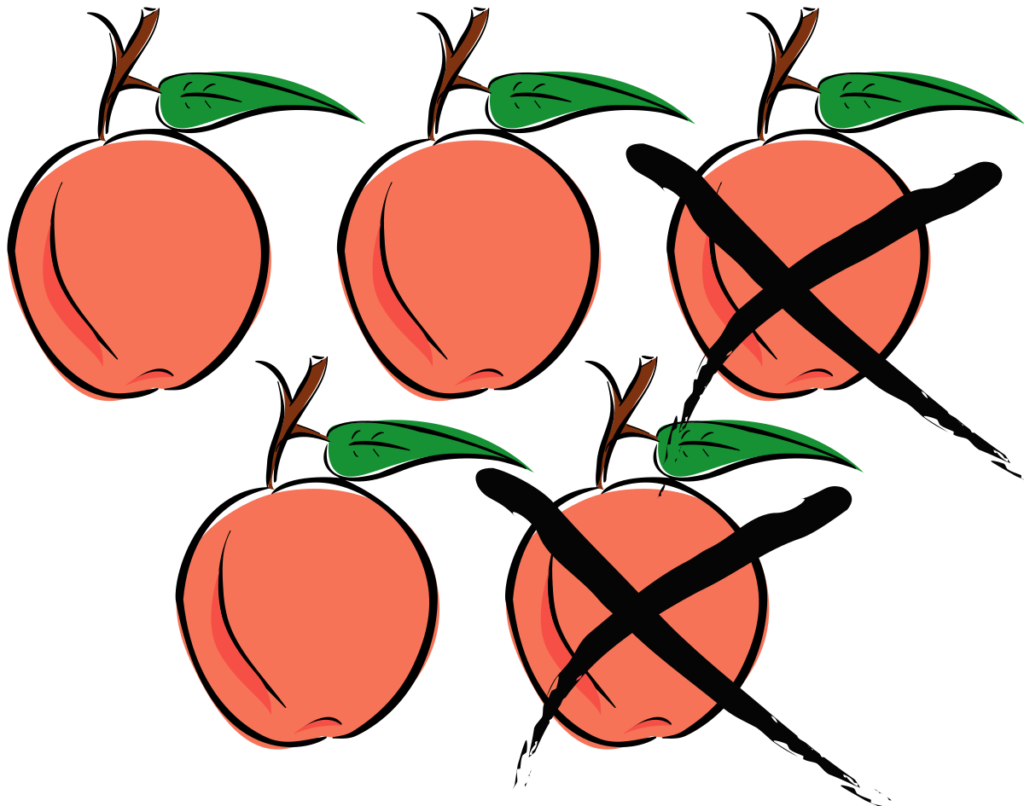
Back then, our teachers were trying to help us understand Math. Subtraction, in particular. 5 apples – 2 oranges = gibberish, was the idea. Oranges and apples, in that example, are not part of the same group or whole, so they can’t be taken away from one another.
But that’s where the mnemonic device’s utility ends. Subtraction. You can even look over at subtraction’s open-minded sister, addition, to see that. 5 apples + 2 oranges = 7 pieces of fruit. With addition, you can redefine the group. You can examine the problem from a higher level of abstraction (fruit rather than apples and oranges). And then you’ve cleared the path for more problem solving. Look at that!
Comparison, then, is a cousin of those two. Equally adept as addition at handling apples and oranges, it just thinks about relationships a little differently. 5 apples > 2 oranges. You can either go down a level of abstraction or up, and you’ll be all set to continue. Just add clarity to the question you’re really asking.
Going down in abstraction means identifying what you’re really measuring. The question you’re really asking. Fiber? Calories? Density? Once you get that sorted out, you’re just contrasting two different measures of the variable on which you landed. 5 apples contain more fiber than 2 oranges. Or more literally “5 apples’ worth of fiber is greater than 2 oranges’ worth of fiber.” Or 5 apples > 2 oranges. Nailed it.
Going up in abstraction just means establishing a frame that joins the two compared objects together.
Which fruit do you enjoy more? Apples or oranges? Take a nice bite of each one and decide which one makes your taste buds happier.
Which music is better during a carpool: Brain Drill or Jack Johnson? Put each one in your friends’ ears and see which makes them happier to be alive.
Which page is better as a landing page for transactional advertisements: blog posts or product pages? Point your paid search cannon at each one and see which one makes more purchases come out the other end.
When we can avoid the urge to “apples and oranges” our way out of a conversation, we can find ourselves in surprising places. “Brain Drill and Jack Johnson are way too different” becomes “who would need to be in my car with me for Brain Drill to be the better choice?” “Impossible to compare blog posts to product pages” becomes “what would a blog post with a high conversion rate look like?”
On the other hand, when the “apples and oranges” phrase ends a conversation, it takes the cake out of the oven before it’s been baked. You’ll remember how mushy and unsatisfying it was, when you could have continued letting it bake and experienced something wonderful, instead.
All of that to suggest this: If you find yourself in a conversation about comparison, and the phrase “apples and oranges” makes an appearance, try probing for higher or lower levels of abstraction. That might knock the clog out of your conversation and let the thoughts flow to some place wonderful.