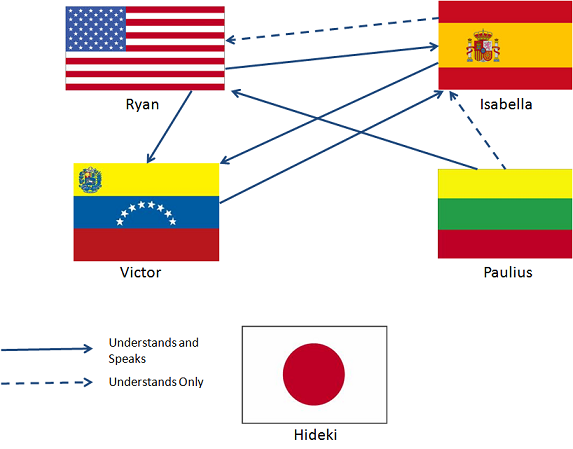
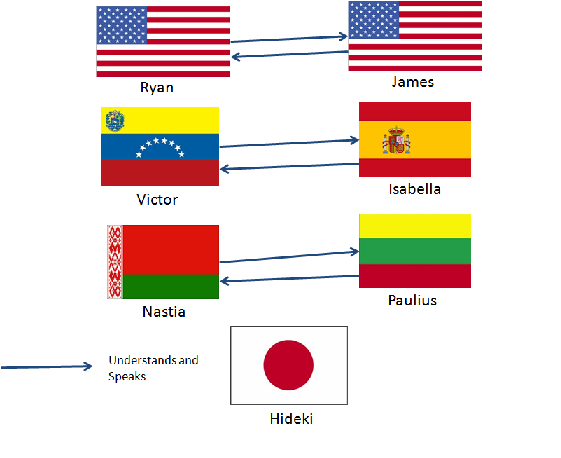
In Junior High, I had to learn a second language, and I had three choices in school: Spanish, French, and German. I’m pretty sure most Gen Y Americans can relate to that (I think iGen are learning Mandarin, too). As a Texan, Spanish was the practical choice. Mexico is our neighbor and a major inspiration for our culture. Not to mention, a Texan without a Mexican acquaintance is a person who never leaves the house.
In college, as my mind opened to other world cultures, I would affirm my choice in a different way. Germany (and bits of its neighbors) speak German, France (and Canada) speak French, while South America, Central America and Spain speak Spanish. Travel potential earns Spanish an extra 100 points.
Then, I met Roxana. 100 extra points for Spanish.
Now, I’m in Munich, and I’m about to give Spanish an extra 100 points. I am learning that people speak Spanish everywhere. For instance, in my heart of hearts, I feel like a ton of people in Munich speak Spanish natively. For the life of me, I can’t find the statistics to support it, but I don’t have the nerve to deny it, either. Let’s talk about my misadventures through statistics before I get into why I think so many Spanish speakers live here. That way, you’ll know how how supremely justified by science my perspective is.
First, I tried to find out how many people who live in Germany are Germans. According to the CIA’s World Factbook, that stat is right around 91%. Damn. That’s doesn’t verify my suspicion at all. Well, maybe many of the country’s immigrants come from Spanish-speaking nations. The same source says that 6.1% of Germany’s residents are non-Turkish and non-German, and then lists Spain as one of the six major “other” immigrant groups. No other Spanish-speaking nations are listed. Crap.
But, Germany’s a complex nation, right? The World Factbook, for instance, says that Roman Catholics are 34% of Germany, but a whopping 80% of Bayern, and my German teacher said to us that Munich is pretty much a complete mix of religions (those stats and vague informative summary zoom in from nation to state to city, for anyone unfamiliar with the country). So cities don’t necessarily represent states or the nation, here. Maybe Munich has an especially high Spanish-speaker population, even though Germany as a whole does not. Well, a 10-minute round of research didn’t reveal anything very telling, except that no Spanish-speaking nation is among the top 6 immigrant populations in Munich (Wikipedia). 22% of Munich residents are from other countries, and the top-6 nations make up about half of those people. That leaves a max of about 10% of Munich for the Spanish-speaking countries. Not much, unless they are all of the 10%.
So, Spanish speakers still don’t seem to be very numerous, here. But maybe every non-top-6 nation in Munich is a Spanish-speaking nation. That would put their numbers at about 10% of Munich residents, and I could finally say that Munich is full of Spanish speakers! Maybe I’ll find out that a lot of Germans learn Spanish as a kid, inspired by all of their Spanish-speaking neighbors. Maybe I can use Spanish education to infer a large Spanish-speaking population, like one can with the Texas population.
5% of Germans learn Spanish.
Thanks for nothing, Wikipedia. I still have my gut feeling that Munich is full of Spanish speakers, but I don’t have any data to reinforce it. Well, I do have something. I have met and spent solid time with about 17 people so far in Munich. Of those, 11 speak Spanish as their native language. And no, I did not meet all 11 through Roxana. That puts the makeup of my new friends in Munich at 65% hispanohablante. Wow, Munich is full of Spanish speakers!
This educational rant brought to you by: A Misguided Use of Statistics