 About a year ago, I arrived in Munich, noticed a really interesting-looking Master’s program at a local university, applied for the program (incidentally, the only program whose deadline hadn’t yet passed), and was rejected for reasons unknown. A Master in Logic and The Philosophy of Science would have been extremely interesting, but as it seems, there are other types of people who are better fits in such a program. Afterward, I laid out the state of my drawing board and resolved to finish learning German before applying to a new Master’s program “next year.”
I began looking at other universities in the area. One is the Munich Business School (MBS)–a place where you go to get an International MBA for approximately one trillion euros per semester. The MBA is a degree that doesn’t quite grant what I need from an education, though. Most public among their benefits are that they offer title recognition (“MBA” is a powerful acronym on a CV), really good networking opportunities, and an environment conducive to learning through discussion of professional experience. The last one, admittedly, is really cool. However, the other two are benefits that I believe I can get elsewhere if I’m a little creative about it.
The Munich University of Applied Sciences and the Ludwig Maximillian University of Munich are two others with English-taught Masters programs. They both emphasize two types of programs (in their English catalogue):
1) Technical Programs: Programs in which you learn how to do something very concrete. Examples are software engineering and bioinformatics.
2) Niche business/strategy/management programs: Programs in which you learn to apply business strategy concepts in esoteric contexts. Examples are social care management and management in the hospitality industry.
Software development is definitely in my future, so a technical program is appealing on some level. But, I feel I don’t need a university education to reap the benefits of a technical program. It seems to me that the core offering of a university education in a technical field is a structured learning environment–guided practice, homework, a teacher telling you what you should learn and when. If structured learning environment is not at the core of what you’re seeking, however, then one can develop a technical skill through YouTube, Lynda, Missing Manuals and SaaS platforms like the Unreal Engine, albeit maybe more slowly. What really matters in the technical fields that interest me is the portfolio which the education services.
The other type of program–niche business/strategy/management programs–seem to be pigeon holes that require a lot of certainty in one’s destiny. If I were to go into social care management, for example, I would learn how what I learned in undergrad is relevant to a comparatively narrow professional field. That means that what the program primarily offers is information related to that comparatively narrow professional field–problems the field has to solve, or the structure of a business in the field, for examples. If I were certain that “social care management” is where I want to make my difference, then a program as narrowly tailored as that one might give me a boost.
LMU and MUAS were just a little outside of my consideration set, then (outside LMU’s Logic and the Philosophy of Science program).
 What I was looking for was a program that develops skill applicable to a broad set of disciplines (analysis, synthesis, human behavioral research, logical argument, engaging speaking…) at a much deeper, more intense level than my undergraduate programs did. I was looking for philosophical challenge, intellectual challenge and a chance to rethink and develop my values. I was looking for marketing leadership in 5 years, entrepreneurial leadership in 15, and the intellectual versatility to make deciding where I apply myself an option.
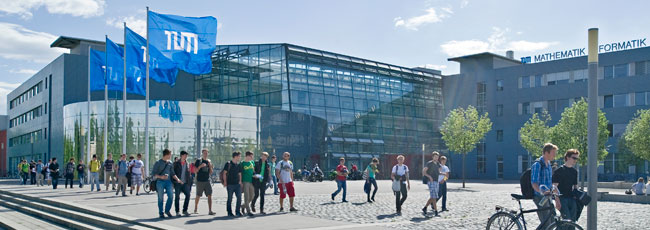
What I found a little less than a year ago is the Master in Consumer Affairs program (MCA) at the Technischen Universität München (TUM).
At the most basic level, MCA teaches marketing skills, using European Union public policy to give the skills context in which to be practiced. In fact, the program was created at the request of the European Commission, and they remain its official supporter. The program offers what I’m after in the following ways:
1) The marketing skill it emphasizes above all others is behavioral research–figuring out why consumers do what they do. The entire Marketing discipline is two words: discover and satisfy. As half of the definition of marketing, behavioral research is an extremely important skill for me in my quest to business leadership.
2) Honing skill in behavioral research necessarily means honing skill in analysis and synthesis, the two most advanced intellectual skills people currently develop (the other two being memorization and application). Conducting market research always culminates in breaking down findings (analysis), reaching conclusions and generating a marketing course of action (synthesis). Analysis and synthesis are at the center of my drive to self improvement, so their involvement in the MCA education make me very excited.
 3) The EU Public Policy context of the program is the source of the philosophical challenge and value development I’m after. As I wrote my entrance essay, one conclusion I reached about the EU is that the EU Commission seem to be of minds that favor experimentation in social change. They pass directives (strong legal suggestions to member nations) and regulations (legal mandates to member nations) rather frequently in the realm of consumer affairs. These measures and their relatively frequent revisions represent pondering that I really admire: What does it mean to enjoy free speech? How free should speech be? How responsible are consumers for their own well-being? Should companies be able to push social agendas with their marketing? Should companies have to push social agendas with their marketing? The EU Commission is overseeing the cultural, political and economic merging of a large and extremely diverse region of the world. This puts it in a position to (read: forces it to?) question many of the values longer-established world regions take for granted. Tasty ideological challenges await.
I’m going to stop here, for now. Long story short, though, TUM accepted me into the MCA program last Thursday, and I’m really excited about it. My next few posts will cover what the application process was like, what preparing for school is like, and maybe a few of the more dramatic moments in the past few months. If you’re thinking about getting a Master’s degree in Munich, or are just curious, then I look forward to seeing you again, soon.