Life is full of smile-inducing moments. Right? Someone holds the door open for you with an inviting grin. Another person moves out of your way when you’re in a hurry. Yet another gives their seat on a train to someone who has a hard time standing.
Just recently, I’ve caught myself grinning like an idiot over something I had never considered before. Some people (and don’t ask me how) remember English grammar lessons they received in High School. These super humans are capable of truly amazing feats. Avoiding dangling prepositions. Treating collective nouns like plural nouns. Using direct and indirect objects correctly. Truly mindblowing stuff.
I witness the three above often enough that I can simply describe the experience as “pleasant.” There are three others, however, that actually get me excited. These are bits of grammar that I hear used correctly approximately 0% of the time. Listen in your daily life, and chances are you’ll notice the same. When they are used correctly, I’m so surprised and delighted that I’ll probably smile about it again the following day.
And here’s the thing: I’m a member of the school of thought that considers language (especially English) fluid and malleable. It’s beyond cool that “classical” English phases out over time as its speakers break the rules more reliably and in larger numbers. What this implies about the influence of second-language speakers on English is freaking awesome. Nonetheless, hearing classical grammar in everyday speech makes me smile like an idiot.
Let’s do this.
Data
“Data” is a plural noun. Just about every time you hear the word, however, it’s treated like a singular noun. “The data doesn’t support your conclusion,” is what you normally hear. “The data don’t support your conclusion” is what you should hear.
“Datum” is the singular version of the noun. Who says “datum,” though? On the other hand, when is that word ever even necessary? I can’t think of a single reason to speak about a single datum at a time outside of some esoteric database diagnostic scenario. So, we don’t reasonably have to worry about looking weird in front of our friends and colleagues.
I have a lecturer in my Master program who uses “data” as a plural noun. It feels so good in my nerdy nerd of a soul every time I hear it.
Number/Amount
To this day, I don’t think I’ve ever heard someone use these correctly. “Number” describes a quantity you can measure. “Amount” describes a quantity you can’t measure. I have an amount of water. I have a number of liters of water. I can only have water. I can’t have 1 water or 2 waters. I can, however, have 1 liter or 2 liters of water.
In the real world, what you always hear is the word “amount.” Your friend will tell you about the astounding “amount” of people in the subway this morning. That implies that an indeterminable number of humans were melted, and the subway was full of their goo.
Oh, no. Maybe that is what he saw this morning.
I’ll wait. One day, I’ll hear “number” when I would otherwise hear “amount.” Unless I manage to contain my glee, I’ll probably be committed for mental illness soon after.
Among/Between
Every now and then, I hear these used in the classical way. Academics know the difference. Business people do not. That’s the general rule I’ve observed over the courses of my studies and career.
“Between” relates two objects to one another. We have two apples between the two of us.
“Among” relates three or more objects to one another. There are three martians among our group of ten people.
Nobody ever says “among” when they mean between. They do, however, routinely say “between” when they mean “among.” Between the three of us, we have one college degree. That makes me cringe in a way similar to the way “amount” in the wrong circumstance makes me cringe.
When I do hear the word “among,” though, it’s sunshine and cervezas for the rest of the day.
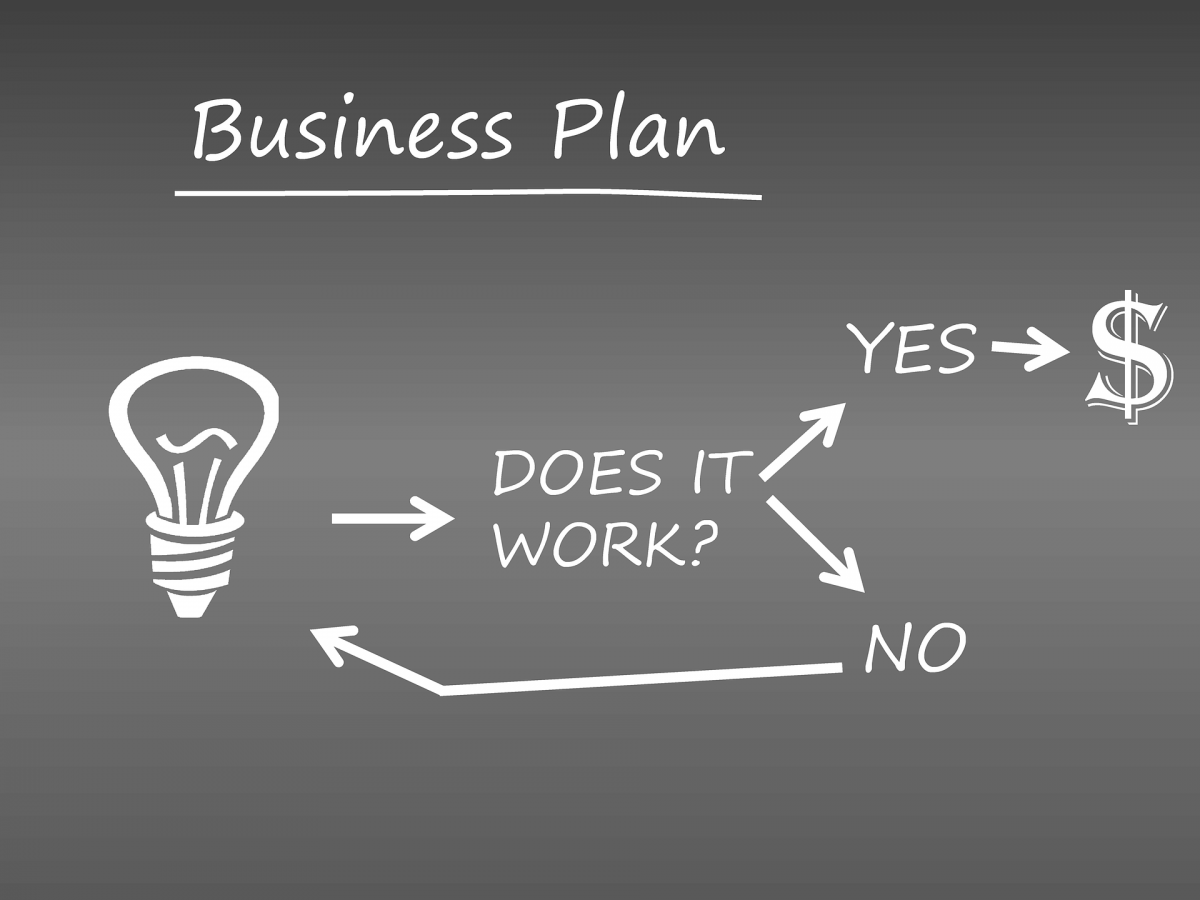
I’ve yet to run my own business in the traditional sense. However, I have conceived business plans and pitches with teams of strangers on a number of occasions. I’ve also, on a number of occasions, conceived, socialized and built new programs for established companies during my career. And finally, I’ve had the pleasure of witnessing many presentations given by startup teams and venture capitalists, many of which elucidated the same handful of conflicts that plague the foundations of many businesses.
I say all this to let you know where I’m getting my information. I also say all this so that the following statement makes sense:
Nobody cares about an entrepreneur’s Idea. That should include the entrepreneur, but it often does not.
Ideas seem strong at first glance. But, they often lack long-term power by themselves.
“The Idea,” as many entrepreneurs would put it as a chorus of angels fill their conference room with “Hallelujah” and the venture capitalists present faint from overstimulation, is just what the entrepreneur intends to sell to people. It’s a new social network for expats. It’s a new delivery app for the sharing economy. It’s a cab service for the new millenium. It’s whatever they want it to be, it’s not in the least bit interesting and, if they conceived it too hastily, it will be the death of their founding team.
That last bit is the really important bit. The part about founding team death. A hastily-conceived idea will kill a founding team, because a hastily-conceived idea attracts members of the founding team to the business for different reasons. I’m working on the cab service because I like disrupting industries–I value excitement. Betty is on the team because she believes commuting around a city really needs to be made easier–she values comfort. Ron’s on the team because he’s the one who came up with the idea in the shower one morning. The cab service will be his darling, his tangible contribution to the world. And he really values a sense of accomplishment.
Be wary of Stray Ideas.
In this case, Ron’s idea is a stray. It’s a Stray Idea and should immediately send up red flags for Betty and me to see. The reasons behind each founder’s buy-in aren’t clear when the idea is a Stray. Stray Ideas are hastily conceived. Stray ideas are ungrounded. Stray Ideas lack direction. And most damaging of all, Stray Ideas are nigh inseparable from egos.
Stray Ideas kill founding teams.
But neither Betty nor I see the red flag and, for the sake of example, we agree to join Ron’s team.
We come up with a business plan, pitch the business a hundred times, and not a single investor bites. Without investment, we’re not a company, so it’s back to the drawing board.
What happens at the drawing board is what will kill the team.
“Alright, guys. Supercab 2000 isn’t getting us anywhere,” laments Ron. His baby was denied the life he so earnestly felt it deserved.
“Yeah,” say I. “Anyone have any other ideas?”
There’s a pause.
“Maybe,” begins Betty, “What if we tailor the idea just to airport transportation? Like a luxury ride to the airport?”
Likely, mine and Ron’s faces are doing the same thing at this point, and the same noise is coming out of each of them. Our lips are pursed. Our eyes are squinted. Our heads are cocked. We look a bit like we’re grimacing. A high-pitched “mmmmmmm” is coming out of each of our faces.
Immediately, the idea sounds off to both Ron and me. Neither one of us knows why, but we feel it.
It’s because Betty’s looking for more ways to make life comfortable. Meanwhile, I’m looking for more ways to make life exciting and Ron is looking for more ways to feel accomplished. We’re all focusing on values that we hold, but that the others apparently do not. Betty’s idea gives neither Ron nor I what we’re seeking.
Ron and I will then pitch ideas that will meet the same reception as Betty’s. We’ll be at this impasse for awhile–until we accidentally land on a new idea that simultaneously satisfies three different values, or we split up and look for new founding teams.
What if one of our investor pitches had succeeded? What if we had never had to return to the drawing board?
Our team would still have died, but conflict would have drawn out for a much longer period of time. What happens when it comes time to pick a target market? What happens when we decide upon our first ad appeal? Ron wants to position our service as a wealthy status symbol to those who value acheivement as much as he does. Betty wants to position it as a convenience to anyone who feels busy. I want to target gen Y rabble rousers by positioning our service as the death of a stodgy conventional cab industry. We’ll ultimately have the same “final conversation” we would have had at the drawing board. Only the timing and the subject of debate would be different.
Maybe the result of all of this conflict would be dissolution of the business. More than likely, two of us would force the third out, or one of us would find a way to edge the other two out.
At this point, it probably seems like the alternative process I’m endorsing is extremely self-centered. Like the nature of the market isn’t even a consideration. That’s true and it’s also not true. Focusing on founder values is essential, because it’s much easier to market a new business to people who already think the way you think. If Ron, Betty and I channel our own values into the business, we’ll naturally appeal to what you might call “target market prime.” Appealing to that market will be easy, because we share a value with them. We know how to appeal to them. The market will also be large, because the common value we identify will be a terminal value, not confused with an esoteric belief or attitude.
As businesses mature, it would seem staying true to the value that linked its founders to Target Market Prime is incredibly difficult. At that stage, the business has probably hired a ton of people who don’t share that value, and it’s probably grown beyond Target Market Prime. It’s grown into new markets that may or may not share the original value.
But we’re starting a business, right? We’re worried about getting the business off the ground. Developing a business into maturity will require strategy we don’t yet need. For now, we can make our team more cohesive and the ideation process much more straightforward by aligning on at least one common value from the beginning. Even before Ron brings his stray cab idea to the table. Especially before that. Clearly, excitement, comfort and achievement are mutually exclusive among us. But, on what do we all agree? I’ll be investigating that line of questioning in a post to come very soon.
Entrepreneurship has been an important part of my education, most so here in Munich at TUM. I’ve taken courses on entrepreneurship, attended startup rallies and conceived, launched and managed new programs at a series of small and large companies. All along the way, I’ve been looking for insight into what it takes to start and then run a business.
At this point, everything has told me that step one of starting a business is identifying what we might call our “market’s value” (not market value; keep your pants on, Finance). This is a human value that we, the founder(s), have in common with a group of people who need something (our potential market).
<sidebar>
If you want to learn more about what I mean by “value” in this post, I recommend with every fiber of my being that you refresh yourself on Milton Rokeach’s value survey and the concepts of instrumental and terminal values. All of the above are inspiring the hell out of this post.
</sidebar>
Regularly, entrepreneurs present about failed teams that couldn’t agree on a direction. Failed pitches that couldn’t convince an investor that a market exists. Failed products that couldn’t generate interest among their intended users. Failed businesses that believed that they had rallied around the “wrong idea.”
Rallying around an idea is a mistake. I’m sure of this. But, I’ll get to that in a future post. This is about a productive approach: rallying around a market’s value. Rallying around a market’s value means all founders are on the same page from day one. All founders know why they’re in business. They know for whom they’re in business. With that knowledge, coming up with the idea that makes a market is just experimentation.
Human values are incredible drivers of business decisions. Here are three with which I identify very strongly. One of these will likely be the market’s value on which I found my own venture, one day.
Let’s do this.
_________________
#1: Wisdom
So wise.
We succeed in life if, at the end of it, we understand how people, the world, and life work. Decision-making guided by this value can’t go wrong. Every step results in greater understanding.
Pitching a business founded on wisdom as its market’s value is easy:
“We believe that the true measure of success in life is the wisdom one possesses at the end of it.”
Instantly, we have the attention of our de facto target market. They believe that, too!
“The problem with accumulating wisdom, of course, is that wordly experience is costly. Learning languages, experiencing new cultures, learning new skills, exposure to contrary worldviews–this all takes extraordinary amounts of time and money. A lifetime of each, in most cases.”
The market is still on board. Accumulating wisdom is costly.
The world should be better when we leave it than when we entered it, and we should be responsible for some of the improvement.
“We believe that a truly worthwhile life is one that has a lasting, positive effect on humanity. One that shines even after it’s extinguished.”
“So, you can imagine our frustration, as we can imagine yours, when mundane, repetitive upkeep tasks distract us from those that contribute to the improvement that drives us.”
“Meet Roomba, an autonomous vacuum cleaner that cleans floors so effectively that you won’t have to engage the chore ever again. One fewer distraction. One more opportunity to strengthen your legacy. Want one?”
Shut up and take my money.
#3: True Friendship
True friends are forever.
“Life is nothing without true friends. Friends that last forever regardless of distance. Regardless of circumstance. Regardless of conflict. Friends who comfort you. Friends who teach you. Friends who love you. A life with true friends is truly a life.”
“Nonetheless, distance and circumstance can keep true friends apart. What if we could maintain the intimacy we cherish with our true friends despite distance and circumstance? What if we could be there for each other, even when we can’t be there with each other?”
“We have for you an online service that lets expats share their culture shock with their childhood companions. It lets humanitarian workers enlighten their old college roommates from the other side of the planet. It lets true friends remain connected for a lifetime. It’s called Skype. Want in?”
Business values rule. Real ones, that is. Commonly not the ones you see on the placard in the conference room–“Innovation, Creativity, Discipline” or whatever.
I’m talking about real values. The values that management can’t prescribe, but rather that they have to cultivate among their organizations over long periods of time. Values that people hold genuinely.
The kinds of values about which I’m talking are what I believe to be the most important consideration of a management team during the founding of a business. Values inform long-term direction, they inform strategy changes, they inform target market choices, and of course they inform hiring strategy. They also inform management team cohesion.
Like I said, you don’t observe a company’s values on a placard or a wiki or during a press conference or during an investor briefing. What you see there is marketing. You observe values in the assumptions colleagues make about their work and about each other. You observe values in the language colleagues use. You observe values in systems, protocol and chain of command, or the entire lack thereof.
Very soon, I’m going to write a post that plays around with values toward which I’ll want to drive my own business, one day. This post is about signifiers of values that I’ve noticed at my current and prior employers. Most of these will come from my experiences at three large tech companies. Some may also come from my experiences at smaller companies and agencies. Have you seen any like these among your employers?
Buckle up!
__________
#1: The Term “Best Known Method”
At one of my employers, the term “Best Known Method” was so institutionalized, that it was abbreviated to “BKM.” In standard industry parlance, it means “best practice.” It’s the first way you should consider getting a thing done.
“Best Known Method” is beautiful in a way that “Best Practice” is not, however. “Best Known Method” implies openness to new ideas. It implies an expectation that, one day, we’ll find a better method. Whoever brings us that method gets a pat on the back. “Best Practice” on the other hand, functions as a sort of biblical proclamation that disgruntled service managers staple to the cubicles of pigheaded program managers in order to show them the true way of the world.
“Best practice for YouTube video length is 2 minutes or less, so cut out 5 minutes,” says the video team manager before watching. Meanwhile, a catalog of 2-minute, 10-view videos and a picture of a top hat against a black background laugh behind their back.
“BKM is making the subject line of an e-mail no longer than seven words. Anybody have a better idea?” verifies the winningest program manager in the world.
#2: Division by Goal Rather than Function
This is an example of a slight way by which a team’s values might differ from the surrounding company’s. One employer of mine usually structured itself by function first and business unit second. You’d see a team full of ad media planners, a team full of product marketing communication managers, a team full of regional marketing communication managers, and a team full of event managers. Each member of a team, then, would align with a business unit or a market. One regional marcom manager, for example, was responsible for the Northwestern US and Canada. One ad media planner was responsible for one of the company’s major software products, for another example.
However, after a short time knowing them, the ad media planning team restructured. Instead of aligning with business units, media planners would be from then on assigned to company goals. One member of the team was the transactional ad planner. Another was the branding ad planner. The transactional planner ran campaigns that generated sales and money for the company. Click on their ad so you can buy the company’s thing. The branding planner ran campaigns that drove people to the website. Click on their ad so you can understand or like the company more and maybe buy later.
This communicated two things about values at the company, to me. The first is that both the team and the company (because their decision met no political blowback) value decentralized decision-making. The second is that the team value what one accomplishes for the company more than whom else at the company that person supports. “What did you do for us this month?” is more important than “How well-connected are you at the company?”
#3: Outsourcing by Degrees
How much of a given discipline (marketing, finance, engineering, etc.) is outsourced, and how much is kept in-house? If you look around and only see coordinators in-house, then it might be that you’re working for a company that values fast execution over thoughtful planning and creativity. If you’re surrounded by creative functions, then values may align in the opposite way.
Right now, I’m thinking of two large tech employers of mine. One had ad media planning and ad creative in-house. At this stage in my career, that blows my mind. This is my only employer that worked this way, and it’s my understanding that this is exceedingly rare in the mature-company world. Even more amazing is that the teams sat right next to each other in the office. This is a company that values getting it done right more than getting it done fast. Both the ad team and the creative team were, in turn, deeply connected with the company’s business units. Even if they didn’t understand a product or a market well, obtaining that understanding only meant putting a cafeteria date on a product marketer’s calendar.
The other employer I have in mind kept neither media planning nor creative in-house. Media planning was managed by an agency, while creative was managed by an office of contract workers. Leftover in the marketing department were solely coordinators called “marcom managers” and “media relations managers.” Their evaluations (and incentives) were based on how many marcom or media campaigns were executed under their name. They were not evaluated based on the degree to which each campaign achieved the company’s goals. Run enough campaigns over time, and eventually your numbers will get to where management wants them. You need processes and connections to succeed at that company. You don’t need access to analytics platforms or sales data.
Being a foreigner means never truly knowing when you’re about to violate a cultural norm.
As you might imagine, being a foreigner changes some aspects of the job hunt significantly. For one thing, your command of the local language is a new factor in your nervousness before an interview. Nearly every Marketing job description I’ve seen, for example, requires that a person know written and oral German and English “expertly” or “fluently.” What does “expertly” really mean? How much of the interview will be in each language? Should I demonstrate English fluency or “working professional” German on my CV? In my experience, even when I handle myself in a German conversation, it still happens through the stress and self doubt of defusing one’s first bomb in a cage full of sleeping badgers. If you’ve ever played a musical instrument competitively, imagine how it felt after you performed your solo for the judge. No matter how Flaxen the Maid’s Hair really was, you just blew “Mahna Mahnam” through a Kazoo.
More generally, though, being a foreigner means never truly knowing when you’re about to violate a cultural norm. And, because feedback is completely absent The Application Process, you often won’t even know after you’ve violated a cultural norm. Luckily, the Internet and friends are things.
The following is what I’ve learned about composing a CV for a company in Germany. Hopefully, it’s also convincing evidence that, to an American at least, it’s a very counterintuitive experience. For reference, here’s what’s most generally expected in the States:
Name, address, phone number, e-mail address
1 page
Focus on accomplishments, not job descriptions
Be honest
Keep it professional–only include information relevant to the job to which you’re applying
Sometimes include references: names, positions and contact information of people from your professional life who can vouch for you
Keep that list in mind as you read the rest of this. We’re about to tear most if it down. Even the “be honest” one. Here are 5 ways composing a CV in Germany is weird to an American.
NUMBER ONE: The Photo
Unnecessary.
I remember quadruple checking this requirement when I first heard about it. A CV here needs to include your photo because…reasons. I’ve been told that the photo should be as basic as it gets–the background should be white and lacking any sort of design, you should just be looking at the camera, and your smile should be somewhat subdued. It’s a mug shot in which you’re kind of amused that you’ve been arrested. The rationale I was given is that those techniques make it more evident that you generated the photo specifically for your CV, rather than having grabbed one from your records or from social media. I’m not sure why that approach is better. “It just looks more professional” is probably the official reason.
NUMBER TWO: Personal Information
They want to know everything, here. Besides your name, address, phone number and e-mail address, they want to see your nationality, birth date, and marital status. Nationality makes sense to me from the start. In a foreigner-friendly workplace, they might want to get an understanding of the paperwork you’ll require before they investigate you further. Additionally, if they are going to be paying you less than a legal minimum*, then they have to prove to the government that you are better than a German would be at the job.
I believe marital status is useful, because the German government require that companies offer some relatively costly benefits to new parents. Mothers, for example, are required to take the 6 weeks prior to birth and the 8 weeks following it off at full salary (The Local). Managers may also have preconceptions about the availability of married employees. If one is married and the job requires a lot of travel, then they may view the CV with a bit of skepticism, or they may wish not to make employees choose between their spouse and the job.
Until today, I had no idea why birth date is a requirement. A friend of mine told me that it’s considered the third essential piece of personally identifiable information. Maybe there are 10 Jürgen Klinnsmanns from Göppingen. Only one of them was born on 30 July 1964, though. When they run a background check, birth date helps them make super secret sure that they have the right person.
And here’s the thing: I have no idea what (if anything) happens if you don’t include nationality, birth date, or marital status. The “German HR” side of this conversation is totally absent my research, so far. But, every resource (online and offline) I’ve checked says that that information should appear.
*Cool Fact: The legal minimum was 66,000 euros until 2012, when it was reduced to 46,000 euros. (Spiegel)
NUMBER THREE: Two Pages
You get two pages, here. Of all 5 differences in this post, the cost of norm violation is probably greatest for this one. Even if you’ve condensed your entire career into a single page of highlights like the total boss that US industry trained you to be, you may look like an underwhelming chump, here. Everyone else has two sheets worth of experience about which they can talk. What have you been doing all this time?
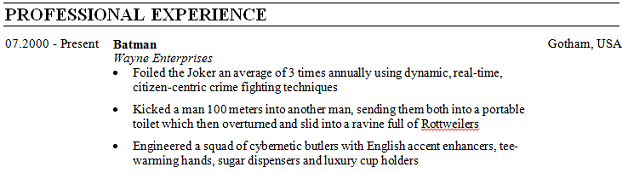
NUMBER FOUR: Hobbies and Interests
Source: Docdreyfus.com
I had to unlearn a BBA’s worth of advice levied directly against this practice when I started applying for jobs, here. Further, non-academic American sources (like Business Insider) are positioned so strongly against it that they might actually hurt their readers’ chances in the international job market. Truth is, American companies will try to learn this about you in the interview and presumably find it distracting during a resume review session. They’re just trying to find out if you can hurdle the acceptable-competence bar when they look at your CV. So I’ve heard and read, anyway. Not so for German companies.
According to the advice I’ve been given, German companies want to know if you’re interesting even before they speak to you in person. It might be* that recruiters like to have personal questions ready before they see you. Maybe it’s considered too frank if you ask someone you’ve just met what they like to do in their spare time, and this gives them a polite path into that conversation. Another theory in which I have far more confidence is that German companies and employees really, really value a balance between work and the rest of life. They want to know that you’re not a workaholic before they entertain recruiting you. My confidence in this theory comes from what I’ve learned about the German perception of working late. It’s usually perceived negatively, as an indication that you didn’t work efficiently enough during the day. Want to experience this norm for yourself? Ask an employed German how many holidays they took last year, and notice how proud they look as they struggle to remember what their office looks like.
And what happens in the States when you’re the guy or girl who always leaves exactly at the 8-hour mark? Or God forbid, sooner? Your workplace will compare you to your office-dwelling, late-working coworkers and consider you comparatively unenthusiastic and unambitious. Want to experience this norm for yourself? Ask an employed American how many hours they worked last month, and notice how proud they become as they tell you what lunch at one’s desk is like (they’ll act like they’re complaining, though).
*Why I’m so unsure: My research into the matter (Googling “why hobbies and interests on my CV?” and the like) is only returning outrageously ethnocentric articles entitled “Things You Should NEVER EVER Include on Your CV.” Outrageous.
NUMBER FIVE: References
This is where we tear down the “be honest” tip we got from the old days in the U.S.
German companies have their own ways of figuring out we’re lying.
American companies sometimes ask for “references,” as well. But, it means something quite different than it does, here. In American, “reference” means contact information. You list 3-5 people at the end of your CV and, alongside each, you mention the nature of your relationship and add their phone number and e-mail address. A potential employer, upon seeing your references, will call one or a few or all of them to verify that you worked with them and ask about your personality. You should be honest on your CV, because your next employer might call one of your old ones and find out if you’re lying (not to mention dishonest CVs are the mark of a true dirtbag).
Here, a “reference” is a very specific kind of document that German employers give their employees when they leave the company. The document confirms your employment dates and even includes an appraisal of your skills and personality. A friend told me today that these appraisals will always sound either neutral or positive, but negativity may abound within. For instance, one might say something like “Hard working and devoted–routinely worked long hours to make sure the job was done.” It sounds like a generous appraisal of someone’s work ethic, but what it means is that they think you manage your life poorly. It’s a red flag to the new employer that you take a long time to finish your work.
The implication here is that candidates don’t even have the option of being dishonest, because each is expected to submit a backup CV written by each previous employer. It’s an interesting step that seems extraneous from an American’s completely American perspective. I remember an undergrad classmate of mine getting blacklisted from Wall Street, because he lied and claimed an internship on his resume that he never actually had. Perhaps vetting him required an investment of time that German firms consider a waste, though. After all, if the background check comes with the CV, HR can spend its time doing other valuable things.
The final interesting thing about references is that American companies simply don’t provide the German version. In fact, my old employers have policies that disallow sharing of any information other than confirmation that you worked for them. They can’t comment on their employees’ personalities or competencies, even if the new employer calls them and asks. It would seem that companies here are understanding about this, though, as I’ve been granted my first interview next Monday.
There you have it: 5 ways composing a CV in Germany is weird to an American. What do you think? Did anything surprise you? Did I leave any weirdness out? How does this list compare to what other countries want in a CV? Light up the comment section; I look forward to the discussion.