“When you visit…” is a blog series about things you’ll want to know before you visit a city. Advice comes from my experience in the city, and is more about “prepare yourself for…” than about “OMG SUCH PRETTY SO WOW.”
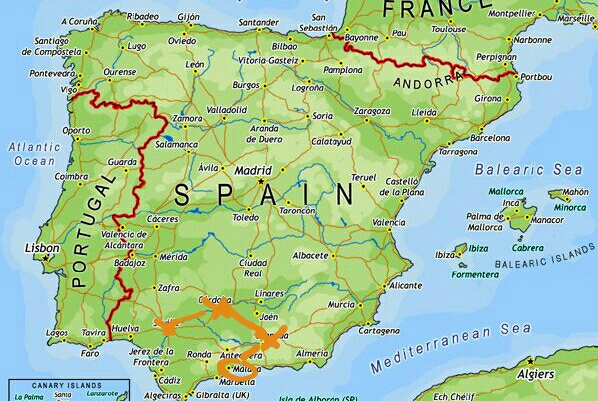
This one’s about Málaga, Spain.
Málaga is a beach. Málaga is not a beach.
As the very last stop before our return to Munich, Málaga is only a one-night stay. Now that our night is about to arrive, I don’t know much about it. But, I do know two things.
#1: Málaga is a Beach
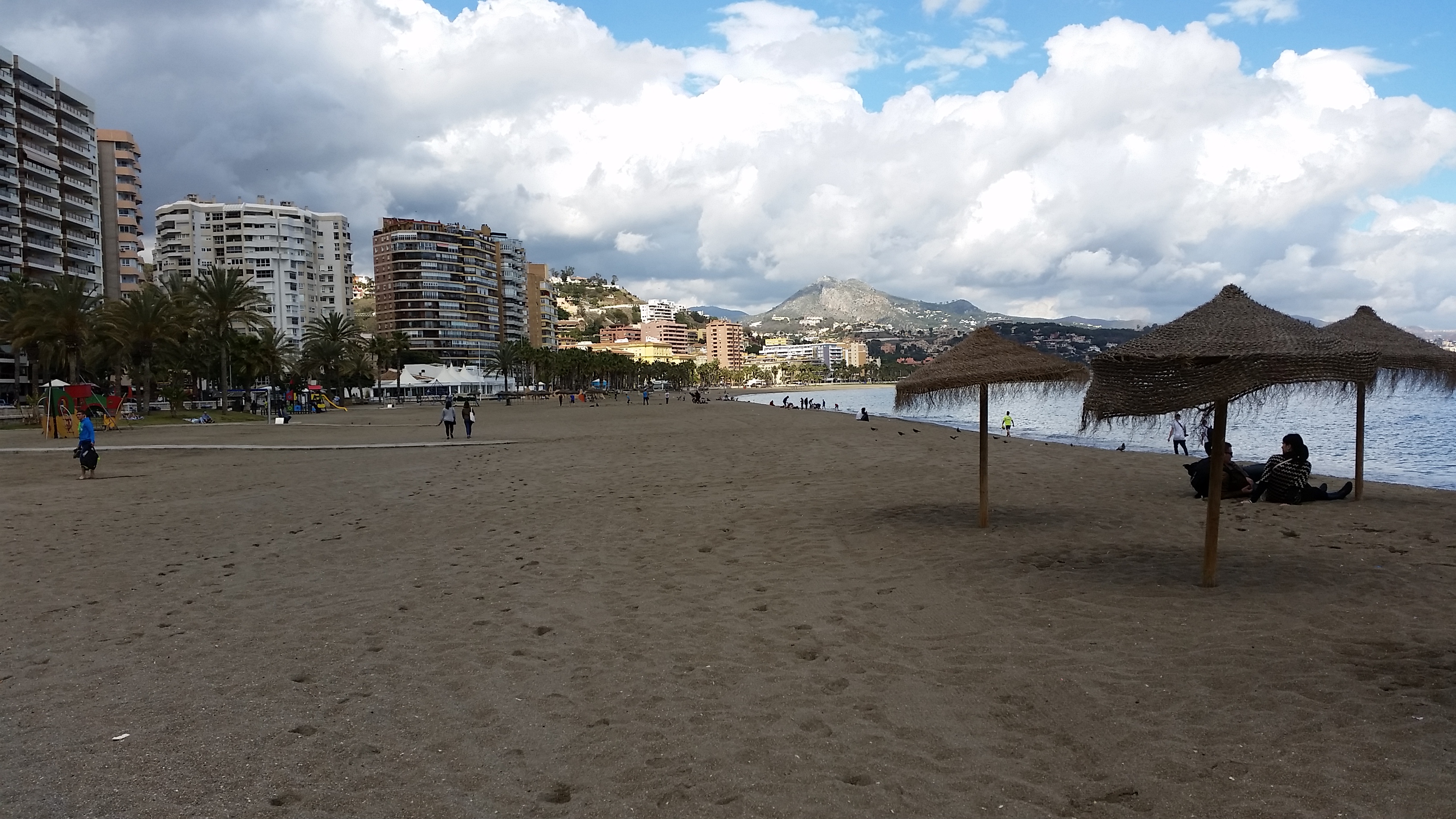
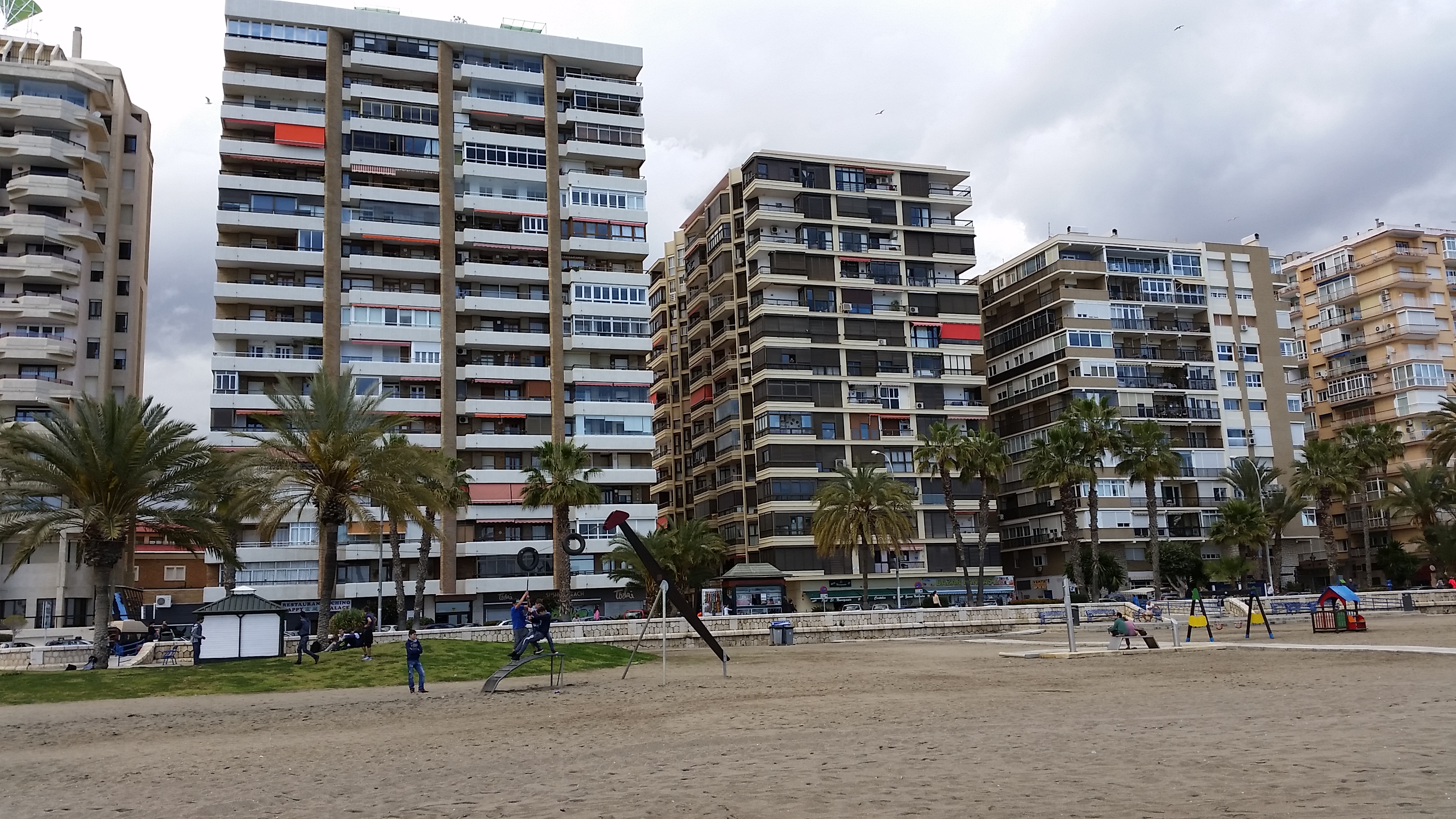
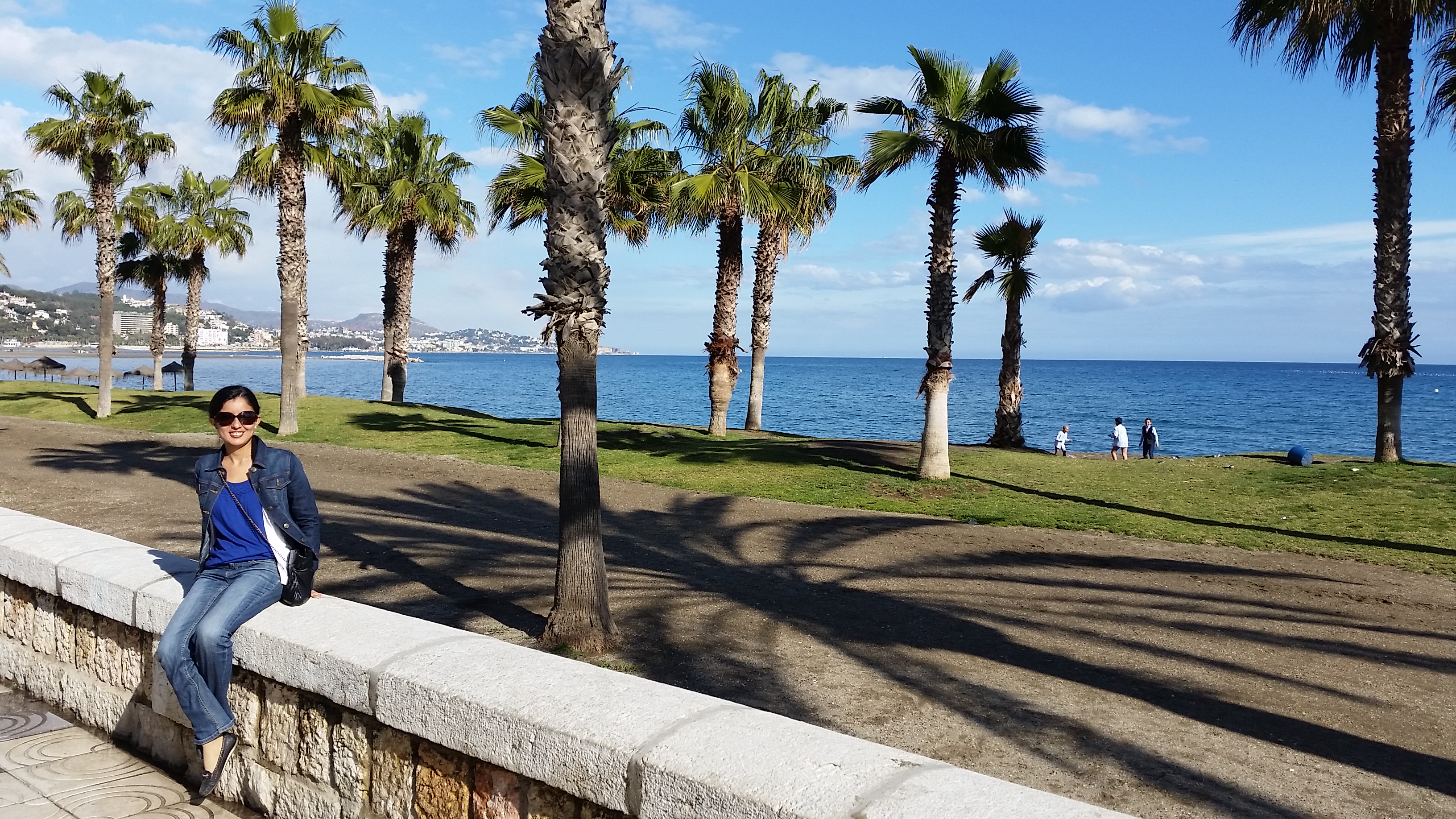
This is the first thing you see after crossing Paseo del Parque and entering the beach side of Málaga.Full-on Málaga beach, baby.If I were an apartment complex, I’d want to be a Málaga beach apartment complex.
From what I could tell as we walked around the city, the beach is the uniqueness that brings people to Málaga. While you’ll likely stay in the city center, it’s just a quick walk down Paseo del Parque until you reach Málaga’s obvious beach zone.
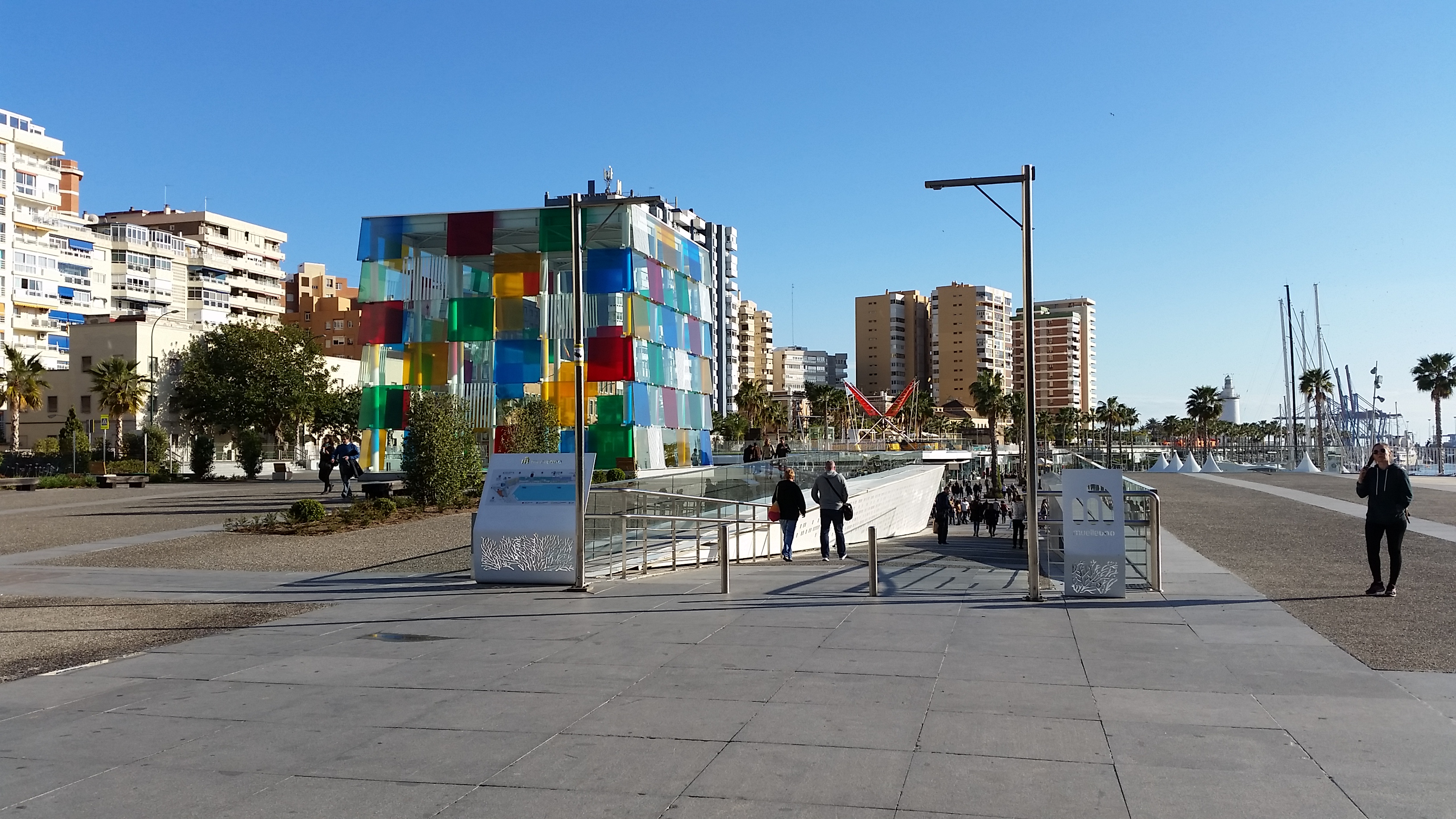
It’s freaking beautiful. On one side of the beach zone (a small peninsula) is the harbor. You’ll see yachts, gelato stands, restaurants and an outdoor market, there. On the other side is the beach. You’ll see salt water and sand, there.
The beach side is also full of runners. Between that side’s apartment complexes and the ocean are: a wide road for cars; a wide, tiled path for pedestrians; and some sand.
#2: Málaga is not a Beach
Near the city center. This is not a beach.Back to the beach side. This is why we’re here, folks.
Aside from the beach zone, you also have the city center and what I think is a region called “East Málaga.”
The center offers standard European fare like a castle, a fortress and an upscale shopping street. It also offers non-standard fare like Pablo Picasso’s birthplace and a higher-than-average number of museums dedicated to Málaga and its history.
I’m making a huge inference, here, but I think what you’d call “East Málaga” is a set of hills dedicated to high-income housing. My clues are a sign pointing East that said “East Malaga,” and a bunch of hills with awesome-looking houses on them in that direction. Name’s Mr. Holmes, if you please.
This wraps up my experience with Málaga. I wish I could say more, but we’re only skidding across the surface of it on our way into our airplane seats. Hopefully, the pictures along the right side can say what I can’t about this city.
“When you visit…” is a blog series about things you’ll want to know before you visit a city. Advice comes from my experience in the city, and is more about “prepare yourself for…” than about “OMG SUCH PRETTY SO WOW.”
This one’s about Granada, Spain.
Granada is huge. Granada is complex. Granada is modern.
Granada is stop number three of four on our trip through Spain. We’re here for two days. The city is huge, to be sure. But, there are more interesting things to discuss.
#1: La Alhambra
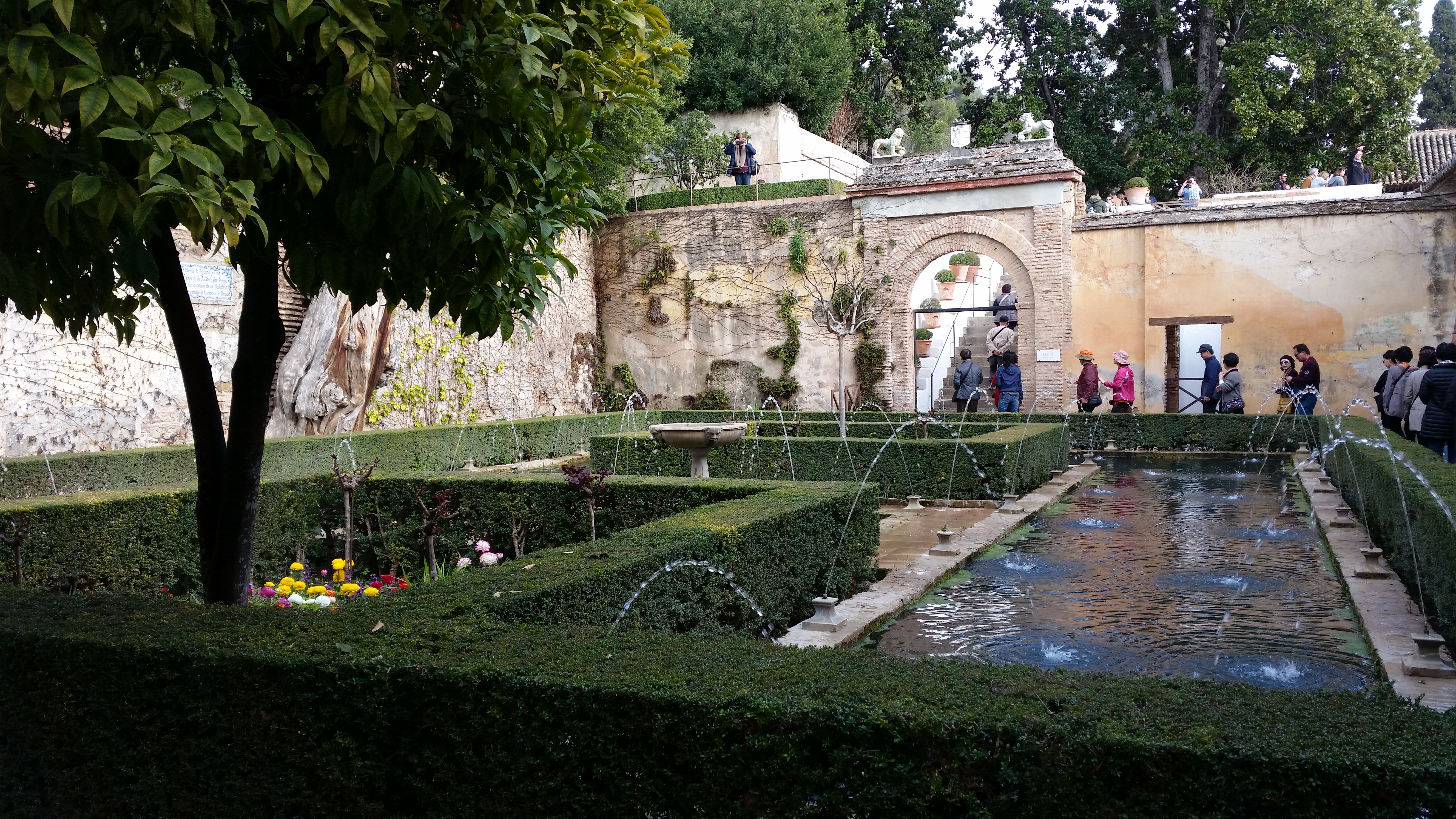
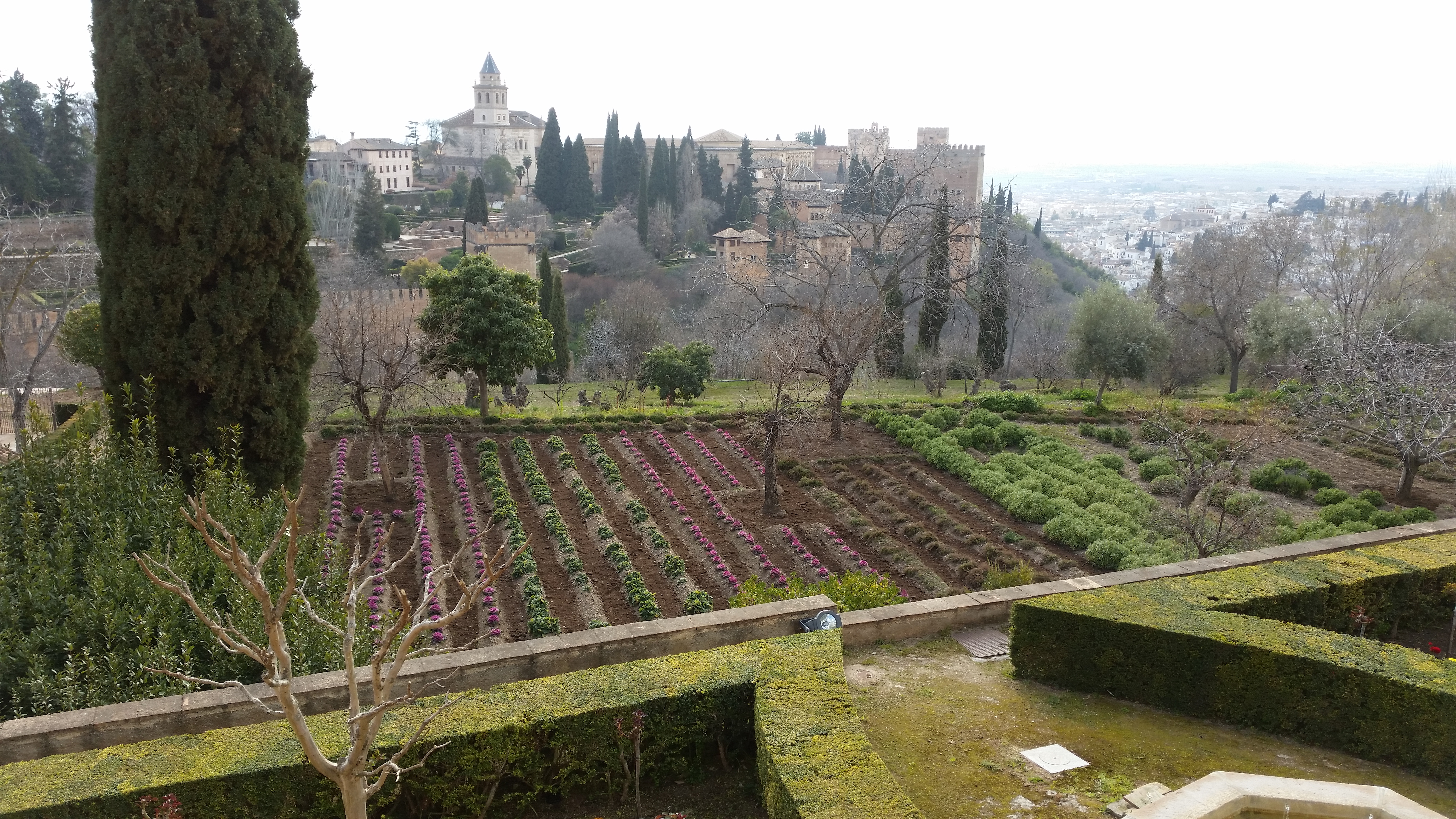
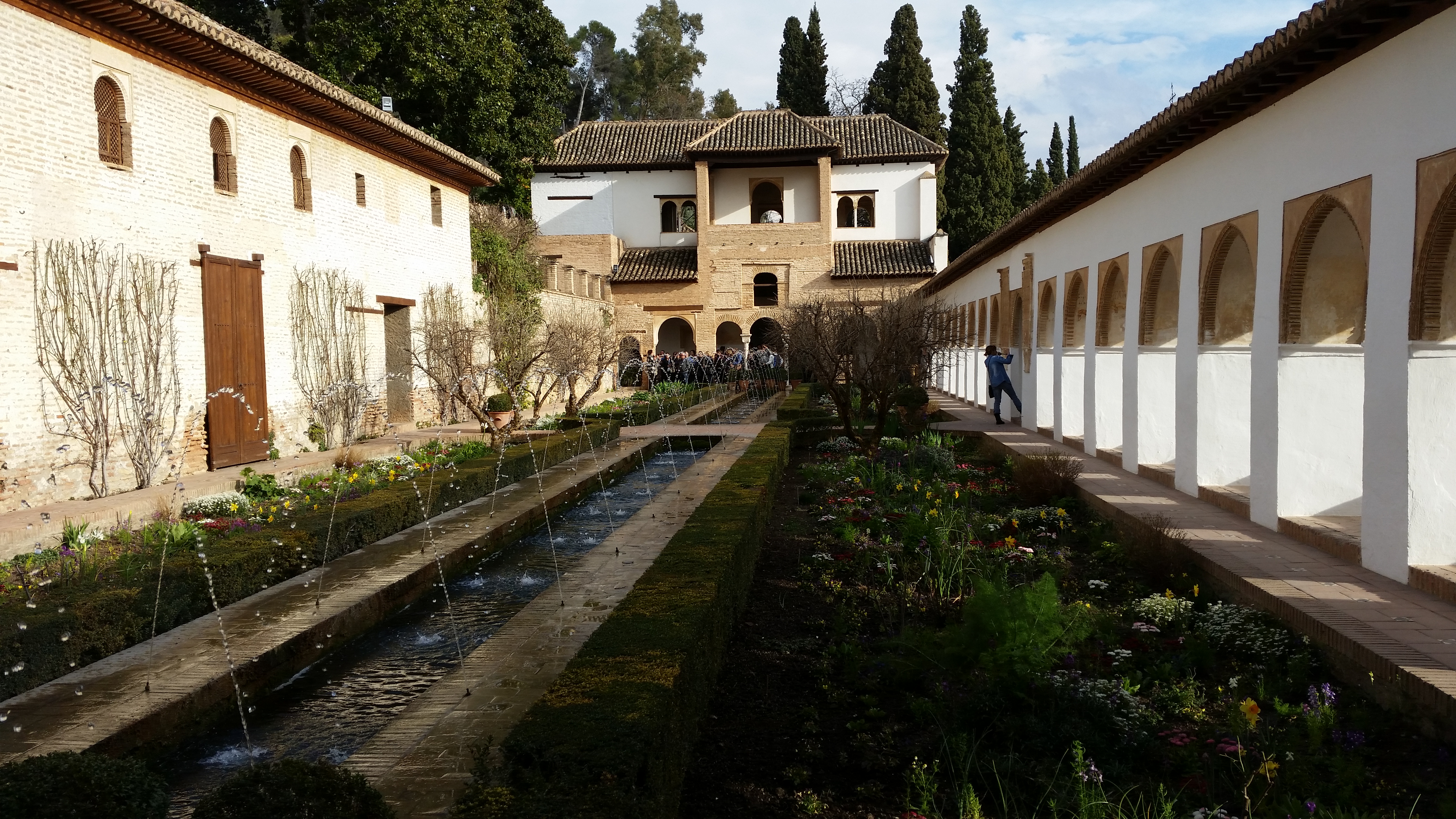
This is one of La Alhambra’s gardens.This is much of the Alhambra complex from far away. Revel in its majesty.Yet another courtyard belonging to this palace.
La Alhambra (Spanish for “The Alhambra”) is a vesitge of Muslim rule that was built somewhere around 1300 CE. In its day, it was a fortified palace complex with an amazing view of the surrounding area. These days, it’s a major tourist attraction with an amazing view of the surrounding area. Someone invent a time machine so we can all show Mohammed ben Al-Ahmar our photos.
To see La Alhambra, properly, you’ll need to purchase tickets in advance (we bought ours a month in advance). The ticket isn’t for La Alhambra, though. You can walk around the general complex without paying anything. The ticket lets you enter the “Palacios Nazaries,” the “Alcazaba” and the “Generalife” portions of the complex (the palacio is the palace, Alcazaba is the fortress, and Generalife is the massive garden). Going guideless (as we did) will give you extremely little in the way of a history lesson. What you will do is walk through restored rooms in a palace and gardens surrounding the palace for about 2 hours. Your dogs will surely be barking after its all over, but the journey will be beautiful.
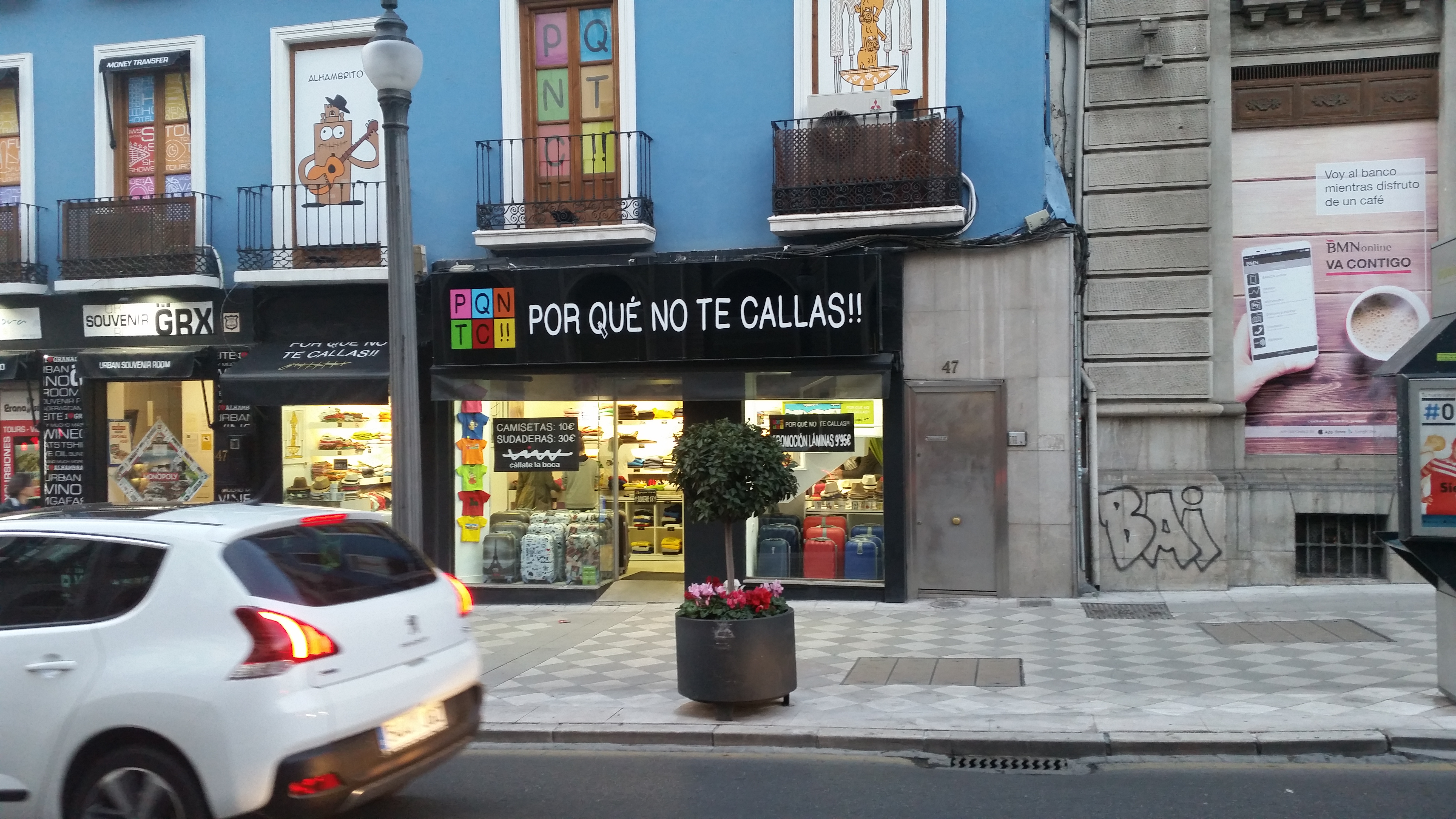
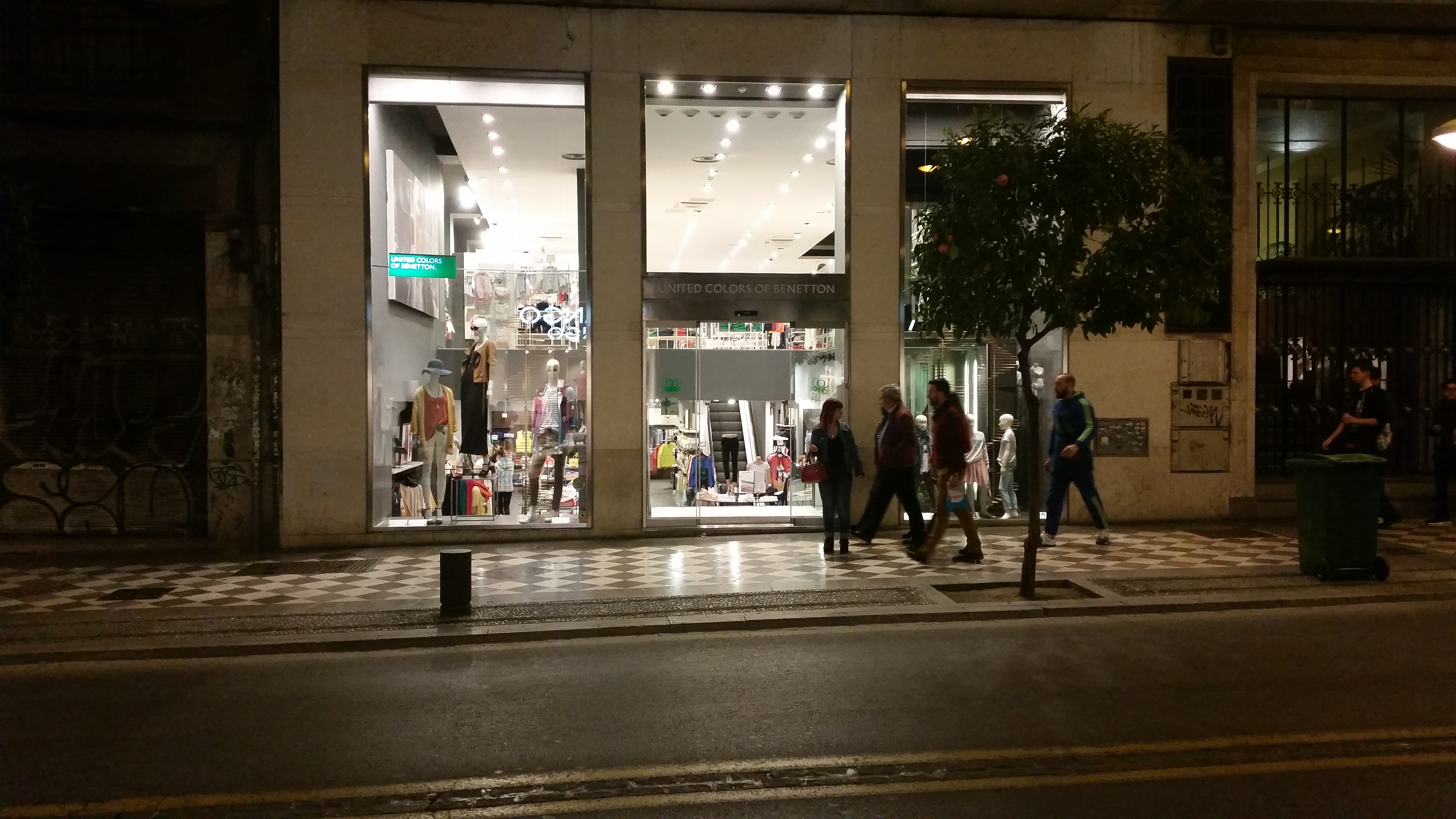
Here’s an alternative fashion shop in Granada. The name is pretty lol-worthy.Stores like this all over the place.
If you read my post on Sevilla from a few days ago, then you’ve seen the word “tapa” about a million times. Granada is much less about the tapa, and much more about modern shopping. It’s a metropolitan city with an evidently-high quality of life. Electronics. Designer fashion. Alternative fashion. Other stuff. It’s all here, and it’s all over the place.
Another way to put this: In Sevilla, you turned down a narrow alley because you heard that there are excellent tapas somewhere in there. In Granada, you turned down that alley because you heard there’s a Zara somewhere in there.
#3: But Granada Still Has Tapas Bars
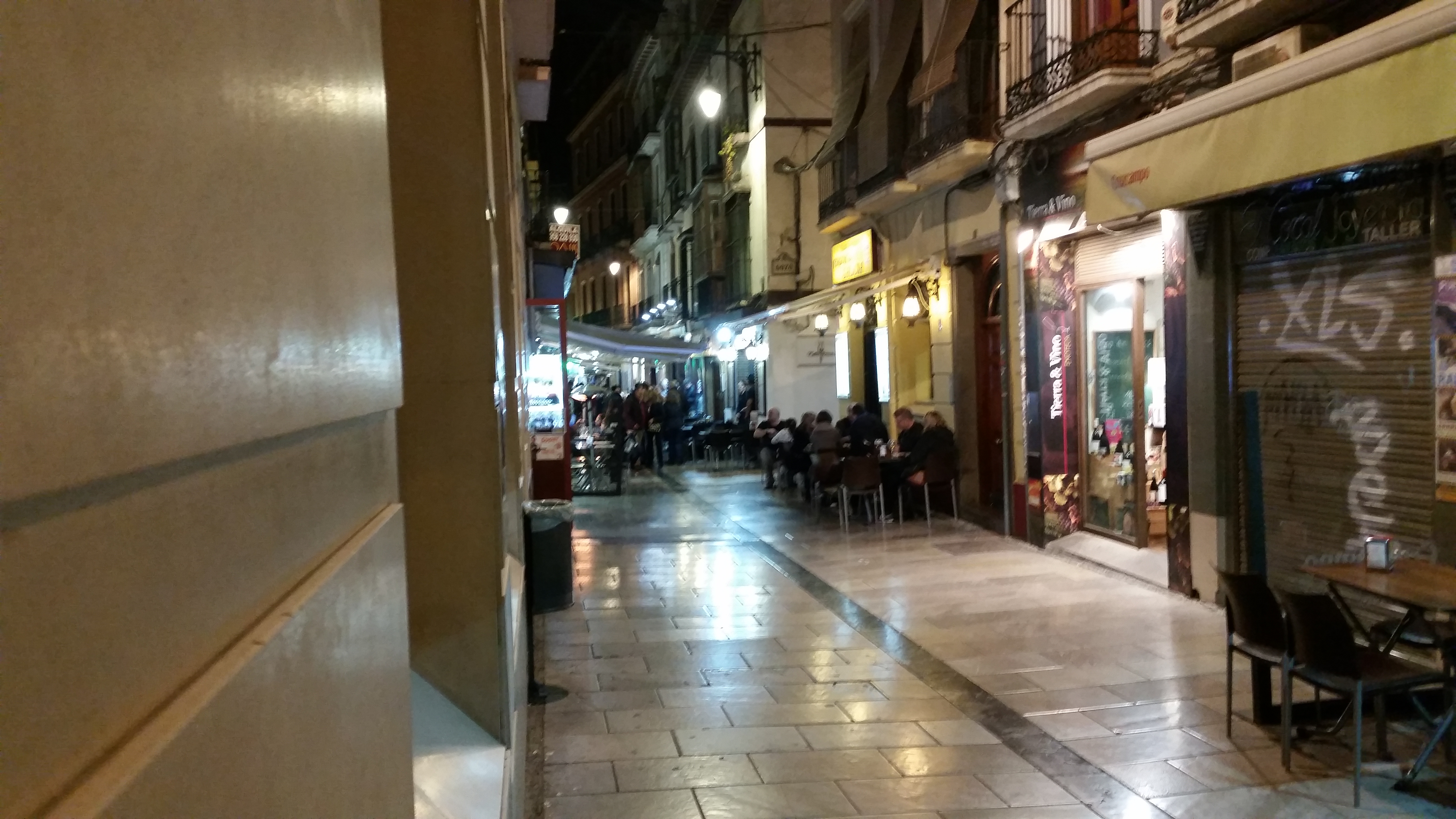
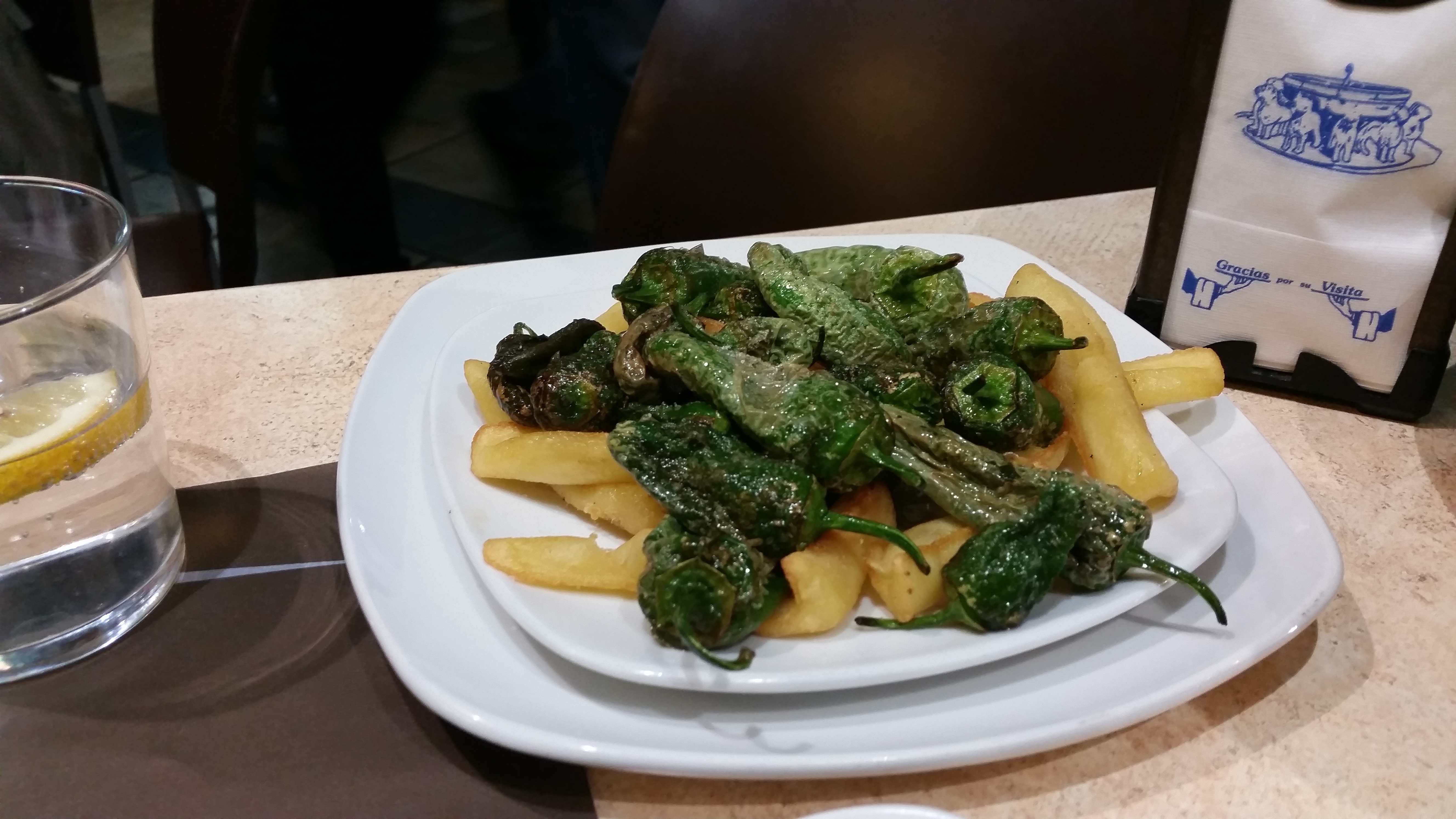
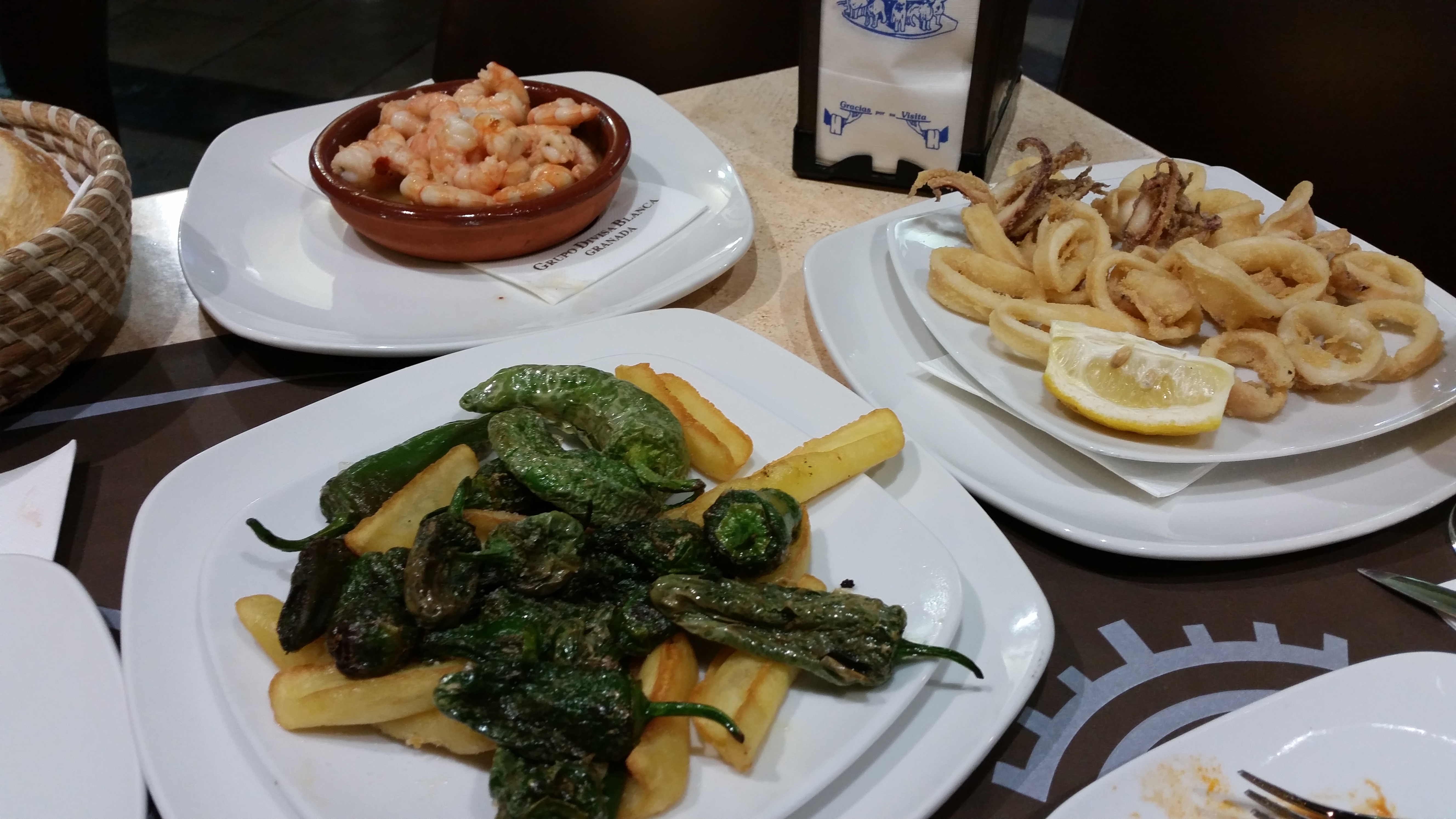
Navas Street, where the tapas live.Granada is the only city of the three in which we found pimientos del Padrón. I sang “La Marcha Real” when I saw them on the menu.Pimientos, Calamari Frito and Gambas Pil Bil in their natural environment. They played the role of “tapas” for the evening.
Even though Sevilla is much closer to what you might call “Tapas City,” Granada will still give you what you crave. We visited a street called Navas, right off of Plaza del Carmen. Word of mouth has it that Navas is the place to go for tapas.
Things are a bit different, here, than in Sevilla. In Granada, ordering tapas requires a seat at the bar. Anywhere else, and you’re ordering “Medias” or “Raciones.” That just means you’re ordering half-plates or full plates. Other than the sizes, medias, raciones and tapas are all exactly the same food. A half plate is roughly equivalent to tapas for two people, for example. Meals are less modular at a table, but they’re just as satisfying.
A perk offered by tapas bars in Granada is that ordering a beer comes with a free tapa (whether or not you’re sitting at the bar). So, that’s something.
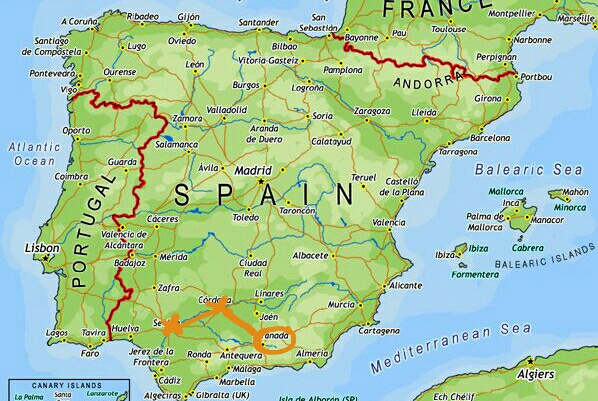
This completes the main circuit of our trip. Tomorrow, we take a bus to Malaga, and the following morning we fly back to Munich. Because of the short stay, I likely won’t be able to say much about Malaga beyond “there’s a beach there.” But who knows?
“When you visit…” is a blog series about things you’ll want to know before you visit a city. Advice comes from my experience in the city, and is more about “prepare yourself for…” than about “OMG SUCH PRETTY SO WOW.”
This one’s about Córdoba, Spain.
Córdoba is developed. Córdoba is traditional. Córdoba is peaceful.
Córdoba is our second of four stops during our trip through Spain. We’re only here for a day, but what it has to offer is obvious from the moment you enter the city.
#1: History of Transitory Leadership
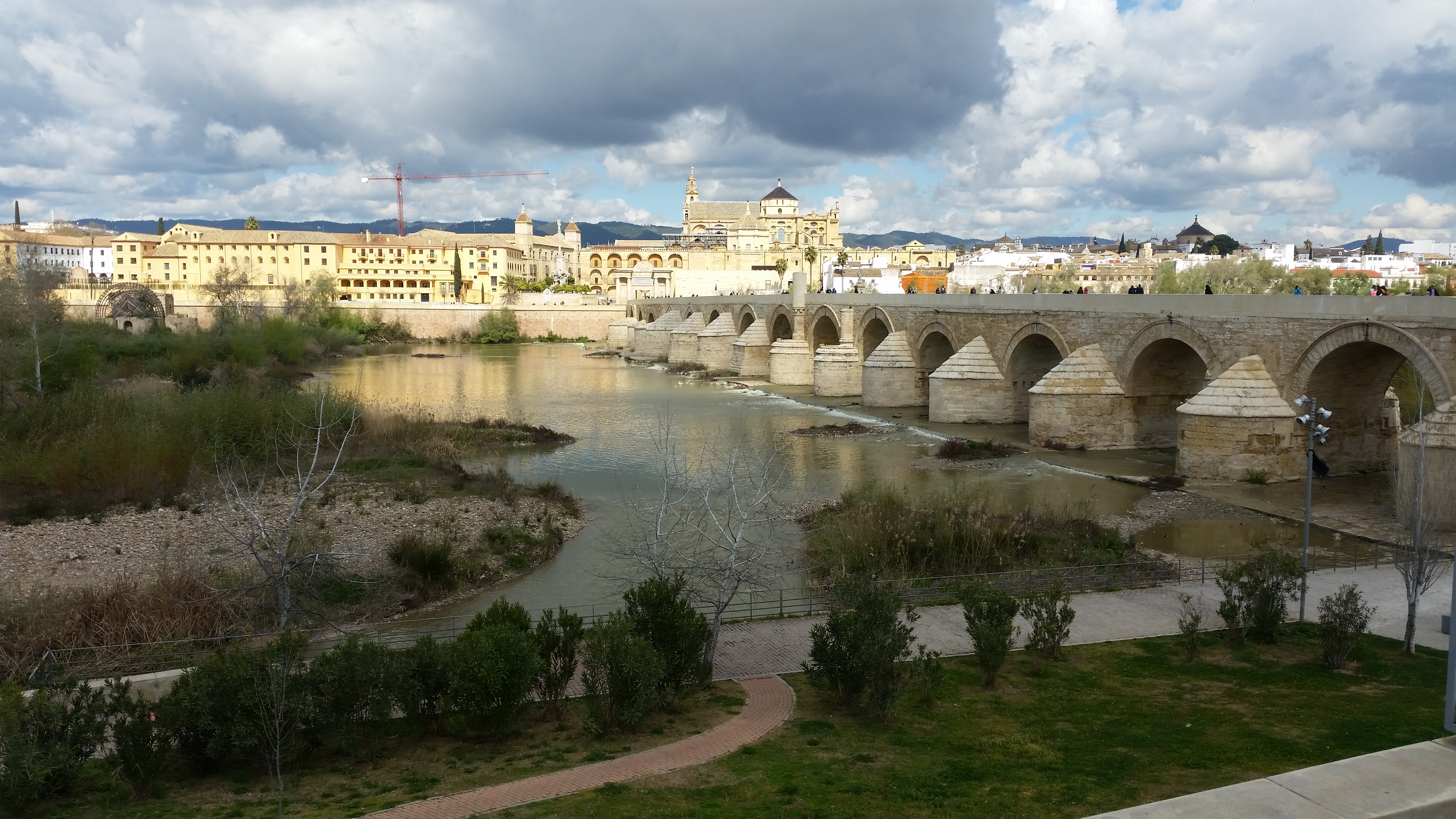
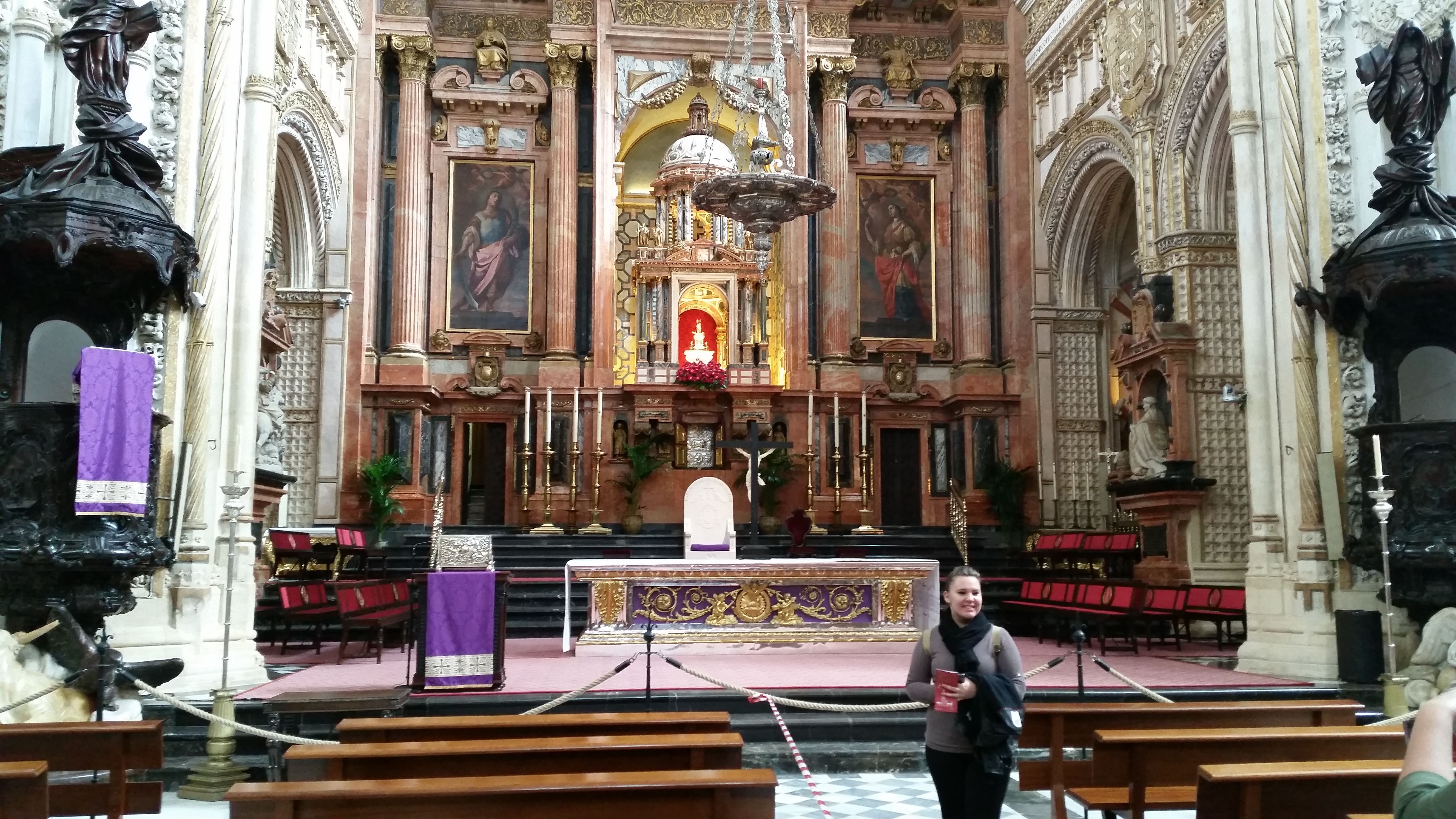
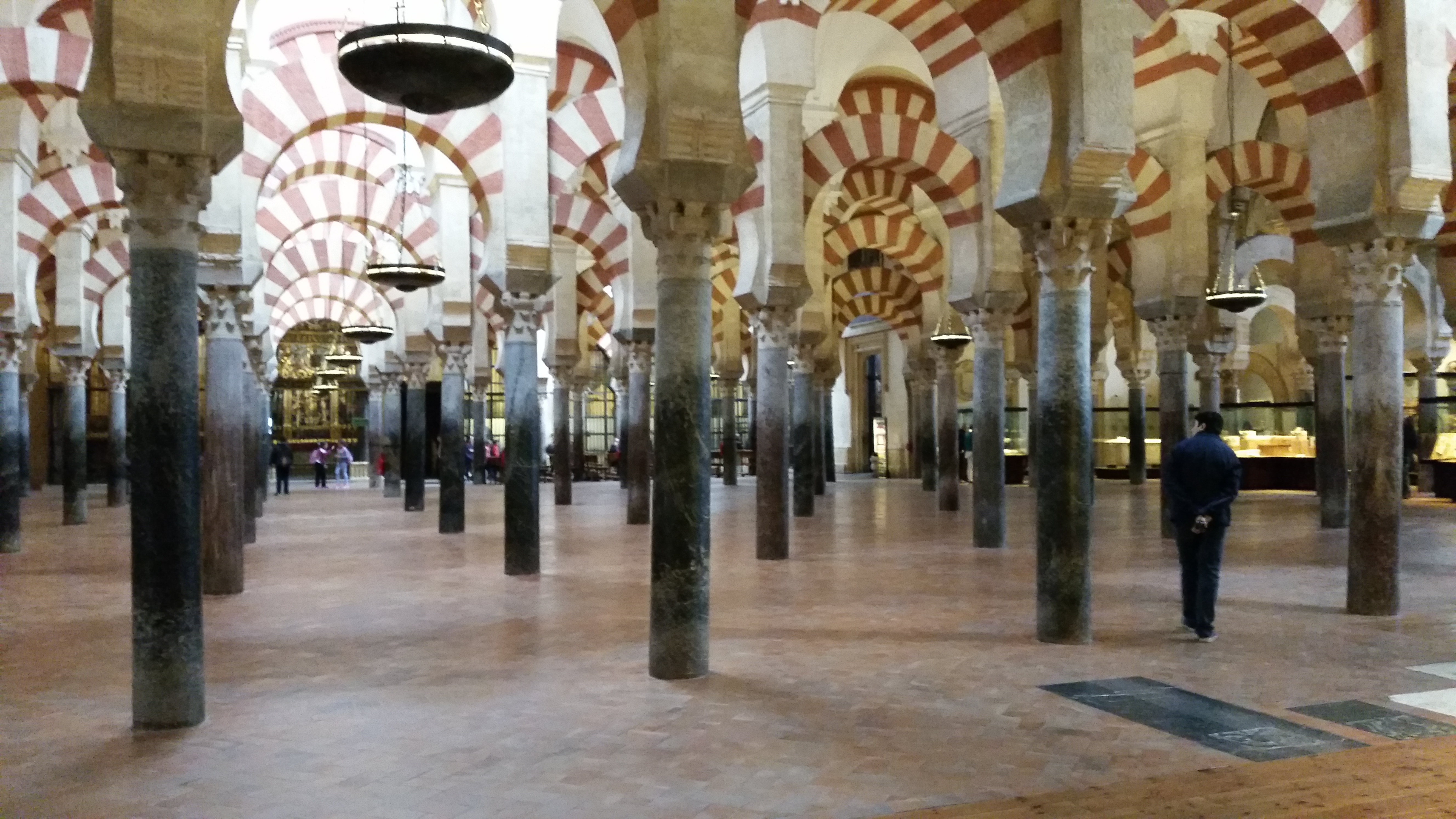
The Puente Romano a.k.a. Roman Bridge.The Cathedral of Cordoba–the part built after Ferdinand III reconquered it.The Catedral of Cordoba–presumably this part dates back to its mosque years.
There’s old Roman architecture, to be sure (this is Western Europe, after all), but the big deal here is the evidence of the half-ish-century dominion swapping between Christianity and Islam. Before 800 CE, it was a Christian city with the San Vicente Basilica at its center. Around 800, a Muslim army invaded the city, conquered it, and demolished San Vicente. They ruled the city until around 1200, when Spanish King Ferdinand III rode back in, reconquered it for Christianity, and subsequently had the mosque destroyed so he could build a cathedral where it stood.
Fascinating is that 3 days ago (13 March, 2016), Córdoba formally denied the Catholic Church’s assertion of claim over the Cathedral. Their stated reason is that consecrating a religious site (i.e. demolishing and “purifying” a mosque) does not confer ownership of the site to the one doing the consecrating.
That’s what I learned while visiting the Catedral de Córdoba, today. I’m no historian (likely painfully obvious if you are a historian).
#2: An Economy Built for Locals
Cordoba is a city for locals.
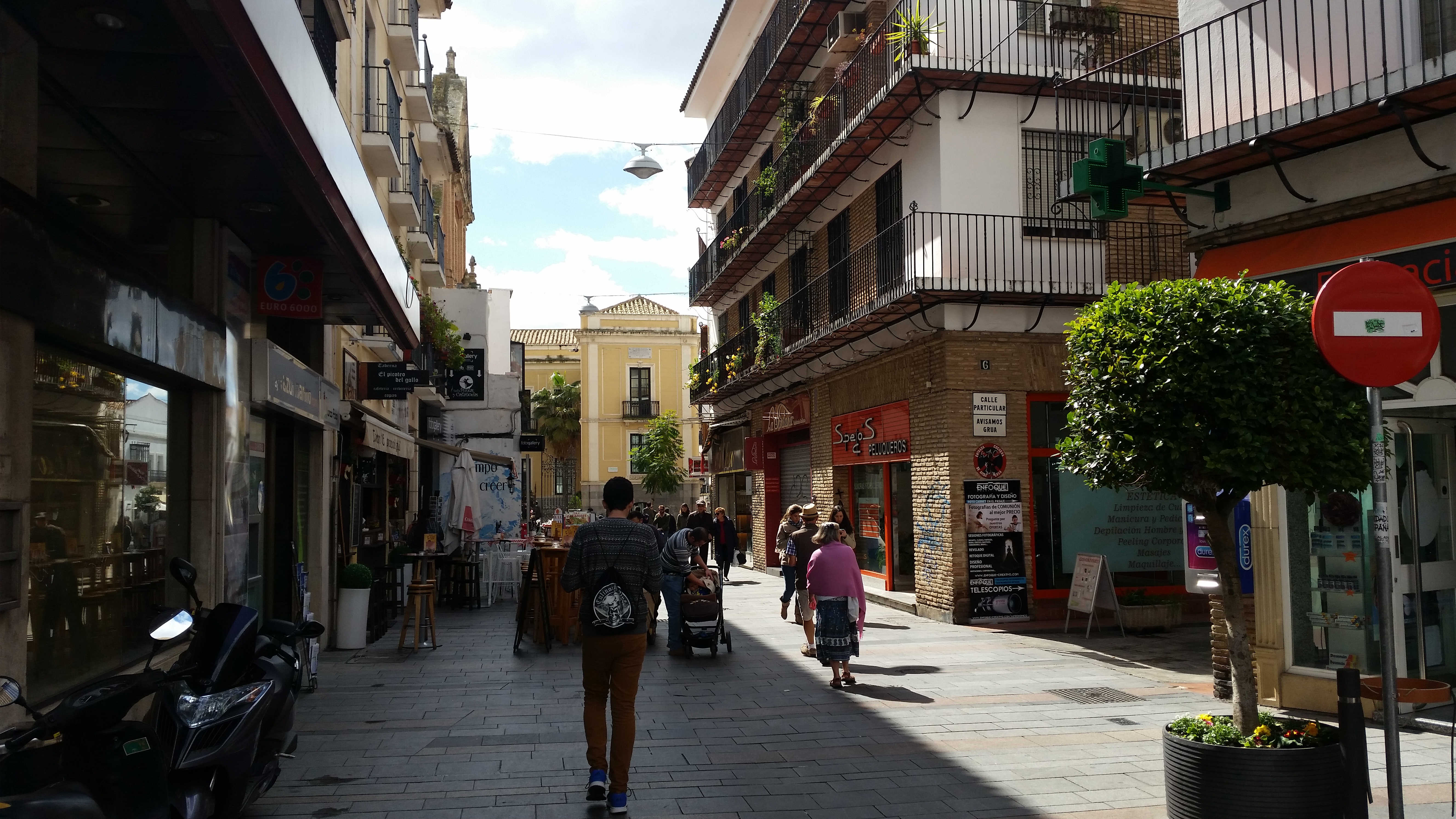
Córdoba reminds me of Dallas, Texas: city planning seems to reflect an intent to depend upon locals rather than tourists for economic sustanence. There’s one restaurant per street corner rather than 40. Many of the other businesses are more utilitarian rather than cultural embellishments (think schools and hardware stores rather than Flamenco
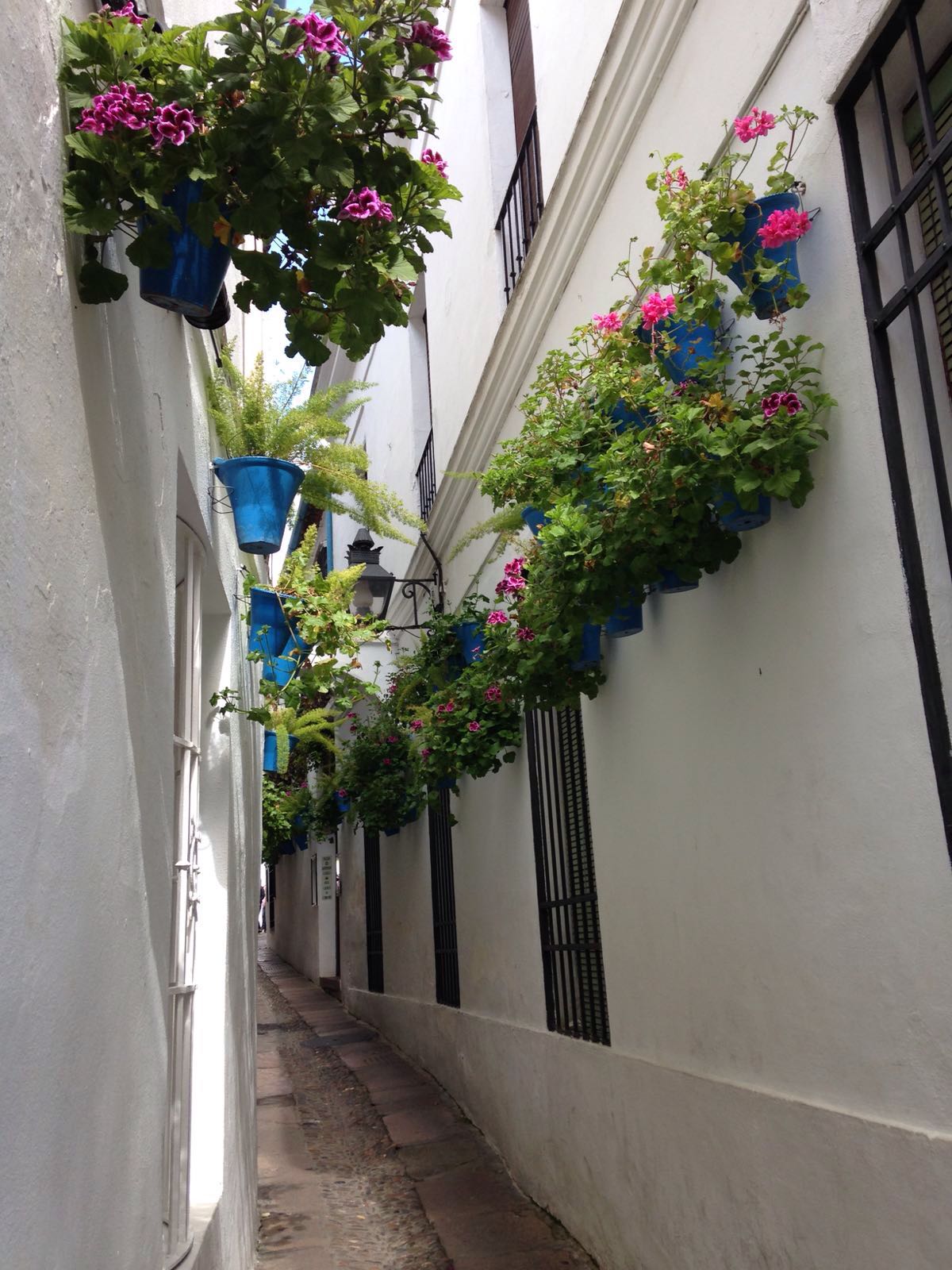
This photo was taken by the lovely Roxana. It’s La Calle de las Flores, in the middle of Old Town, Cordoba. Subsequent searches for La Calle de las Cervezas bore no fruit.
studios and artisan markets). We even noticed a bit of conspicuous living (can’t fall short of the Joneses): we saw a pattern of homes leaving the doors to a follier open, behind which were impressively maintained gardens.
The mosque-thedral (I’ll propose that name to city management if they want to hire me as a marketing consultant) is a tourist attraction, to be sure. But, other than that, I would recommend simply taking some walks to observe local lifestyles and compare the local food with other Spanish food you know.
Tomorrow, we move on to Granada. If the way my Spanish friends light up when they talk about it is any indication, then it’s the Austin/Portland of Spain. If Sevilla was chaotic beauty, and Córdoba is peaceful development, then what will Granada have in store?
“When you visit…” is a blog series about things you’ll want to know before you visit a city. Advice comes from my experience in the city, and is more about “prepare yourself for…” than about “OMG SUCH PRETTY SO WOW.”
This one’s about Sevilla, Spain.
Sevilla is crowds. Sevilla is chaos. Sevilla is beauty.
We’ve been here for three days, and tomorrow we leave for Córdoba. More on Córdoba, later. For now, here’s what you may want to know before you visit Sevilla, Spain.
#1: Walking is the Best Way to Get Around
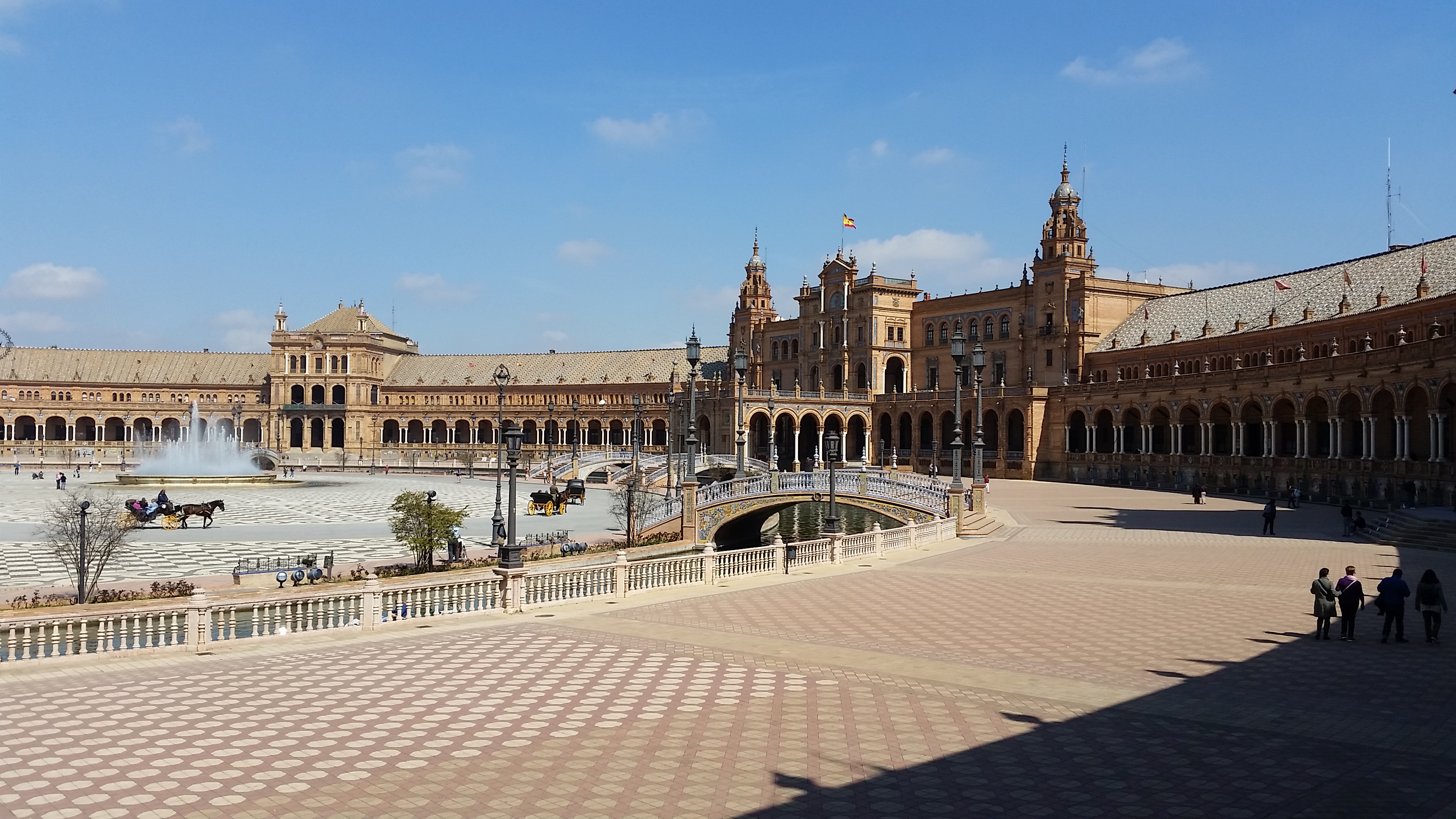
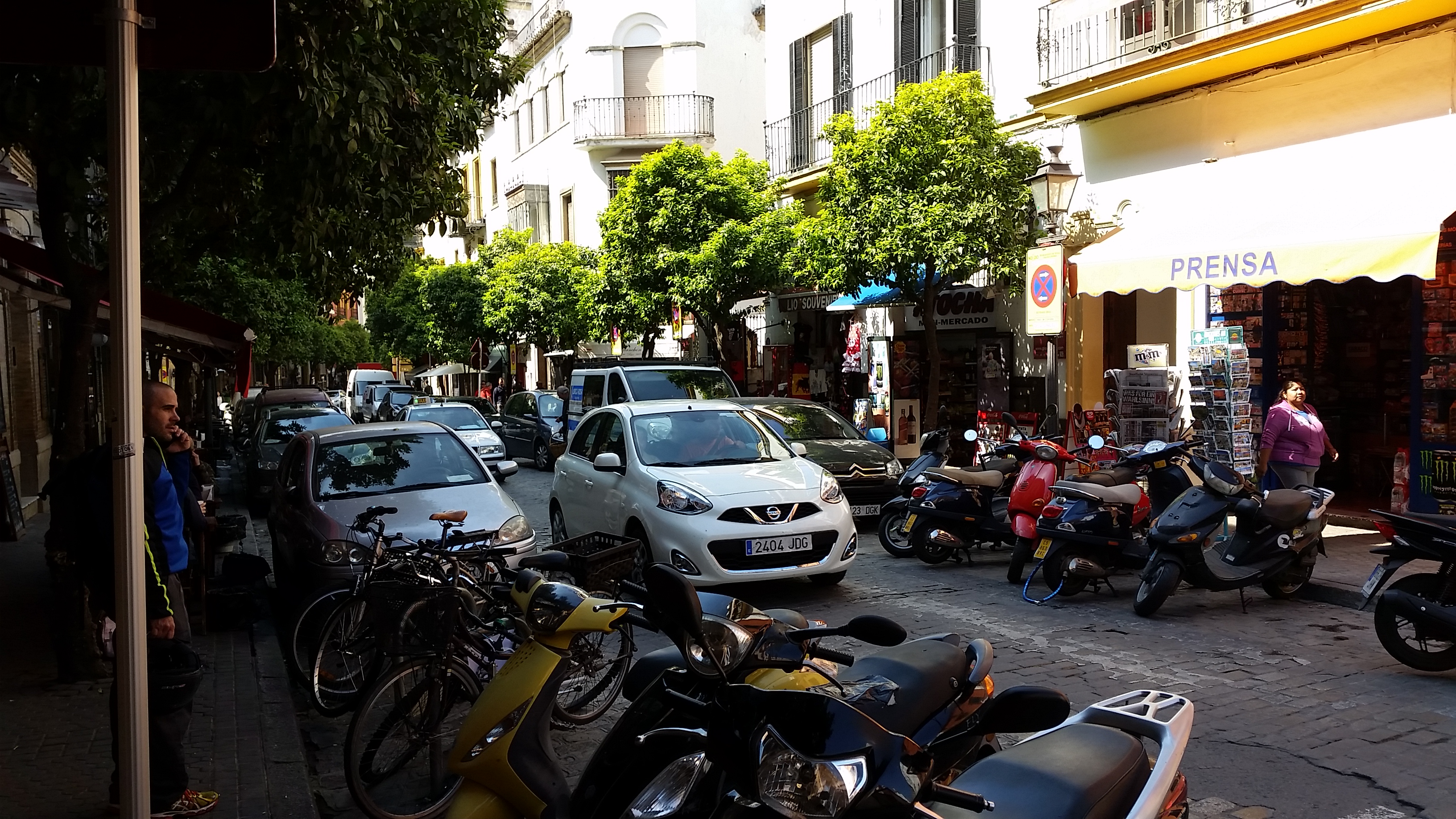
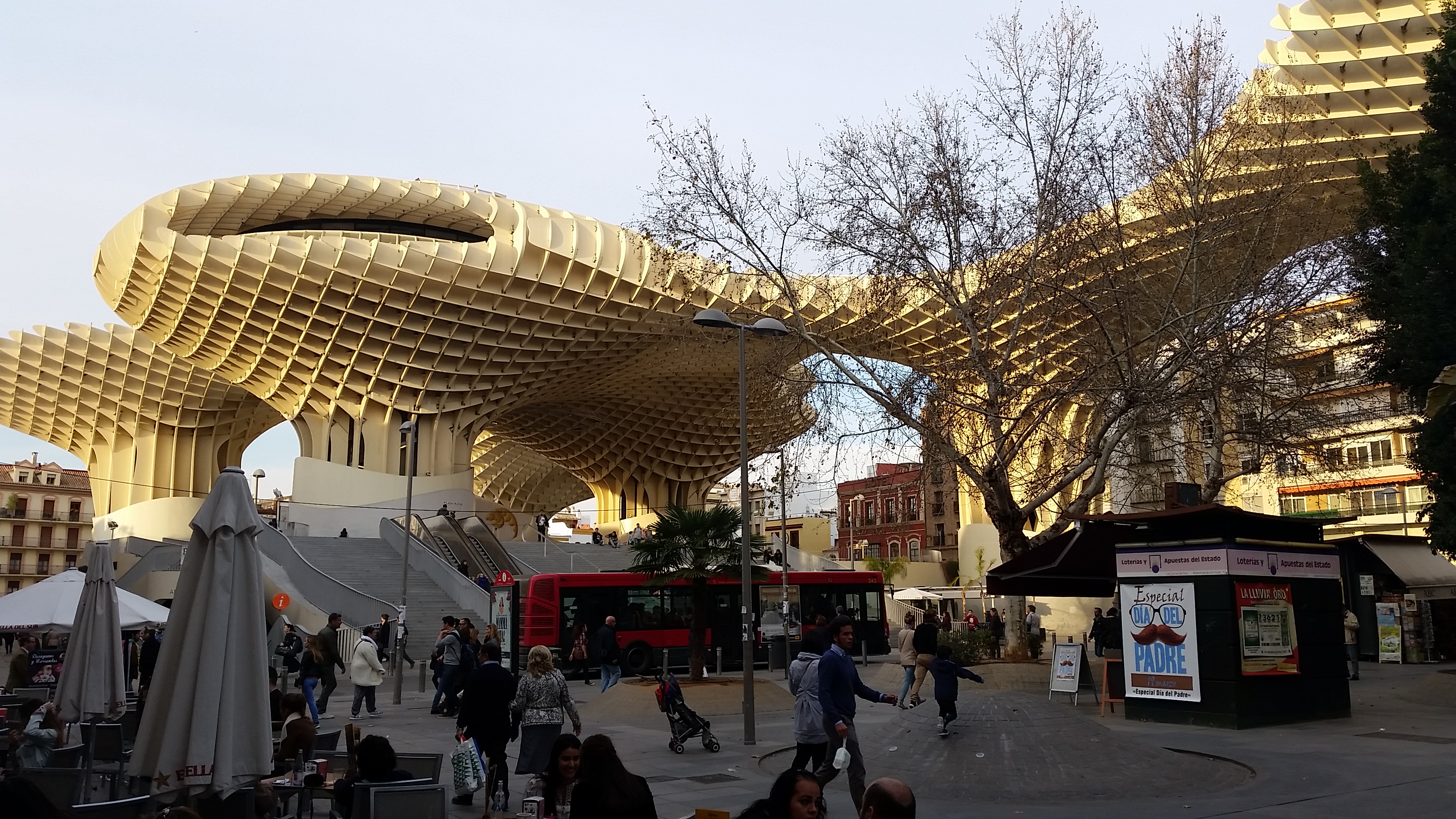
Here’s a thing you see if you walk around Sevilla.Here’s another thing you’ll see if you walk around Sevilla.And here is yet a third thing you will see if you walk around Sevilla.
We’re staying in the sort-of center of Sevilla at a hostel called Nomads. There are about a million other hotels and hostels in the area, so chances are, you’ll be staying somewhere close by. From here, getting all over the city is a breeze by foot, a waste of money by cab, and unthinkable by car.
Sevilla is a nest of small alleys and back roads that only exist for 1-3 blocks. What this means is that walking treats you to a tremendous amount of visual variety. One minute, you’re in a park, the next you’re walking down a spatious roadway dedicated to high-end shopping, and the third you’re squeezing down a side-street full of hipster-esque tapas bars. By cab, you’re missing out on all of that. In your own car, good luck trying to find parking while reading your map.
#2: It is Easy to Get Lost in Sevilla
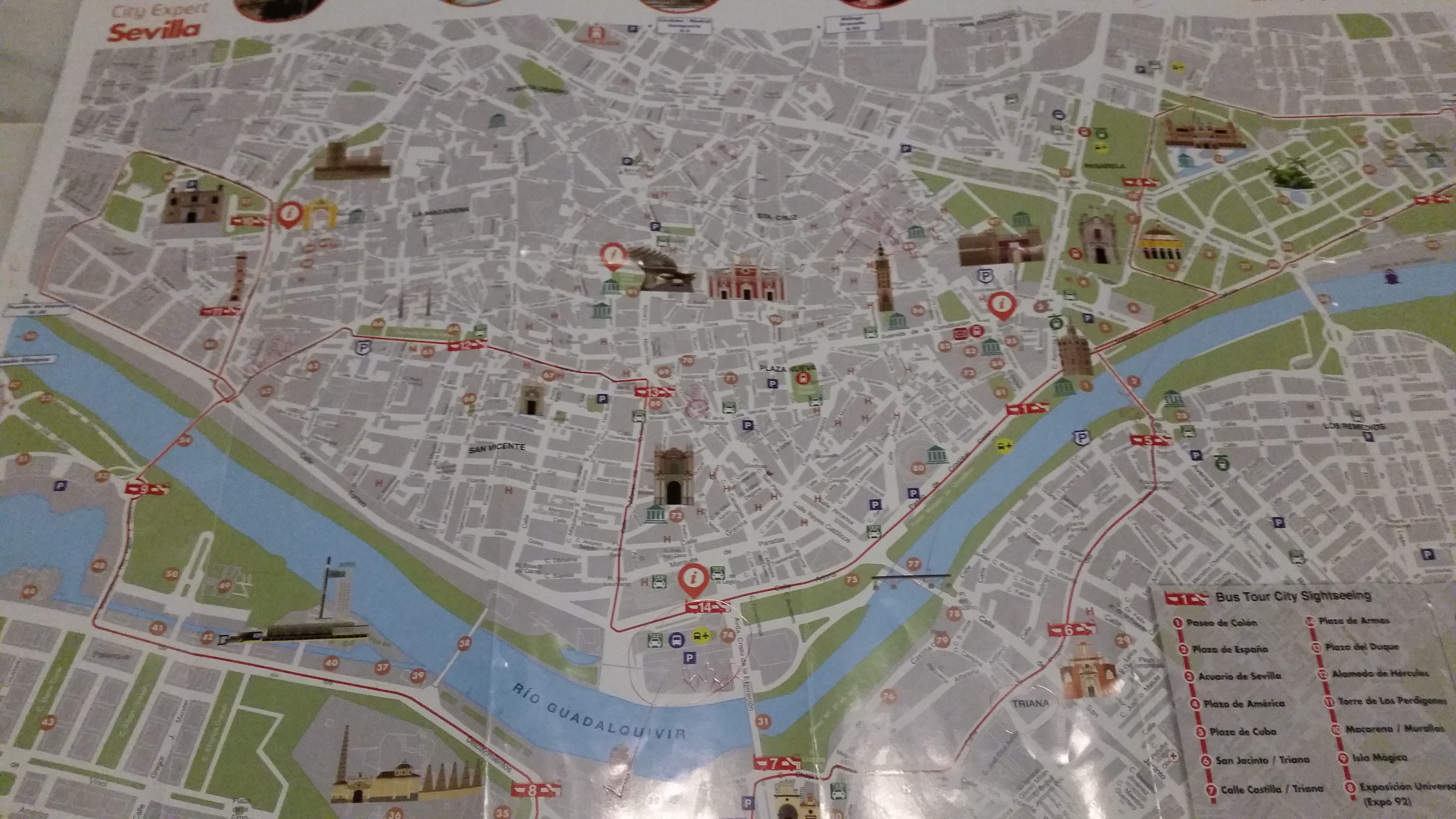
Meet Sevilla. I challenge you to find a grid in that.
“What’s a grid?” asked Sevilla’s city planner, probably.
The first day, here, we decided to wing it through a walk around the city. It’s been easy to do that everywhere else we’ve been. However, as I mentioned in this post’s first point, Sevilla is a nest of side-streets and alleys. When someone tells you to “go North,” what they really mean is “go East for a block, then go South for a block, then go back East for a block, then go North for no longer than 2 blocks, then go West for a block…” You get the picture. There’s no straight shot to anywhere in Sevilla. And when you look at a map, there’s just a big pair of shrugging shoulders looking back at you.
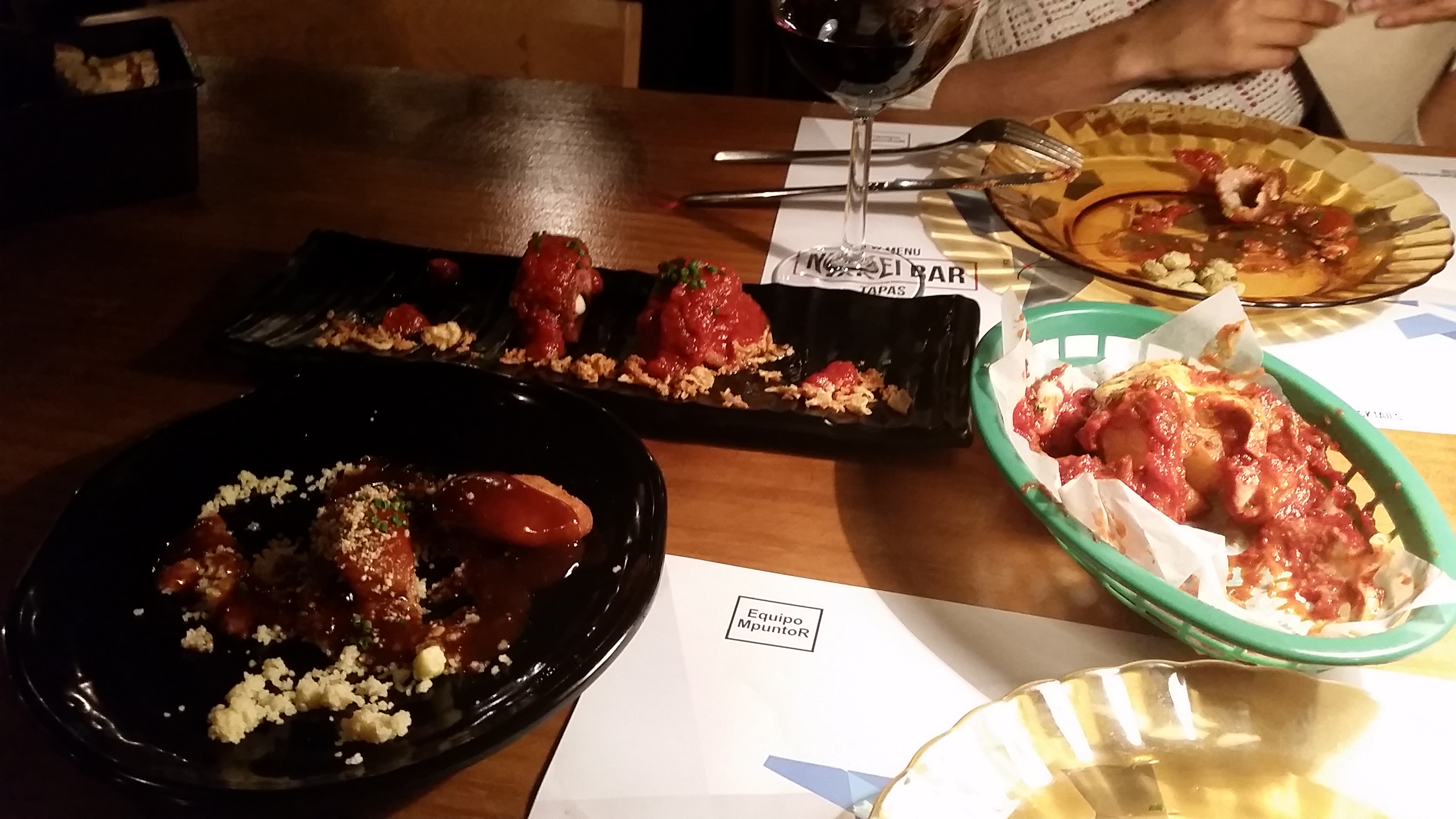
So, we got lost on the first day. Probably 3 times. The good thing though, is that Sevilla is an amazing city in which to get lost. One of those times, for example, we went looking for a trendy street full of tapas bars called Mateos Gago (just South of the center). We ended up at Puente de la Barqueta (far North of the center) and stumbled upon a really good bar that serves Spanish-Japanese fusion tapas. Losing was truly winning, that evening.
#3: Eating Many Small Meals is the Way to Go
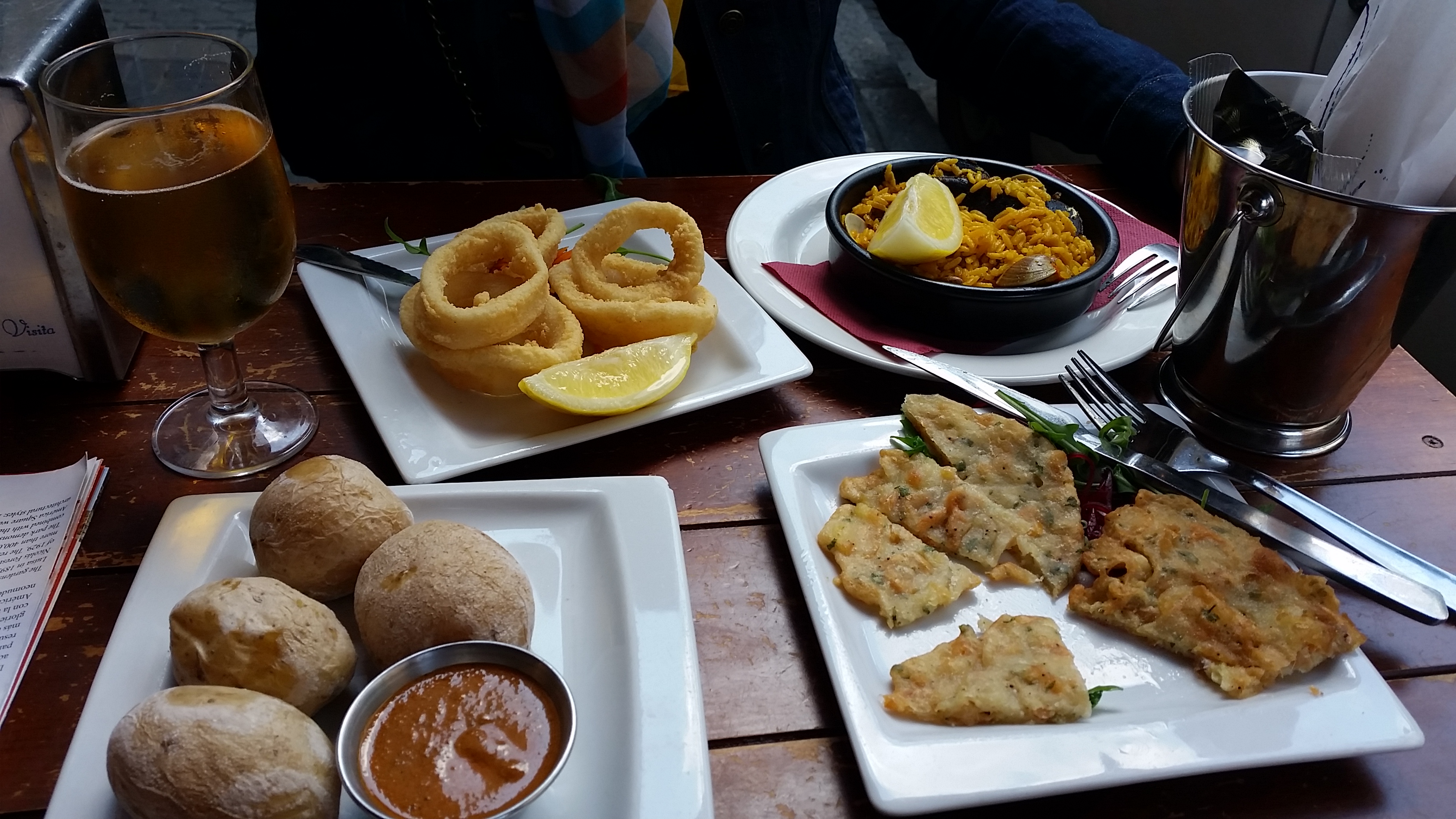
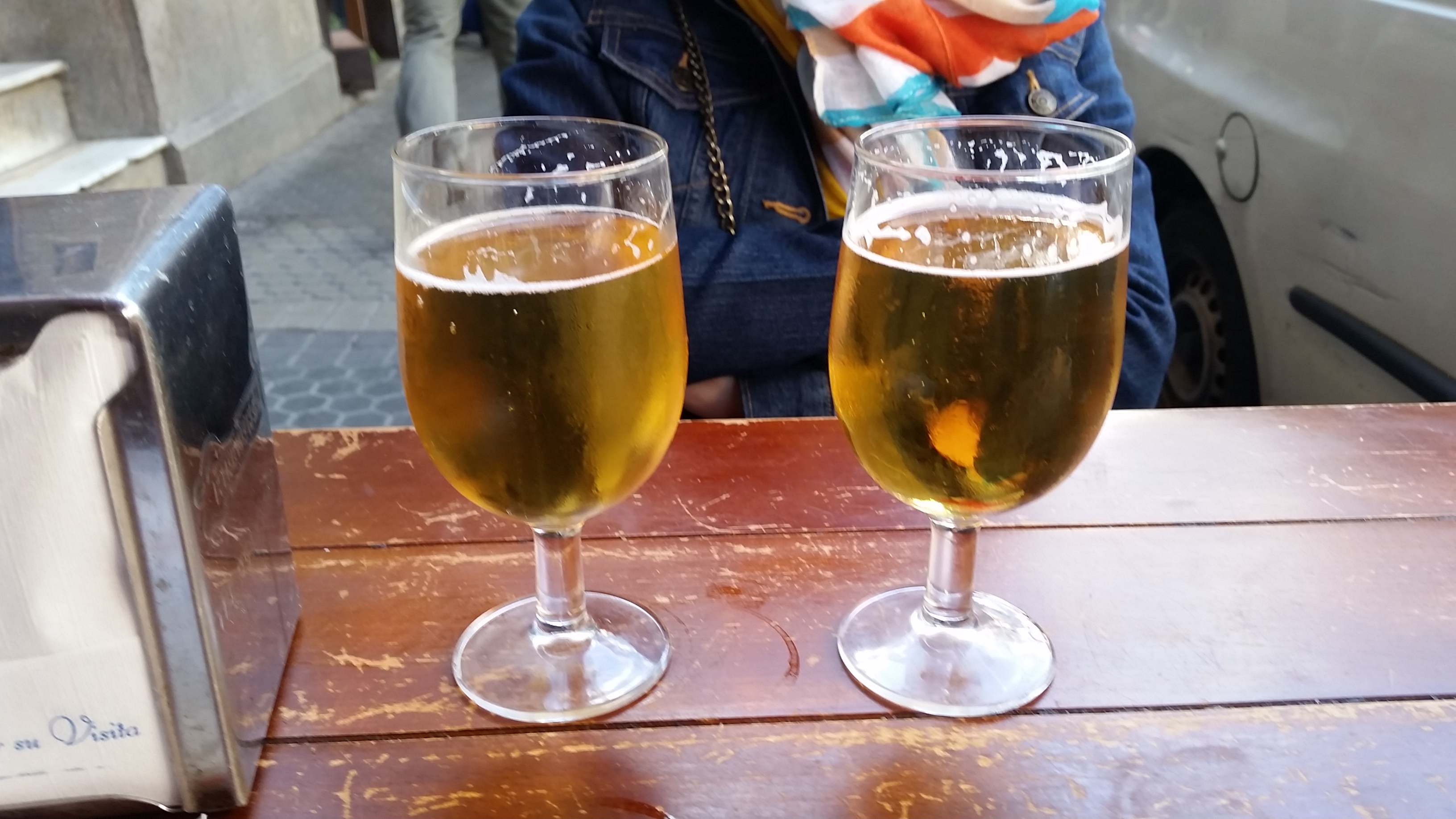
Calamari, Shrimp Tortillas, Paella, and Potatoes with a Texas-Chili-like sauce.Japanese Fusion TapasThese are beers.
Typically, everyone’s out for breakfast at 10-11am. Breakfast philosophy is “put some stuff on that bread.” Two to three hours later, everyone’s eating lunch. Then, dinner starts after 8:30pm. So, the day starts with a tiny breakfast to get you going. Seemingly right afterward, you’re eating lunch (if you’re as obsessed as we were, then you’re looking for more tapas places). At dinner, you’ll probably eat more tapas, but that’s 8-10 hours away. In between, you’re noticing that food is always happening in Sevilla.
Notably, every street is restaurant street. Churros, tapas, sushi, tacos (yes, there’s some Japanese and some Mexican, here), gelato, milk shakes, on and on. If you ever feel a pang of hunger, finding something to quell it is only a matter of keeping your eyes open and walking one or two steps in any direction.
Also noteworthy is that tapas are easily the most common style of service, here. This means that you order multiple small plates of food and share them with your travel buddies. Some friends of mine would call them Spanish dim sum. I would call them Spanish bar food. This makes every meal pretty modular. Only a little hungry? Order one tapa’s worth per person. Really hungry? Order three or four per person.
At the end of a day, you’ll have stopped maybe 5 times for relatively small portions each time, and the variety you’ve experienced in the process will thrill you.
*: Flamenco is Here
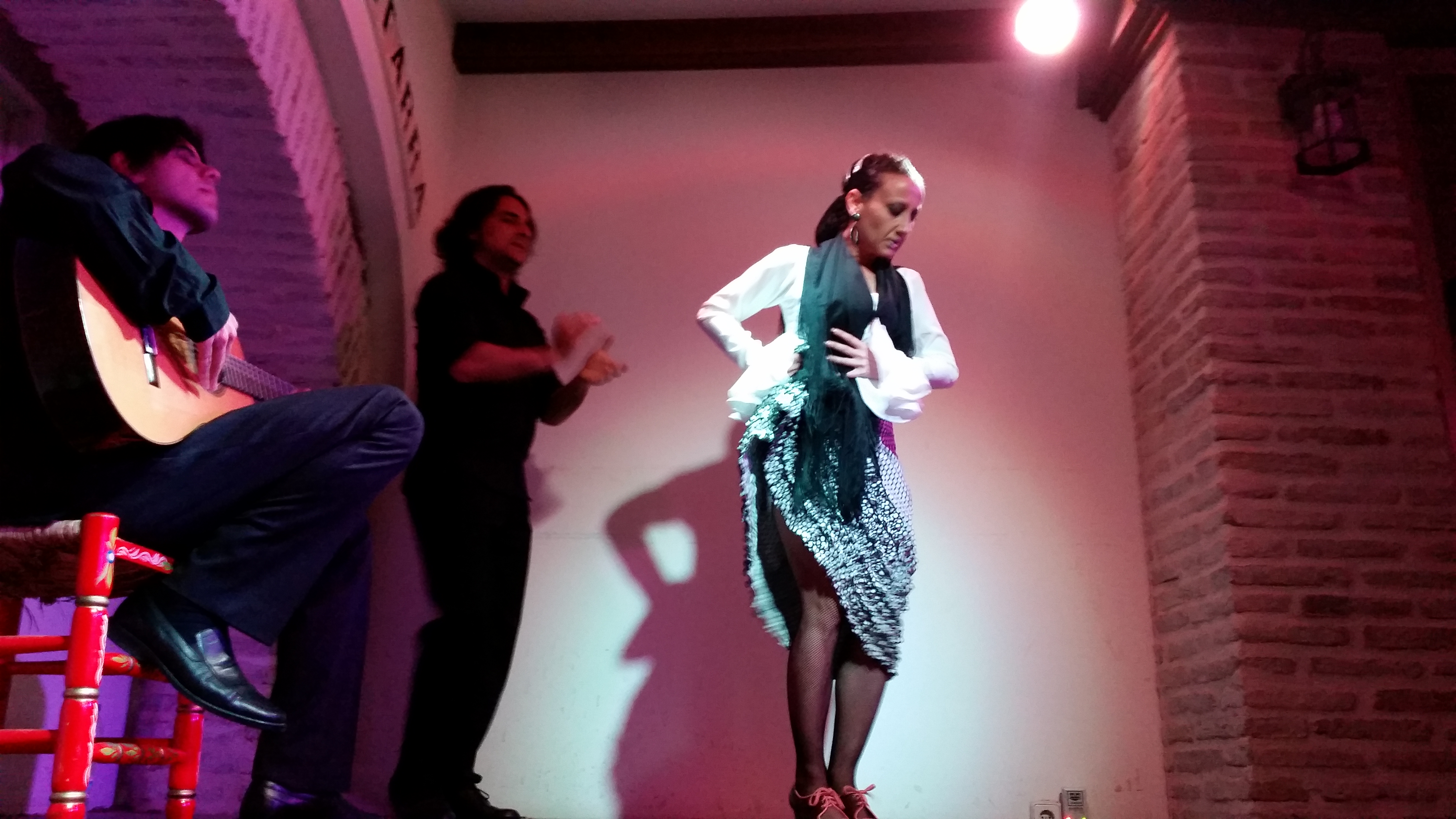
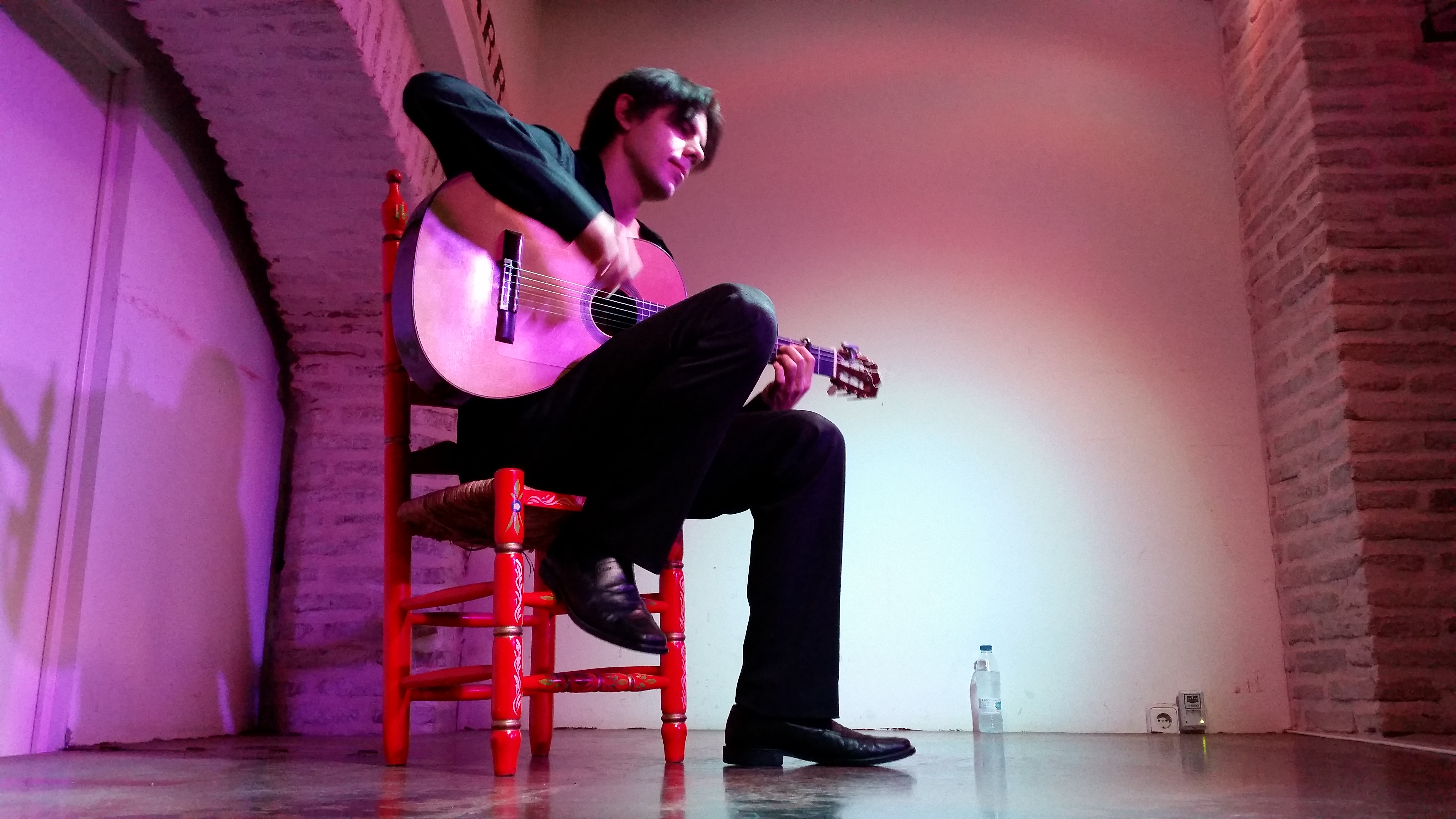
The guy in the back is the vocalist/percussionist. The woman is the dancer. And the guy on the left is obviously making flapjacks.A solo by the flapjack-ist.
You’ll notice one million Flamenco theaters (+/- 10%) during your stay in Sevilla. Trip Advisor might help. Or, you could just pick one and buy tickets. We went to a place called La Casa de la Guitarra.
I knew precious little about Flamenco going into the show (and I still know precious little). But, I do know now that over 40 styles comprise Flamenco, and what we heard is what our host called the “pure” style (although I’ll bet all the Flamenco show hosts say that). And, the exposure definitely highlights some cool patterns in the music. For one, vocals carry an absolute hell-ton of melisma. They also play with a particular set of intervals that are unfamiliar to ears accustomed to western music, but familiar to those that have ever been around a mosque. For those reasons, it sounds very Arabic, to me.
Another pattern is that all three parts–guitar, vocals/percussion, and dancing–are mostly fluid, but regularly shift into really aggressive bursts of volume, speed and syncopation. To me, that communicated sadness, frustration, and underdog-style defiance. I’ll be doing more research into the style, because now I’m really curious about its origin.
Anyway, you should see a Flamenco show, while you’re in Sevilla.
Tomorrow, we move on to Córdoba. There’s a famous mosque, there, but that’s about all I know at this point. Will it be entirely unique? Or, will it offer a hint that the crowds, chaos and beauty of Sevilla comprise a more universal Spanish experience?
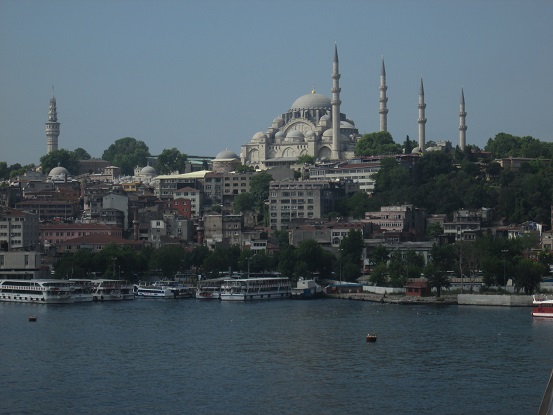
Walking across a bridge from our hotel to the historical district, we see the Suleymaniye mosque.
Roxana and I have wanted to visit Turkey for a long time. We couldn’t find any talking ones, though, so we settled on visiting the country for a weekend instead.
Ha.
Anyway, we visited Istanbul, and it’s a very, very cool city. On a scale from Michael Scott to uncle Jesse, Istanbul ranks a solid Vincent Chase.
Show me a city that ranks “Uncle Jesse,” and I’ll tell Elon Musk that he lost the race to Mars.
I expected it to be pretty close to completely normal, since I’ve been told that Istanbul is absolutely crawling with tourists all of the time. Surprisingly, though, it was a much weirder time than I expected. Weird, of course, is a good thing.
Anyway, since it was our first time there, and we were there only for a weekend, what I offer here is a description of the way Istanbul feels as a tourist. Specifically, I’m going to tell you that there are a ton of people in Istanbul, and that there are some cool things to do there. In that order.
The Friend Factor
You’re friendly, right? Eh, we all are. Put one of us in a room full of people–the more people in the room, the more friends we’ll have at the end of the night. Shrink that room and we’ll just make those friends all the faster. Life is super duper.
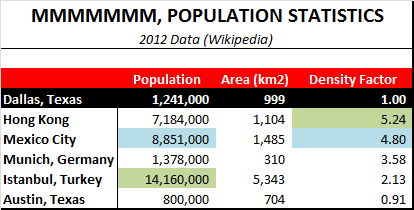
What if someone were to put us in an Istanbul full of 14 million people? That’s the kind of question we here at the Bittesuite like to answer with our patented Friend Facto-
Okay, you got me. The friend factor just compares population density from city to city. Population statistics go down easier with a bit of rich cheese poured over the top, don’t you think?
Below is a list of density factors, prepared much like what I displayed in my post about Mexico City. They just relate the crowd in each city to the normal crowd in Dallas, Texas. On the weekend. Not during a weekday, when 20 cities outside of Dallas feed it a workforce.
Never been to Dallas, so this is stupid? Not for long! Imagine a weekend in Dallas. You wake up on Saturday to the sound of either birds or nothing outside your window. During the day, you’ll drive to the store and stop only for red lights and stop signs. Maybe you’ll take a walk around the uptown area–plenty of people will also be walking around, but very few people will be in your way. For dinner you go to a casual uptown restaurant without reservations, and you’re probably able to eat there. All of this is possible in spite of the worst local mass transit system on the planet.
You suck. (Source: dallassouthnews.com)
Then, you take a trip to Istanbul, and the number of people per square kilometer is more than twice what it was in Dallas. Yowzah. That’s what this table says.
Seriously, Munich?????
We spent the entire Saturday walking around the entire Istanbul, and I can now say with authority that there are a ton of people in that city. Crossing a street means waiting for someone confident-looking to pick an appropriately sized gap in traffic so they can drag you to safety with their coattails. Speaking of traffic, I think the average car in Istanbul at any given point in time is moving at 10 miles per hour. If you’re a woman, finding a seat on a train is possible. If you’re a man, prepare to stand like it’s your pastime (giving up your seat to women and the elderly might be the most easily recognizable cultural norm in the city). Finding a place to eat, however, is remarkably easy, but that’s probably due to what I estimate to be a 2:1 restaurant-to-person ratio. Normal streets are packed full of people. However, walking down them is totally fine, because Istanbul is awesome: people move like they’re actually going somewhere. Very little aimless meandering in Istanbul, is what I’m trying to say.
There are Some Cool Things to do in Istanbul
Now, about that walking I mentioned. In one day, we hit the Sultan Ahmet (“Blue Mosque”), the Yeni (“New Mosque”), the Basilica Cistern, Topkapi Palace, Galata Tower, Taksim Square, Istiklal Street, the Grand Bazaar, and the Spice Bazaar. Because we did so much in one day, we didn’t have much time to dwell on the historical significance of each landmark. However, we did learn a little (I’m not going to fill in the gaps with Google research, so you can know what kind of depth one might sacrifice during such a broad visit):
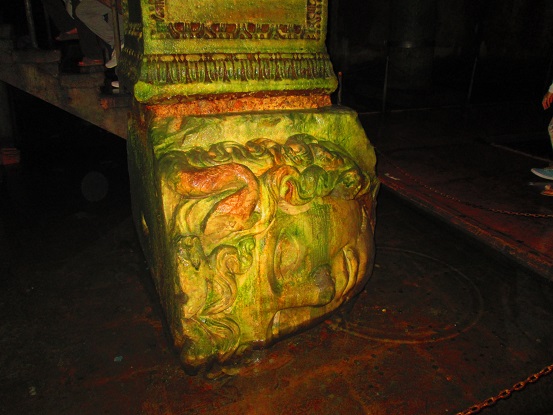
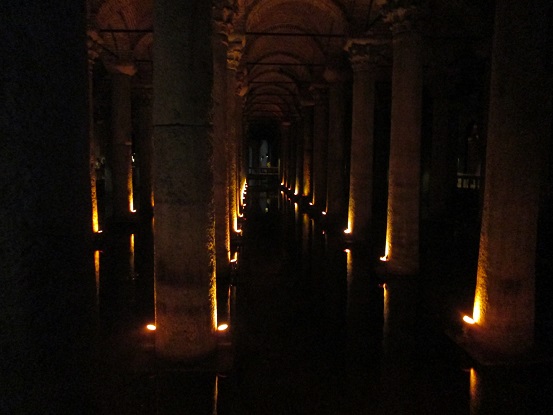
1) The Basilica Cistern is a relic of Roman occupation. It stored water for the city, like a normal cistern, except there are two weird Medusa heads carved into two pillars near the back of it. Mysterious.
Why are you here, Medusa head?
I swear there’s a secret passage to the Ark of the Covenant in there, somewhere.
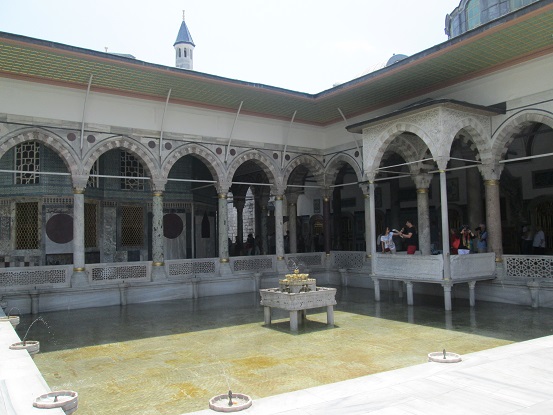
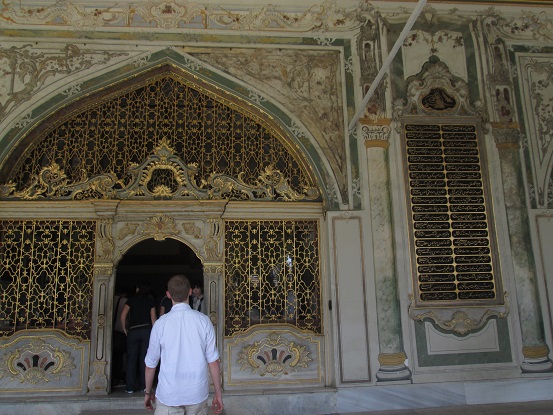
2) The Topkapi Palace was owned by a person during an era of some sort. Now, it’s a museum to that person’s lifestyle and that era’s materialism and mentality for war. We learned, for instance, that curved swords were easier to wield quickly than straight swords, and the Ottoman armies preferred quick slashes to blunt slicing and thrusting. We also viewed rooms full of golden- and jeweled things. They also let you walk around in the palace’s harem–the building where the owner kept his wives and concubines. And finally, we walked out to a flower garden overlooking the city, but I had to turn around and leave immediately; standing in that garden rendered me completely blind. It might be because the floor and walls were white rock, or maybe the garden is a holy refuge and I’m a demon. I did hiss and moan a bit of Latin heresy when the bright light flooded my vision.
Topkapi Palace
The Palace beckons.
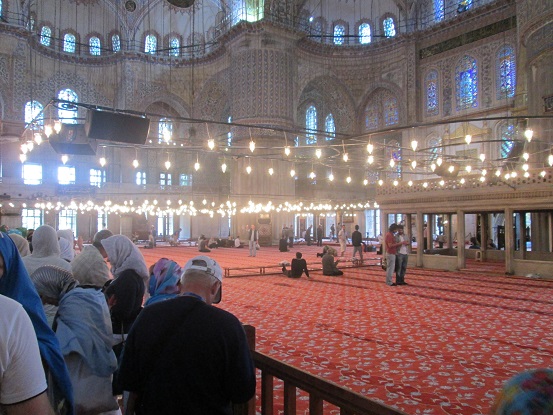
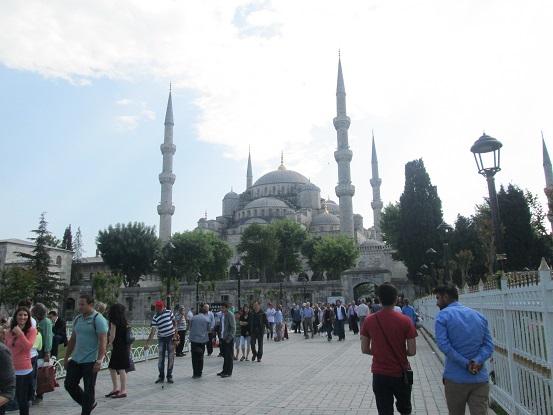
3) Sultan Ahmet (Blue Mosque) is the big daddy mosque that plays host to all of us tourists. It’s the one you can enter as an ignorant boob without getting into trouble, because they’ve prepared for your ignorant boobness. For instance, you have to wear long pants and a sleeved shirt as a man. Of course I wore shorts. It’s okay, though, because they offer you a long blue skirt of sorts that you wrap around yourself over your shorts in place of long pants. Women also need to cover their arms and legs, but in addition they need to cover their heads. The mosque’s hosts provide head coverings. Once inside, we were able to look around. Muslim men pray in the front of the mosque. We tourists walked around behind the men. Muslim women prayed behind us.
Inside Sultan Ahmet (“Blue Mosque”)
Not quite as blue as the name implies.
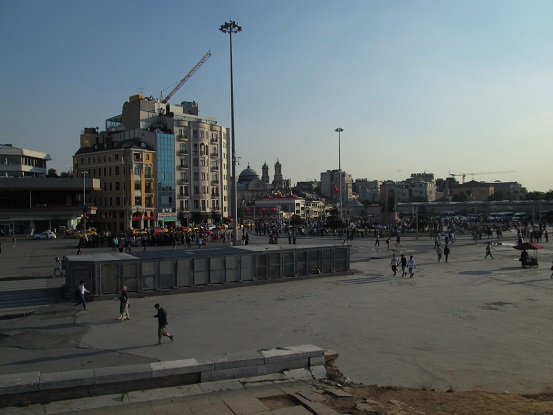
4) Taksim Square is an open area at one end of Istiklal Street. It’s where last year’s and this year’s famous demonstrations occurred. It’s a pretty plaza.
Taksim Square. This year’s demonstration would take place just a few days after this.
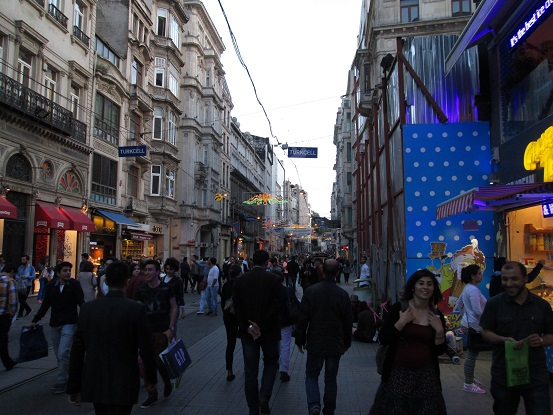
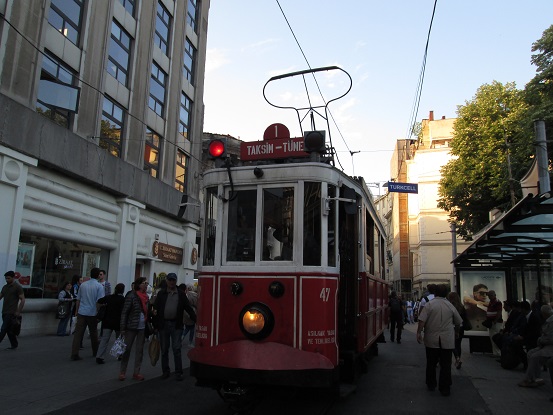
5) Istiklal Street is where you find tons of conventional shopping and dining. The city is incredibly light on alcohol, but Istiklal offers restaurants that serve it. Otherwise, the western European influence is extremely evident: it looks just like a commercial street you would find in Amsterdam, or like Kaufingerstraße in Munich.
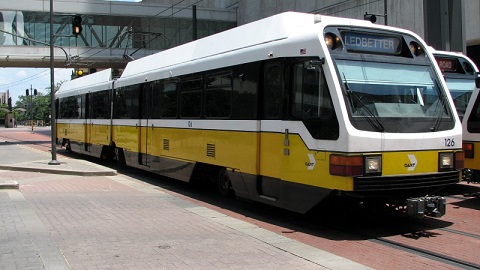
Serious Theory: That tram’s job is pushing people out of the way.
Istiklal Street
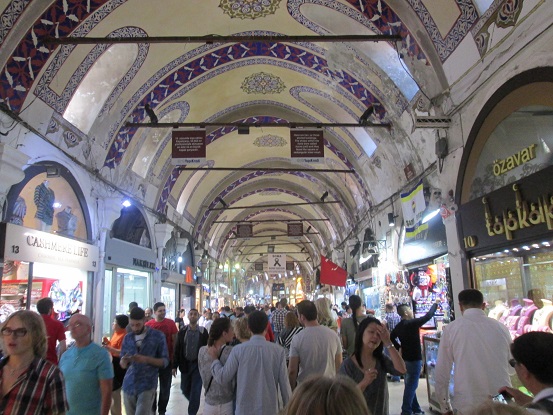
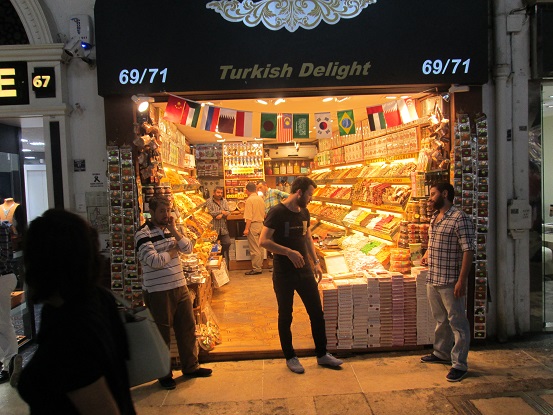
6) The Grand Bazaar and the Spice Bazaar were major trade hubs a long time ago, I think. I think I remember learning when I was younger that western Europeans many many years ago would travel through Istanbul on their way eastward. They would stop and marvel at the foreign spices and wares sold at these markets, and then maybe go home to tell their bros how awesome it was. I’m trying my hardest not to Google this right now. My point is that we were able to learn very, very little about the history of these Bazaars while we were there, although the city might offer that information through some channel that we didn’t find. Today, you move through its giant hallways past throngs of shoppers, perfume stores, clothing stores, and shops that sell special candies generally called “Turkish Delight.”
This is the Grand Bazaar (Not Pictured: Spice Bazaar)