
I just finished the third of my master program’s four semesters. Even more specifically, I just finished the final exams of my third of four semesters. More excitingly, I only have three more courses and a thesis to write before I graduate from the program. Ecstatic, I tell you.
Anyway.
At this point, a whole lot of education has happened to me, and I’ve been thinking about what’s made certain classes particularly useful. In a word, it’s challenge. But that word is incredibly lame and vague.
More precisely, what makes an amazing class amazing is a combo of two things:
- According to the instructor, their role is making students better at things and making students understand things. Their role is not making students know things.
- Courses are fora in which we practice skills and ponder ideas. This means we take some responsibility for the getting better at things and the understanding things.
An example from each of my universities has run through my head repeatedly over the past few weeks, so I’m putting them on the Internet so that they live forever. To posterity!
The University of Texas at Austin

In my undergraduate advertising program, the purest example of this optimal teacher/course combination was Digital Media as taught by Gene Kincaid. In addition to being our lecturer, he also ran his own web consultancy in Austin (my TUM example shares this trait, so I think there’s really something to it). At the beginning of each week, we would find articles in the class’s cloud–new media profiles, buzzword salads written by industry bloggers, ad tech developments, ad standards developments, legal developments, on and on.
Each class was a discussion of the articles initiated by Mr. Kincaid and then dominated by the students. He would ask the class for an opinion on an issue (are reach and frequency still valid ad metrics?). We would vomit our gut reactions at him. He would ask why. We’d break to listen to the cricket symphony while our gears spun into action.
Classes were headaches, and Mr. Kincaid was an intellectual task master. One of my favorite memories was a class day, at the beginning of which he wanted to start a discussion on augmented reality’s use cases (this was 2007-08). Nobody had an answer. He asked “who here read through the suggested articles before class?” Nobody raised their hand. “Okay, everyone out. Class is over.” Nothing feels more like failure than feeling directly responsible for a missed learning opportunity.
Technische Universität München

The ideal combo in my master program, so far, is definitely Behavioral Pricing as taught by Dr. Florian Bauer. Like Mr. Kincaid, he also runs his own consultancy, but in the Munich area. I really think this has something to do with the effectiveness of his teaching style.
Anyway, Dr. Bauer’s course was a seminar that took place all day on four days during the semester. On the first day, he told us to pair up and draw numbers from a box. The number told us which topic in behavioral pricing we would be teaching the class two months later. Half of the class were assigned topics in behavioral pricing theory (behavioral economics, cognitive bias…), while the other half were assigned pricing research tools (Van Westendorp PSM, BPTO, pricing experiments…).
He then gave us goals. Of course, one was understanding our topic (my partner and I had Gabor-Granger and the Van Westendorp PSM). What was our tool designed to accomplish? How does it work? How well does it do what it says it can do? Could it do anything else?
We on the tools side also had to link our tools to the other tools and the theories discussed by the other half of the class. Finally, we had to consider the tool from the “behavioral pricing” perspective, which meant understanding how the research tool itself might bias its own results.
That’s a lot of critical thinking.
The following three days of class (two months after the first) were days full of student-led lectures interspersed with Dr. Bauer’s commentary, corrections and anecdotes from his work as a pricing consultant. When other students presented, we were reminded of our own research that linked our topic to theirs. When we presented, we knew when to call out prior presentations and foreshadow future presentations. In between presentations, we had Dr. Bauer there to elaborate and make our presentations more real by relating his own experiences. If repeated exposure guarantees learning, then this is one of the most risk-free courses I’ve ever taken.
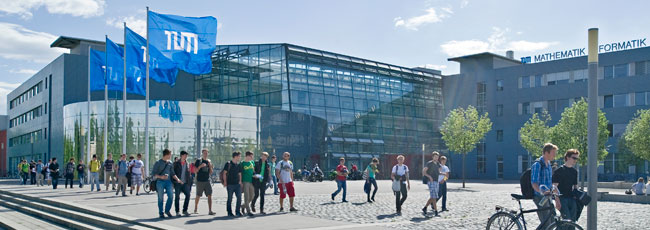 About a year ago, I arrived in Munich, noticed a really interesting-looking Master’s program at a local university, applied for the program (incidentally, the only program whose deadline hadn’t yet passed),
  What I was looking for was a program that develops skill applicable to a broad set of disciplines (analysis, synthesis, human behavioral research, logical argument, engaging speaking…) at a much deeper, more intense level than my undergraduate programs did. I was looking for philosophical challenge, intellectual challenge and a chance to rethink and develop my values. I was looking for marketing leadership in 5 years, entrepreneurial leadership in 15, and the intellectual versatility to make deciding where I apply myself an option.
 3) The EU Public Policy context of the program is the source of the philosophical challenge and value development I’m after. As I wrote my entrance essay, one conclusion I reached about the EU is that the EU Commission seem to be of minds that favor experimentation in social change. They pass directives (strong legal suggestions to member nations) and regulations (legal mandates to member nations) rather frequently in the realm of consumer affairs. These measures and their relatively frequent revisions represent pondering that I really admire: What does it mean to enjoy free speech? How free should speech be? How responsible are consumers for their own well-being? Should companies be able to push social agendas with their marketing? Should companies have to push social agendas with their marketing? The EU Commission is overseeing the cultural, political and economic merging of a large and extremely diverse region of the world. This puts it in a position to (read: forces it to?) question many of the values longer-established world regions take for granted. Tasty ideological challenges await.