As you might imagine, being a foreigner changes some aspects of the job hunt significantly. For one thing, your command of the local language is a new factor in your nervousness before an interview. Nearly every Marketing job description I’ve seen, for example, requires that a person know written and oral German and English “expertly” or “fluently.” What does “expertly” really mean? How much of the interview will be in each language? Should I demonstrate English fluency or “working professional” German on my CV? In my experience, even when I handle myself in a German conversation, it still happens through the stress and self doubt of defusing one’s first bomb in a cage full of sleeping badgers. If you’ve ever played a musical instrument competitively, imagine how it felt after you performed your solo for the judge. No matter how Flaxen the Maid’s Hair really was, you just blew “Mahna Mahnam” through a Kazoo.
More generally, though, being a foreigner means never truly knowing when you’re about to violate a cultural norm. And, because feedback is completely absent The Application Process, you often won’t even know after you’ve violated a cultural norm. Luckily, the Internet and friends are things.
The following is what I’ve learned about composing a CV for a company in Germany. Hopefully, it’s also convincing evidence that, to an American at least, it’s a very counterintuitive experience. For reference, here’s what’s most generally expected in the States:
- Name, address, phone number, e-mail address
- 1 page
- Focus on accomplishments, not job descriptions
- Be honest
- Keep it professional–only include information relevant to the job to which you’re applying
- Sometimes include references: names, positions and contact information of people from your professional life who can vouch for you
Keep that list in mind as you read the rest of this. We’re about to tear most if it down. Even the “be honest” one. Here are 5 ways composing a CV in Germany is weird to an American.
NUMBER ONE: The Photo

I remember quadruple checking this requirement when I first heard about it. A CV here needs to include your photo because…reasons. I’ve been told that the photo should be as basic as it gets–the background should be white and lacking any sort of design, you should just be looking at the camera, and your smile should be somewhat subdued. It’s a mug shot in which you’re kind of amused that you’ve been arrested. The rationale I was given is that those techniques make it more evident that you generated the photo specifically for your CV, rather than having grabbed one from your records or from social media. I’m not sure why that approach is better. “It just looks more professional” is probably the official reason.
NUMBER TWO: Personal Information
 They want to know everything, here. Besides your name, address, phone number and e-mail address, they want to see your nationality, birth date, and marital status. Nationality makes sense to me from the start. In a foreigner-friendly workplace, they might want to get an understanding of the paperwork you’ll require before they investigate you further. Additionally, if they are going to be paying you less than a legal minimum*, then they have to prove to the government that you are better than a German would be at the job.
I believe marital status is useful, because the German government require that companies offer some relatively costly benefits to new parents. Mothers, for example, are required to take the 6 weeks prior to birth and the 8 weeks following it off at full salary (The Local). Managers may also have preconceptions about the availability of married employees. If one is married and the job requires a lot of travel, then they may view the CV with a bit of skepticism, or they may wish not to make employees choose between their spouse and the job.
Until today, I had no idea why birth date is a requirement. A friend of mine told me that it’s considered the third essential piece of personally identifiable information. Maybe there are 10 Jürgen Klinnsmanns from Göppingen. Only one of them was born on 30 July 1964, though. When they run a background check, birth date helps them make super secret sure that they have the right person.
And here’s the thing: I have no idea what (if anything) happens if you don’t include nationality, birth date, or marital status. The “German HR” side of this conversation is totally absent my research, so far. But, every resource (online and offline) I’ve checked says that that information should appear.
*Cool Fact: The legal minimum was 66,000 euros until 2012, when it was reduced to 46,000 euros. (Spiegel)
NUMBER THREE: Two Pages
You get two pages, here. Of all 5 differences in this post, the cost of norm violation is probably greatest for this one. Even if you’ve condensed your entire career into a single page of highlights like the total boss that US industry trained you to be, you may look like an underwhelming chump, here. Everyone else has two sheets worth of experience about which they can talk. What have you been doing all this time?
NUMBER FOUR: Hobbies and Interests
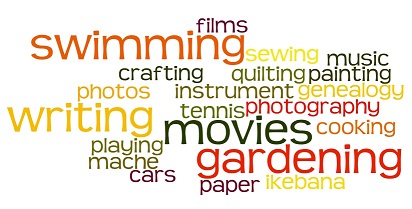
I had to unlearn a BBA’s worth of advice levied directly against this practice when I started applying for jobs, here. Further, non-academic American sources (like Business Insider) are positioned so strongly against it that they might actually hurt their readers’ chances in the international job market. Truth is, American companies will try to learn this about you in the interview and presumably find it distracting during a resume review session. They’re just trying to find out if you can hurdle the acceptable-competence bar when they look at your CV. So I’ve heard and read, anyway. Not so for German companies.
According to the advice I’ve been given, German companies want to know if you’re interesting even before they speak to you in person. It might be* that recruiters like to have personal questions ready before they see you. Maybe it’s considered too frank if you ask someone you’ve just met what they like to do in their spare time, and this gives them a polite path into that conversation. Another theory in which I have far more confidence is that German companies and employees really, really value a balance between work and the rest of life. They want to know that you’re not a workaholic before they entertain recruiting you. My confidence in this theory comes from what I’ve learned about the German perception of working late. It’s usually perceived negatively, as an indication that you didn’t work efficiently enough during the day. Want to experience this norm for yourself? Ask an employed German how many holidays they took last year, and notice how proud they look as they struggle to remember what their office looks like.
And what happens in the States when you’re the guy or girl who always leaves exactly at the 8-hour mark? Or God forbid, sooner? Your workplace will compare you to your office-dwelling, late-working coworkers and consider you comparatively unenthusiastic and unambitious. Want to experience this norm for yourself? Ask an employed American how many hours they worked last month, and notice how proud they become as they tell you what lunch at one’s desk is like (they’ll act like they’re complaining, though).
*Why I’m so unsure: My research into the matter (Googling “why hobbies and interests on my CV?” and the like) is only returning outrageously ethnocentric articles entitled “Things You Should NEVER EVER Include on Your CV.” Outrageous.
NUMBER FIVE: References
This is where we tear down the “be honest” tip we got from the old days in the U.S.
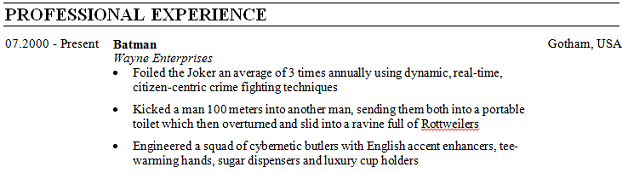
American companies sometimes ask for “references,” as well. But, it means something quite different than it does, here. In American, “reference” means contact information. You list 3-5 people at the end of your CV and, alongside each, you mention the nature of your relationship and add their phone number and e-mail address. A potential employer, upon seeing your references, will call one or a few or all of them to verify that you worked with them and ask about your personality. You should be honest on your CV, because your next employer might call one of your old ones and find out if you’re lying (not to mention dishonest CVs are the mark of a true dirtbag).
Here, a “reference” is a very specific kind of document that German employers give their employees when they leave the company. The document confirms your employment dates and even includes an appraisal of your skills and personality. A friend told me today that these appraisals will always sound either neutral or positive, but negativity may abound within. For instance, one might say something like “Hard working and devoted–routinely worked long hours to make sure the job was done.” It sounds like a generous appraisal of someone’s work ethic, but what it means is that they think you manage your life poorly. It’s a red flag to the new employer that you take a long time to finish your work.
The implication here is that candidates don’t even have the option of being dishonest, because each is expected to submit a backup CV written by each previous employer. It’s an interesting step that seems extraneous from an American’s completely American perspective. I remember an undergrad classmate of mine getting blacklisted from Wall Street, because he lied and claimed an internship on his resume that he never actually had. Perhaps vetting him required an investment of time that German firms consider a waste, though. After all, if the background check comes with the CV, HR can spend its time doing other valuable things.
The final interesting thing about references is that American companies simply don’t provide the German version. In fact, my old employers have policies that disallow sharing of any information other than confirmation that you worked for them. They can’t comment on their employees’ personalities or competencies, even if the new employer calls them and asks. It would seem that companies here are understanding about this, though, as I’ve been granted my first interview next Monday.
There you have it: 5 ways composing a CV in Germany is weird to an American. What do you think? Did anything surprise you? Did I leave any weirdness out? How does this list compare to what other countries want in a CV? Light up the comment section; I look forward to the discussion.