What the Last 30 Days is Like

You may already know that U.S. citizens (and those of some other countries) can live in Germany for 90 days without any type of visa before the country gives them a 3-month timeout (they make you leave the EU for 3 months). The last of my 90 days is July 4th, and I don’t want to sit in timeout, so June is really busy.

I’ve finished my first major task: deciding which visa I need. Mostly, I accomplished that with individual research. Funnily enough, asking people for advice about getting a visa is almost completely fruitless. Many people I’ve met are here for work, so all they know is that someone in a suit cut some red tape for them and now they’re living in Germany. Others had to endure really strict immigration processes that required them to have a visa before they even set foot in the country. And others just spread random second-hand fantasies and phantom tips.

“I know a guy…”

[He probably doesn’t know a guy]

“…who just told the government…”

[Sure. I’d love to meet Mr. Government if he’s ever available.]

“…that he’s a freelancer. So they just gave him something called a ‘Freelancer Visa,’ and now he can stay here!”

[They didn’t ‘just give him’ one. One of the bundle of requirements of a ‘Freelancer Visa’ is that you prove that you’ve been contracted for 3 projects at the time you apply for it.]

Many of the second-hand tips are like that one. They begin with “Have you heard of a [X] Visa?” Then, they make it sound like the German government is just giving them away to people with faces. Those tips are problems, because they can make you think that getting a visa is easy or worse, quick, and that you can wait a little while before you start applying for one.

So I’ve relied mostly on the Internet for my research. Forgetting about travelers’ blogs, because they really just offer more phantom tips, I set my sights on government resources. First, Google led me to the US Embassy’s residence permit tips. They give really general advice–gems like “yeah, you need a permit after 90 days,” and “go talk to the Germans if you really want to know the requirements for a visa.” Nice. Germany’s official resources aren’t any better. They offer super lists (read: comprehensive lists) which, if followed, could get anyone in the world into Germany. I know that some of those requirements don’t apply to me, so I had to keep looking. Finally, I found the best resource at the University of Munich’s website.

Anyway, the visa upon which I’ve decided is called a “Student Application Visa.” It gives me three extra months to apply to a university. Then, once I’m accepted, it becomes a normal student visa that allows me to live in Germany for the duration of my time with the school.

My plan to remain in Germany relies on my accomplishing three things in the next 20 or so days: obtain a student application visa, get into an LMU Master’s program, and book the next 6-8 months of German courses.

1. Obtain a Student Application Visa

I’ll be getting this one going tomorrow morning at 7am, across town, since “early morning” and “across town” are parts of a universal phenomenon that determines how we work with governments. Mostly, this is about filling out easy forms and showing my passport to people who glare at me. But, I just learned that I need German health insurance before I can get a visa, here. So far, getting insured sounds easy and cheap (EURO 50 per month is what I keep hearing). I’m wary, though, since that could just be a phantom tip.

2. Get Into an LMU Master’s Program

I’ve always known I would eventually go back for more education. Academia is just so tasty and theoretical that a second round needs to happen in the middle of my career to prevent mental atrophy. Now is a good time–I’m in another country, I don’t have to leave a job to make it happen, the local university is really good, and they offer a really interesting program–so I’m going for it.

Coming from the undergrad business world, I certainly considered the MBA. But, I mostly floated back and forth between “maybe” and “no,” never actually breaching the positive end of the argument. As I read and asked people about getting an MBA, I always encountered the same pros (not always all at once, but I never encountered other pros). They are 1) the letters “MBA” on your resume, 2) personal connections and 3) return on investment stemming from 1 and 2. While those three are no doubt useful benefits, they are not benefits I need from my education. Well, I admit that ROI is a factor I need to consider, but I think I have a pretty low threshold for “acceptable ROI,” and ROI is a weak factor for any program above that threshold.

As I researched the universities near and in Munich, I tossed around Economics and Psychology, believing they could make me a better marketer and, one day, an awesome marketing leader. At once, though, I noticed a strange-sounding Master’s program at the bottom of LMU’s English-taught programs list: Logic and the Philosophy of Science. I had to investigate; it sounded like a program  rooted in questioning the ability of science to deliver Truth. God, that’s tasty.

It turns out that’s, in large part, what it is. The program’s informative resources previewed its subject areas.

  1. Philosophical Logic
  2. General Philosophy of Science
  3. Philosophy of the Special Sciences: eg “Philosophy of the Social Sciences”
  4. Philosophy of Logic and Mathematics: What is the role of logic in thought and reasoning?
  5. Rational Choice and Formal Epistemology: eg Formal Rationality Concepts in Decision Theory and Social Choice Theory
  6. Analytic Philosophy: eg “Philosophy of Language” and “Philosophy of Probability”

GOD, that is tasty.

If I am accepted, I’ll use what I learn from the program to develop ideas and perspectives related to conducting market research, analyzing marketing data, employing appeals to marketing audiences and markets, and evaluating different marketing plans before launch, when there are more than one option.

In short, I’ll use the program to be a better specialist in the short term, and an awesome leader in the long term.

3. Book the Next 6-8 Months of German Courses

6 more months will get me through B2 level (I just finished A1, and the last possible level is C2). That’s where many tell me I should stop, since it’s where the practical German ends (for instance, future tense starts in C1, but nobody uses future tense, here). 8 months gets me through C1. That’s where I want to stop, since I want to be able to be clever. Even teachers say C2 isn’t worth it unless you’re a linguist, so I’ll trust them on that one.

I studied A1 at Tandem Munich. 1 unit (2 months) costs 1,090 Euros there. I will be studying A2 and probably all of the rest at the Muenchner Volkshochschule. One unit (2 months) costs 460 Euros. From what I can tell, the secret behind the price difference is that the German government subsidizes the VHS. It’s nice to know that life still involves some easy decisions.

Anyway, this is the easiest step. Every few weeks, I go to the VHS and enroll in a new German course (courses aren’t available much further than 2 months ahead of time). The challenge is dedicating myself to going to Rosenheimerplatz once a week to make sure the classes don’t fill up before I can enroll. It’s insane how quickly VHS classes reach capacity.

Well, that’s it.

Without spending much time on the sign off, I’ll just say that I hope all of this works out. Wish me luck.

TexMexpatriats: Scoring an Apartment in Munich #6

Ryan’s and Roxana’s Thursday

“Whatever you said on the phone last night worked, because Wolfgang wants us to meet us at the apartment today at 2pm!” exclaims Roxana over the phone.

“Great, mi amor! I’ll meet you there at 2!”

***

“There’s a small problem,” apologizes Wolfgang while he dismounts his bike. “Well, not a problem, really. Saskja isn’t at home, so I won’t be able to show you both the room, today.”

That’s kind of a problem. “Eh, that’s no big deal,” I reply.

“Yes, Ryan told me that this place is great, and I trust him,” laughs my adorable girlfriend. And then grinning at me, “Right?” Adorable.

Wolfgang politely chuckles. “Well, okay. I am very sorry that we will not be able to go in and see the place but, uh, there is not much I can do. Saskja was home from work yesterday to show applicants the apartment, and I’m not sure she can stay home a second day.” He shrugs and slants his eyes downward to emphasize that we had our chance, yesterday.

I get the point. “Yeah, of course. That’s understandable.”

“But I wanted to meet anyway,” continues Wolfgang, “so that I might get to know Roxana. I met you, yesterday, so we are good. I just have to make sure I can tell the owner that I know both of you when I make my final recommendation.”

That’s interesting. It sounds like he just said that he’s planning to recommend us.

“Oh, yeah?” I ask. “How does that part of the selection work?”

“Well, after I meet every applicant, I make a judgment about which ones would fit in well, here. You know–who will likely pay rent, whom the existing tenants might like, and things like that.” And then “I’ve been working with this building for a long time, so I have no problem identifying good residents.”

“Anyway, then I propose three applicants to the man who owns the building. I might emphasize one over the other two, but I leave it to him to make the final decision among those three. Then, of course, he meets the applicant he chooses when we sign the papers.”

Roxana’s wearing her biggest happy face. “Of course, no pressure there!” she jokes.

“Haha, yes. It’s a pretty formal process, but it’s also very smooth and easy. Nothing to worry about. If you meet the guy, it’s because you’ve already been awarded the place.”

He changes the subject. “So, um, I have a few questions for you, Roxana.”

Roxana: “Okay!”

“You work for,” checking his papers “Texas Instruments, is that right?”

“Yes, that’s right!”

“And when does your contract end?”

“It doesn’t. I’m on indefinite contract with TI.”

“Oh! That’s good. Stable jobs are always good things.”

“Yes, I can confirm that!”

“So I’ll just need the standard set of documents to review, whenever you can provide them.”

“Oh, I have them now!” Roxana is beaming.

“Oh! That’s great! Let me see…and this is your current salary?” he points at one of the documents.

“Yes, that is the current one.”

“Okay, and I see you also have your travel and residency documents in here. Good.”

“Yes, it’s all there!”

“Very good! Well, I feel good having met both of you. Now, I can go to the owner and make my recommendations. Do you have any questions for me?”

Both of us: “No, no questions!”

“Okay, you will hear from me tomorrow morning. I will tell you whether or not you are selected.”

“Sounds great,” I tell him. “Vielen dank!”

“Ja, bitte! Bis bald!”

“Bis bald,” Roxana and I yell back. And then Wolfgang pedals away.

“Wow, I really hope we get this apartment, now,” says Roxana.

TexMexpatriats: Scoring an Apartment in Munich #5

Ryan’s Wednesday Afternoon pt. 3 – Viewing the Apartment and Debrief

Following him through the front door of the place, I’m struck by its apparent age. The walls are solid cement, and the tile floors display patterns much too detailed to be new. Also, the stained wooden stairs cry when I climb them. He leads me through the tiny dark lobby of “the first building” and past a two-person glass elevator into  the building’s courtyard. I think I see a ghost in one of the corners.

Bicycles line the edges of the courtyard, propped up on the building’s outer walls. I imagine there’s at least one bike per resident. The only area in which I see no bikes is to the right of us, beneath the tin/wooden canopy that shields the garbage from rain. As I follow the stone path from the back of “the first building” to the front door of “the back building,” I’m impressed  by the courtyard’s coziness. Mostly, it’s because the courtyard is about the size of two tennis courts and the 5-story apartment buildings wrap around its edges. They’re relatives crowded around a newborn’s crib.

Anyway, now Wolfgang and I are in “the back building.” I’ll be seeing a room in this one.

“There’s a…um…keller? I don’t know the word in English.”

Shot in the dark from me: “A cellar?”

“Yes! That’s it. There’s a cellar somewhere, here. But I don’t know where it is, so we’ll have to ask Saskja.” And then, “Oh! Saskja is the girl who lives here, now. She is waiting for us upstairs.”

“Great!” We climb, and the stairs cry.

On the second floor (we would call this the third floor in the States) I see three doors. Two appear to lead into apartments while the third leads onto a balcony. Wolfgang notices I’m looking at the balcony.

“Ah, yes. That’s the balkon. There’s no way to access it from inside the apartment, but it belongs to whomever rents the room you are about to see. The other girl on this floor knows that it doesn’t belong to her room.”

“Oh, okay.” I’m a little disappointed that I would have to put on real-person pants to walk into the hall and out to the balcony. Call me old-fashioned.

Wolfgang knocks on the door, and after a few seconds Saskja answers. She’s a tall woman, maybe 30 years old. Maybe. She’s dressed as if she’s just come home from work, and her blond hair is pulled back into a bun. Despite her aggressively professional appearance, she smiles warmly at us and invites us in with a 6-inch voice she clearly picked up in elementary school.

Enough small talk with Saskja and Wolfgang. I’m here to assess an apartment. Since Roxana isn’t here, I need to compile a mental photo book worthy of the Smithsonian. I analyze the unit like this:

  • Floors: All wood, except for the bathroom’s
  • Bathroom floor: Tile
  • Walls: Originally white, but now off-white with age
  • Long hallway with a missing ceiling lamp

First impression: Unimpressed, because I imagine most of the room’s amenities are in disrepair. Noise probably travels through walls without any problem at all.

More analysis:

  • Order of rooms along the hallway:
    • Tiny closet full of Saskja’s shoes (I imagine Roxana fainting when I tell her about this)
    • Bathroom
    • Kitchen
    • Living Room
  • The bedroom is through a door at the back of the living room, not connected to the hallway
  • The bathroom is huge. I think it’s too big, but I make a mental note similar to the one I made after seeing the shoe closet.
    • The toilet has its own corner carved out of one of the walls
    • The shower is also a bathtub
    • The sink is on a wall opposite the bathtub, next to the toilet nook
    • I have about 5 feet between the sink and the tub.
    • Saskja has a washing machine in the corner next to the tub, directly opposite the toilet
  • The kitchen is big, too–about the size of my living room in Dallas. A stove, counter top and sink fit comfortably against one wall, and there’s plenty of room for a table on the opposite wall. Nice.
  • The living room easily fits the standard couch, coffee table, tv stand setup on one end, and it would easily fit a desk and my guitar on the other end.
  • The bedroom is just barely wide enough for a queen bed, and there’s no closet.
  • The walls are solid cement

Refined First Impression: Pretty luxurious when it comes to room sizes, and the cement walls negate my first impression about noise. But why do they sacrifice bedroom space for the sake of bathroom space? I think about putting a desk in the bathroom and about what a keyboard sounds like surrounded by tile.

I’m not listening to Saskja and Wolfgang, but I’m aware of their voices while I’m scanning the place. I do, however, pick up one of Wolfgang’s phrases clearly:

“…ein Amerikaner und eine Mexikanerin!”

“Oh, wow!” says Saskja.

“Ja!”

I smile and get back to scanning.

After a few more minutes, Wolfgang is behind me.

“Do you have any questions about the place?”

“No, I think I understand it pretty well,” I smile back.

“Really? No questions?” he and Saskja are both very surprised. I wonder what it’s like when Germans view apartments.

“No, it looks good. I’ll talk about this with Roxana tonight. Can I call or email you to let you know what we think?”

A bit apprehensive, Wolfgang replies “Um, yes. But please try to tell me what you think by tomorrow afternoon. As you can imagine, finding and apartment in Munich is very difficult. We have, uh, many interested people.”

“Sure thing!” I grin obliviously.

***

I’m looking across the dinner table at a curious Roxana and an absolutely baffled Sergio.

“What do you mean, you’re not sure it’s worth it? Tell the guy you’re interested,” he says in an absolutely baffled manner. “It’s in a good location?”

“Yeah.”

“And it has a separate rooms?”

“Yeah.”

“Tell him you’re interested.”

“Yeah, you should call him,” urges Roxana, “and at least say we’re interested. At the least, we can see it again and if we don’t want it, then it’s no big deal.”

“Okay, deal,” I say, reaching for my cell phone.

Post #10: This Blog is Alive

It’s been awhile since I’ve posted anything. I think it’s been too long, so I’m going to bring the frequency back to normal (1-3 posts per week). I’m working on the rest of the story that ends with Roxana and me scoring an apartment in central Munich. In the next installment, our agent Wolfgang shows me the inside of the first apartment we were to view. But I’m not done with that, yet. In the meantime, this is a post about some cool things we’ve done during the past few weeks. I hope I’m as excited as you are about this.

Fruhlingsfest

“Fruhling” is the German word for Spring. And, as many of us know, “fests” were large oaken boats from the American Civil War. It goes without saying, then, that Fruhlingsfest is a festival that celebrates the beginning of Spring.

I’ve heard it called “small Oktoberfest.” I would get a little more specific and compare it to a beer-drinking 5k on the road to Oktoberfest’s marathon. If you’re a Texan, you can imagine the Texas State Fair with big tents and a lot more beer, but it only lasts a week.

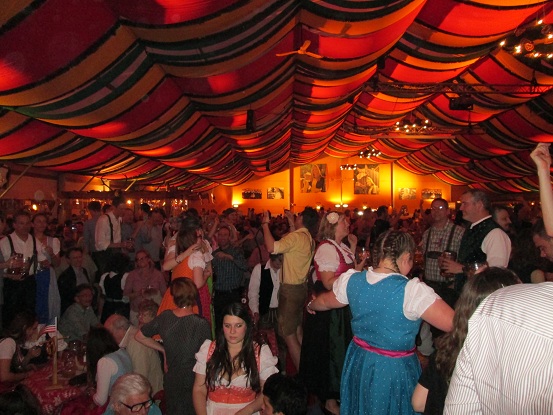
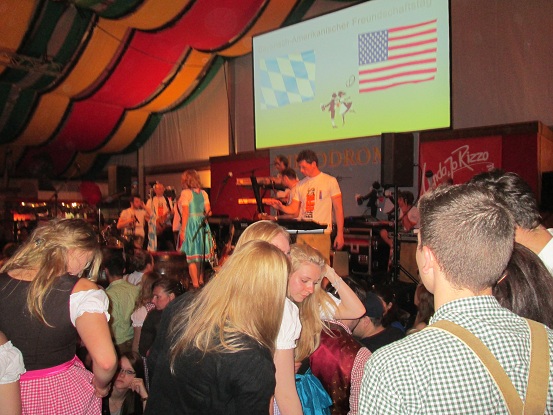
Roxana and I went on a Friday during the celebration of “Bayern-America Friendship Day.” The “Hippodrom” tent hosted the celebration, so we went there and found a table amid maybe 1,000 other people. Soon, we were joined by three German girls. Soon after that, a German guy and two more German girls sat–we had a full table.

While we waited for our 1L mugs of beer, Roxana and I enjoyed some pretty fun conversation with the Germans at our table. I dutifully asked them why people in Munich seem to like light beer so much (they didn’t know why) and made a corny joke about Roxana being from South Texas. They asked us about Texas and Mexico and explained that they were stopping by after work to relax. Then, the beers came.

For the rest of the night, a German band covered German and American songs while everyone in the tent jumped onto the tabletops to drink and dance and yell. Amazingly fun. But enough words. Below are some pictures. Also below is a list of the American songs the German band covered. American setlists played by non-American bands in non-American countries are really interesting, it turns out.

The Setlist:

  1. Sweet Caroline
  2. I Love Rock and Roll
  3. Sweet Home Alabama (the tent went absolutely nuts over this one)
  4. Stand by Me
  5. Blue Suede Shoes
  6. Tutti Frutti
  7. Hey Jude (I guess the magic here is that neither country can take credit for it, but everyone loves it, anyway)
  8. What’s Goin’ On?

Enough Words. Picture time.

Outside Hippodrom Tent - Fruhlingsfest Munich The Stage Inside Hippodrom Tent Hippodrom Tent Crowd

Music Festival In Dachau

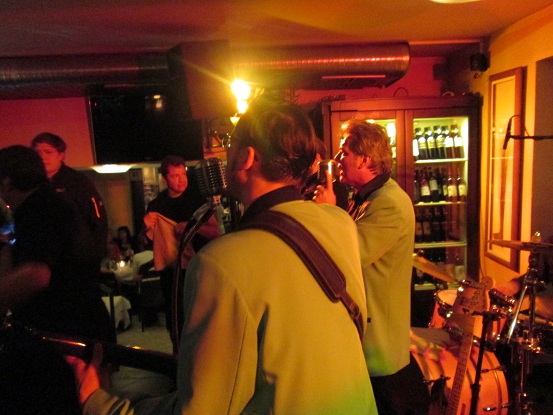
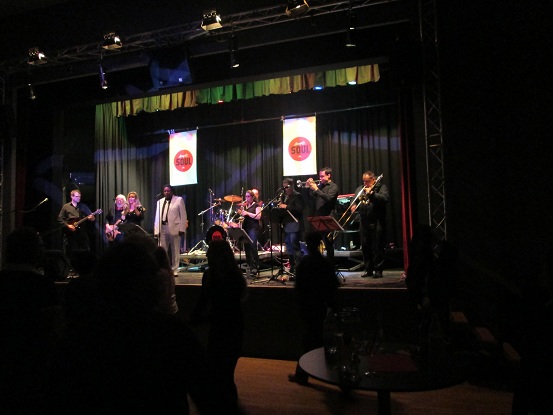
Dachau is a small town to the North of Munich. Roxana and I went there to visit Carolina and Steffan, another couple. That night, a bunch of the town’s bars and entertainment halls hosted bands from different styles, but mostly rockabilly, blues and soul.

One of the more remarkable moments of the night happened during our walk from Carolina’s and Steffan’s flat to the center of town. Before, we had all been discussing the differences among our home countries (Carolina is Bolivian and Steffan is German). Carolina and Roxana noted many differences, but I mentioned that my experience in Munich and those of mine in Texas are pretty similar–that Munich seems to value the same things as the US, but to a greater degree. For example, in the US drinking tends to be a pretty democratic affair. Each person orders however much of whatever they want, and you just start drinking when you get your beer. It works much the same way in Munich, except every social activity involves beer. Compare those customs with those of Central and South American countries. If you don’t say “Salud” while looking directly at one of your friends before you drink your first drink, the roof collapses on your head and you die a sterile hermit in the nearest gutter (or maybe it’s 7 years of bad luck). The Chinese also have a custom that requires everyone to drink the same amount of alcohol during a gathering.

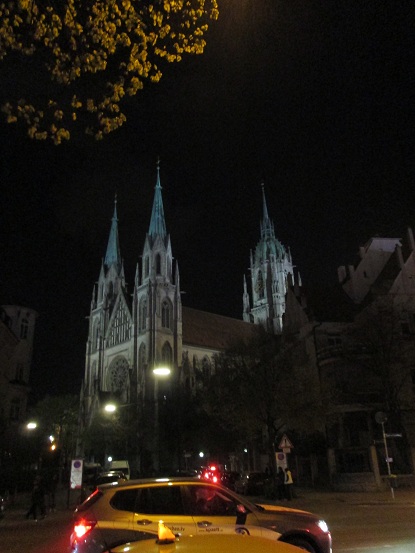
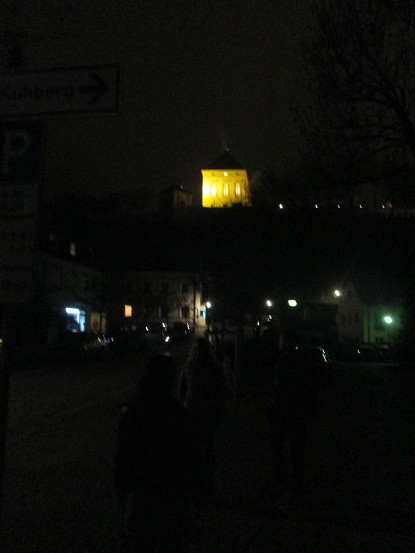
Anyway, as we walked toward the center of town, I saw the outline of a large structure over some trees (it was dark out). “What’s that?” I asked.

“That’s our castle.” Steffan said that way too casually, if you ask me.

Okay, so Munich is different from the US in at least one very important way.

Enough words. Picture time.
A Big Scary Church in Dachau That Castle I was Talking About
Rockabilly Band in a Small Dachau Bar Soul Band in a Dachau Music Hall

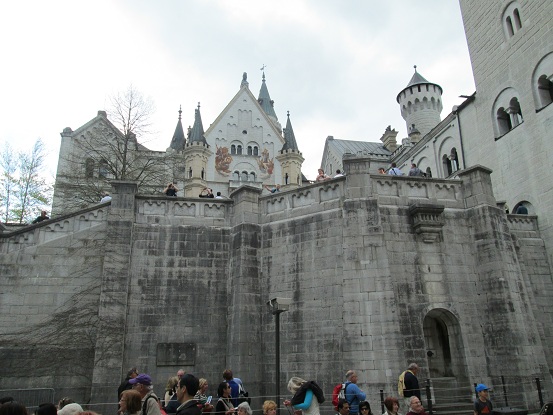
Neuschwanstein Castle

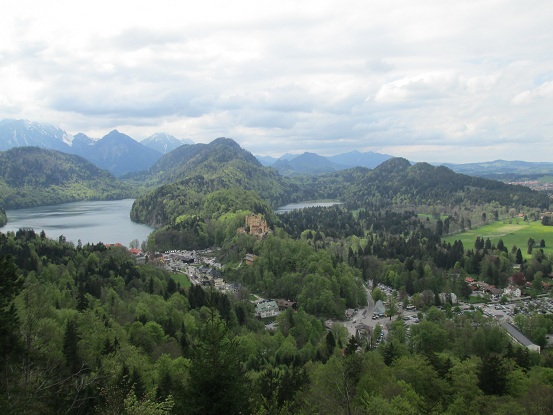
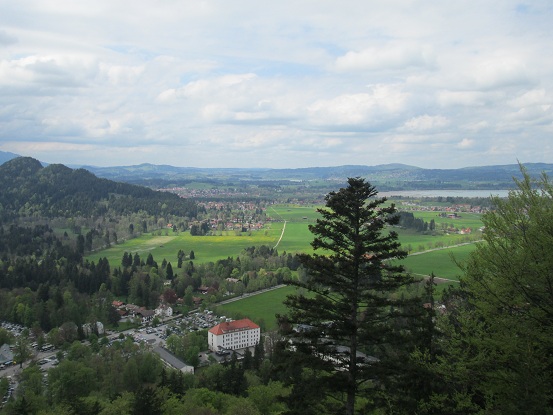
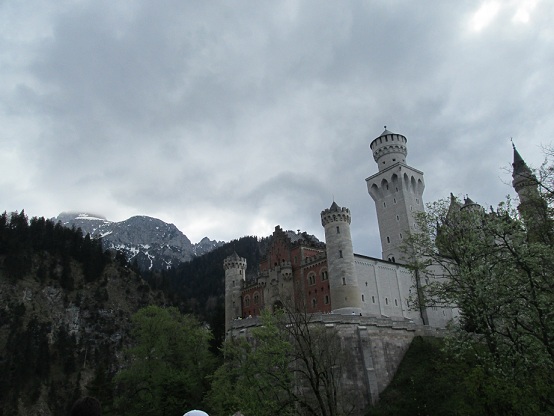
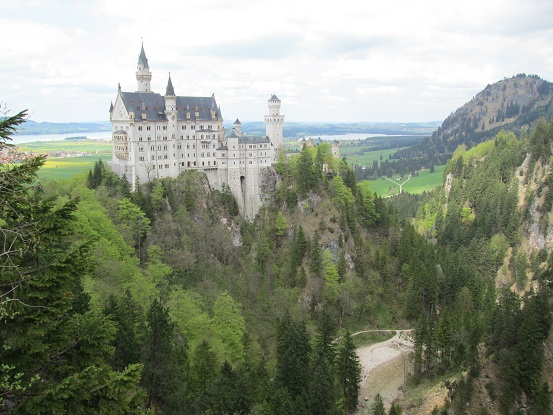
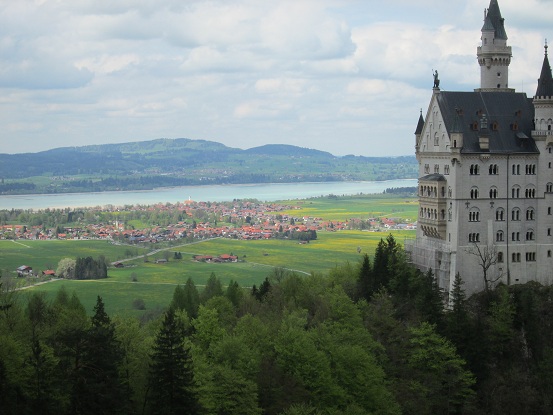
This was our most recent destination. Last Thursday, Germany had one of its 31 May holidays (exaggeration alert). This meant that Rox didn’t have to work, and I didn’t have class. A two-hour northbound train ride into our day, and we were at the base of the mountain that houses this medieval beast.

An astoundingly beautiful 40-minute hike up the mountain took us to the castle. I haven’t done my research, yet, but I do know a few things about it. Ludwig Maximilian had it built in a year between 0 and now. I think. It’s one of his vacations homes, but they never finished building it. I’ve heard that, when he was young, he went through a phase of obsession with building castles.

Enough words. Picture time.

River River 2 Castle Interior - Low Castle Exterior - Low POV Castle Exterior - Far Castle and Town - From Bridge

Post #9 – Why Helles?

This is the fourth “Post 9” on my hard drive. For a week, I’ve been writing 3 other “Post 9s” and have finished 0 of them. One is about the Dachau Music Festival we attended last weekend, and why I think adapting to German culture has been easy. Another is about the night Roxana and I went salsa dancing with another couple and how language barriers crumble when soaked in alcohol. The third is about Fruhlingsfest (Spring Festival) and how cool it feels to celebrate American culture in another country with the residents of that country.

I can’t seem to get through those, yet, so this post 9 (the actual post 9) is simple. It’s about beer, and a bizarre mystery surrounding it in Germany. Or at least in South Germany. Or at least in Munich.

Most places (read: nearly all places) in Munich serve beer. Most also emphasize (read: only sell) three types of beer: Hell, Dunkel, and Weiss. Sometimes you can find a Radler (light beer + Sprite) or a Pilz (bitter Czech beer), but the first three are all that usually matter. So, you sit down and, when you’re asked what you want, you reply ” Ein Hell,” “Ein Dunkel,” or “Ein Weiss.” Usually.

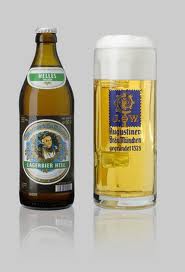
Augustiner Hellesbier

Anyway, Germany, or at least South Germany, or at least Munich prefer Helles Beers. By a Kilimanjaro landslide. It would seem that not even Germans know why this is the case. Here’s the evidence:

  • Refrigerators absolutely full of Augustiner Helles and barely anything else
  • Biergartens at which every member of every table has a mass (1 L mug) full of Helles
  • Streets full of soccer fans watching the game through bar windows–each person holding one or two of those Augustiner Helles bottles
  • Night clubs packed full of people trying to dance–every one holding an Augustiner Helles bottle
  • Restaurants packed to the rafters with customers eating a vast variety of entrees–and each drinking an Augustiner Helles beer

I have seen at least one of those situations play out every single day since I arrived 3 weeks ago.

I understand why it’s always Augustiner. Everyone tells me straight away that they make the best Helles beer. But why Helles? Helles is at the bottom of my ranking system:

  1. Weiss
  2. Dunkel
  3. Helles

Of the three, Hell tastes the most like water (not anywhere near how much Bud Light tastes like water, so keep in mind how relative my assessments are). Dunkel tastes like super beer and Weiss tastes like alternative beer, so those two seem obviously special to me. Hell tastes like a conservative beer (not too hoppy, but it does actually taste like beer).

It doesn’t cost the least–0.5L of any of those beers costs EURO 3.50 in most drink shops.

It’s likely not the healthiest (read: least unhealthy)–my German teacher actually supposes that Weiss is the least bad for you.

I’ve spoken to 8 native Germans about this, and their responses are so similar it’s creepy. First, their face expresses momentary doubt while they examine my claim that everyone drinks Hell. Then, they slowly nod their head and make approving noises as they start to agree. Finally, they shrug and say something like “I don’t know–I guess it’s just the German way.”

So no luck with the horse’s mouth. Yet, at least. I’m sure somebody knows why Hell is so popular, here. I will find that person. Don’t worry, though; I have some theories:

  1. Hell is the easiest to drink. If you want to drink a lot, avoid the other two, which fill you up quickly.
  2. Hell is the easiest to produce. This would mean that its stock is the greatest at public events and that it’s the easiest to obtain at those events. Maybe people grow accustomed to it, that way.
  3. Hell is the easiest to pour. Weiss requires extra time to pour it, since the head is so thick. I think that’s why some bars don’t even serve it at night.

For now, this case stays open.