This is the fourth “Post 9” on my hard drive. For a week, I’ve been writing 3 other “Post 9s” and have finished 0 of them. One is about the Dachau Music Festival we attended last weekend, and why I think adapting to German culture has been easy. Another is about the night Roxana and I went salsa dancing with another couple and how language barriers crumble when soaked in alcohol. The third is about Fruhlingsfest (Spring Festival) and how cool it feels to celebrate American culture in another country with the residents of that country.
I can’t seem to get through those, yet, so this post 9 (the actual post 9) is simple. It’s about beer, and a bizarre mystery surrounding it in Germany. Or at least in South Germany. Or at least in Munich.
Most places (read: nearly all places) in Munich serve beer. Most also emphasize (read: only sell) three types of beer: Hell, Dunkel, and Weiss. Sometimes you can find a Radler (light beer + Sprite) or a Pilz (bitter Czech beer), but the first three are all that usually matter. So, you sit down and, when you’re asked what you want, you reply ” Ein Hell,” “Ein Dunkel,” or “Ein Weiss.” Usually.
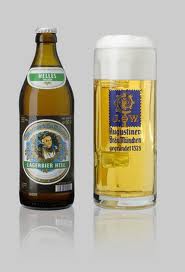
Anyway, Germany, or at least South Germany, or at least Munich prefer Helles Beers. By a Kilimanjaro landslide. It would seem that not even Germans know why this is the case. Here’s the evidence:
- Refrigerators absolutely full of Augustiner Helles and barely anything else
- Biergartens at which every member of every table has a mass (1 L mug) full of Helles
- Streets full of soccer fans watching the game through bar windows–each person holding one or two of those Augustiner Helles bottles
- Night clubs packed full of people trying to dance–every one holding an Augustiner Helles bottle
- Restaurants packed to the rafters with customers eating a vast variety of entrees–and each drinking an Augustiner Helles beer
I have seen at least one of those situations play out every single day since I arrived 3 weeks ago.
I understand why it’s always Augustiner. Everyone tells me straight away that they make the best Helles beer. But why Helles? Helles is at the bottom of my ranking system:
- Weiss
- Dunkel
- Helles
Of the three, Hell tastes the most like water (not anywhere near how much Bud Light tastes like water, so keep in mind how relative my assessments are). Dunkel tastes like super beer and Weiss tastes like alternative beer, so those two seem obviously special to me. Hell tastes like a conservative beer (not too hoppy, but it does actually taste like beer).
It doesn’t cost the least–0.5L of any of those beers costs EURO 3.50 in most drink shops.
It’s likely not the healthiest (read: least unhealthy)–my German teacher actually supposes that Weiss is the least bad for you.
I’ve spoken to 8 native Germans about this, and their responses are so similar it’s creepy. First, their face expresses momentary doubt while they examine my claim that everyone drinks Hell. Then, they slowly nod their head and make approving noises as they start to agree. Finally, they shrug and say something like “I don’t know–I guess it’s just the German way.”
So no luck with the horse’s mouth. Yet, at least. I’m sure somebody knows why Hell is so popular, here. I will find that person. Don’t worry, though; I have some theories:
- Hell is the easiest to drink. If you want to drink a lot, avoid the other two, which fill you up quickly.
- Hell is the easiest to produce. This would mean that its stock is the greatest at public events and that it’s the easiest to obtain at those events. Maybe people grow accustomed to it, that way.
- Hell is the easiest to pour. Weiss requires extra time to pour it, since the head is so thick. I think that’s why some bars don’t even serve it at night.
For now, this case stays open.