Roxana and I have wanted to visit Turkey for a long time. We couldn’t find any talking ones, though, so we settled on visiting the country for a weekend instead.
Ha.
Anyway, we visited Istanbul, and it’s a very, very cool city. On a scale from Michael Scott to uncle Jesse, Istanbul ranks a solid Vincent Chase.



I expected it to be pretty close to completely normal, since I’ve been told that Istanbul is absolutely crawling with tourists all of the time. Surprisingly, though, it was a much weirder time than I expected. Weird, of course, is a good thing.
Anyway, since it was our first time there, and we were there only for a weekend, what I offer here is a description of the way Istanbul feels as a tourist. Specifically, I’m going to tell you that there are a ton of people in Istanbul, and that there are some cool things to do there. In that order.
The Friend Factor
You’re friendly, right? Eh, we all are. Put one of us in a room full of people–the more people in the room, the more friends we’ll have at the end of the night. Shrink that room and we’ll just make those friends all the faster. Life is super duper.
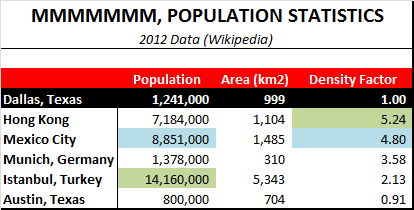
What if someone were to put us in an Istanbul full of 14 million people? That’s the kind of question we here at the Bittesuite like to answer with our patented Friend Facto-
Okay, you got me. The friend factor just compares population density from city to city. Population statistics go down easier with a bit of rich cheese poured over the top, don’t you think?
Below is a list of density factors, prepared much like what I displayed in my post about Mexico City. They just relate the crowd in each city to the normal crowd in Dallas, Texas. On the weekend. Not during a weekday, when 20 cities outside of Dallas feed it a workforce.
Shut your blog hole and tell me about Istanbul, already!
Never been to Dallas, so this is stupid? Not for long! Imagine a weekend in Dallas. You wake up on Saturday to the sound of either birds or nothing outside your window. During the day, you’ll drive to the store and stop only for red lights and stop signs. Maybe you’ll take a walk around the uptown area–plenty of people will also be walking around, but very few people will be in your way. For dinner you go to a casual uptown restaurant without reservations, and you’re probably able to eat there. All of this is possible in spite of the worst local mass transit system on the planet.
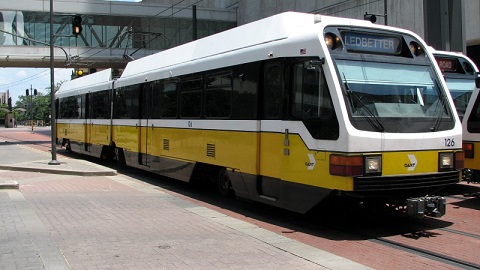
(Source: dallassouthnews.com)
Then, you take a trip to Istanbul, and the number of people per square kilometer is more than twice what it was in Dallas. Yowzah. That’s what this table says.
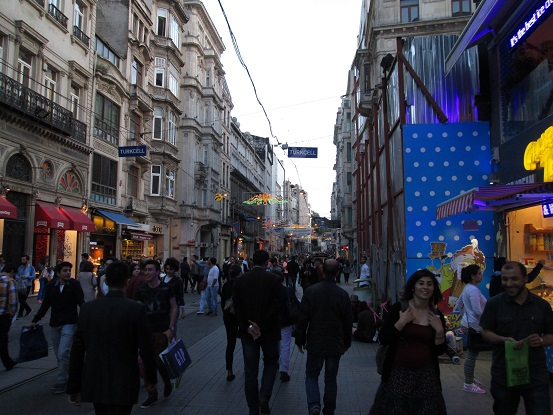
We spent the entire Saturday walking around the entire Istanbul, and I can now say with authority that there are a ton of people in that city. Crossing a street means waiting for someone confident-looking to pick an appropriately sized gap in traffic so they can drag you to safety with their coattails. Speaking of traffic, I think the average car in Istanbul at any given point in time is moving at 10 miles per hour. If you’re a woman, finding a seat on a train is possible. If you’re a man, prepare to stand like it’s your pastime (giving up your seat to women and the elderly might be the most easily recognizable cultural norm in the city). Finding a place to eat, however, is remarkably easy, but that’s probably due to what I estimate to be a 2:1 restaurant-to-person ratio. Normal streets are packed full of people. However, walking down them is totally fine, because Istanbul is awesome: people move like they’re actually going somewhere. Very little aimless meandering in Istanbul, is what I’m trying to say.
There are Some Cool Things to do in Istanbul
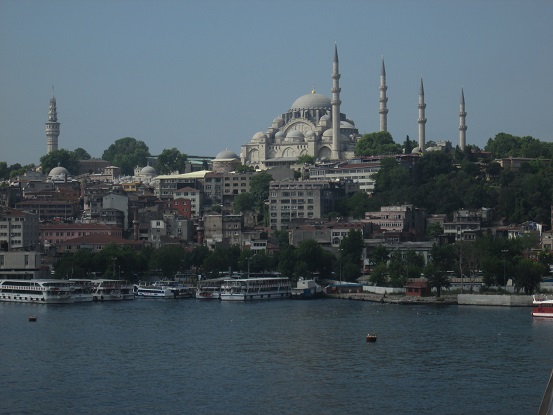
Now, about that walking I mentioned. In one day, we hit the Sultan Ahmet (“Blue Mosque”), the Yeni (“New Mosque”), the Basilica Cistern, Topkapi Palace, Galata Tower, Taksim Square, Istiklal Street, the Grand Bazaar, and the Spice Bazaar. Because we did so much in one day, we didn’t have much time to dwell on the historical significance of each landmark. However, we did learn a little (I’m not going to fill in the gaps with Google research, so you can know what kind of depth one might sacrifice during such a broad visit):
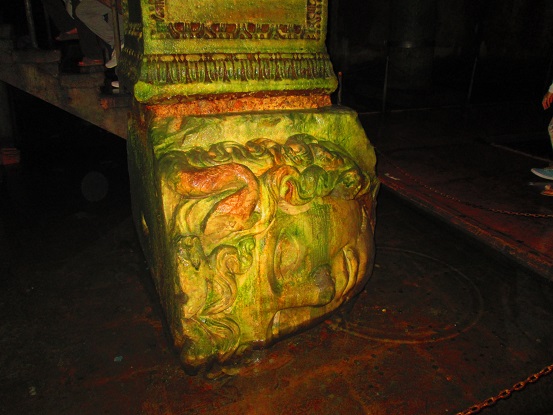
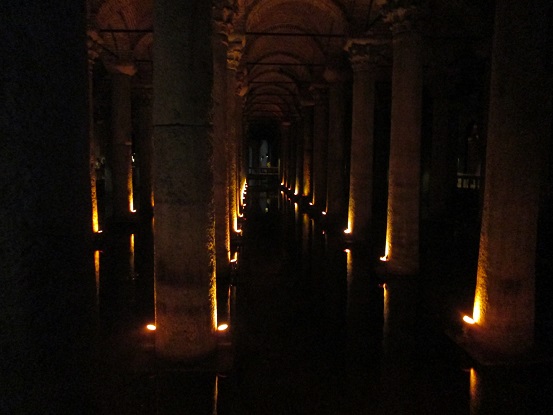
1) The Basilica Cistern is a relic of Roman occupation. It stored water for the city, like a normal cistern, except there are two weird Medusa heads carved into two pillars near the back of it. Mysterious.
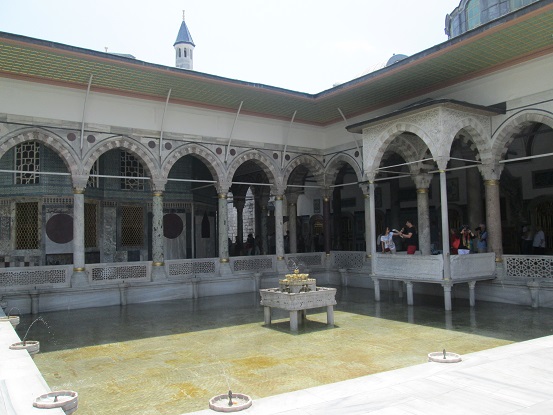
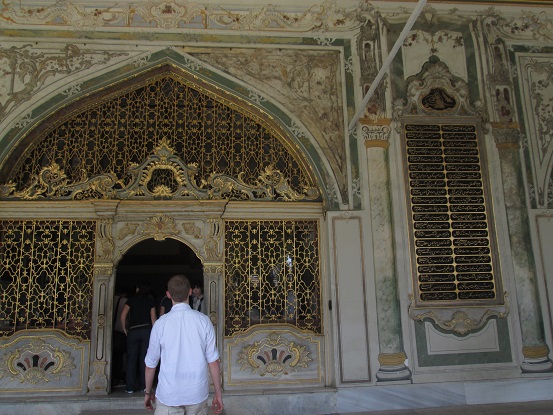
2) The Topkapi Palace was owned by a person during an era of some sort. Now, it’s a museum to that person’s lifestyle and that era’s materialism and mentality for war. We learned, for instance, that curved swords were easier to wield quickly than straight swords, and the Ottoman armies preferred quick slashes to blunt slicing and thrusting. We also viewed rooms full of golden- and jeweled things. They also let you walk around in the palace’s harem–the building where the owner kept his wives and concubines. And finally, we walked out to a flower garden overlooking the city, but I had to turn around and leave immediately; standing in that garden rendered me completely blind. It might be because the floor and walls were white rock, or maybe the garden is a holy refuge and I’m a demon. I did hiss and moan a bit of Latin heresy when the bright light flooded my vision.
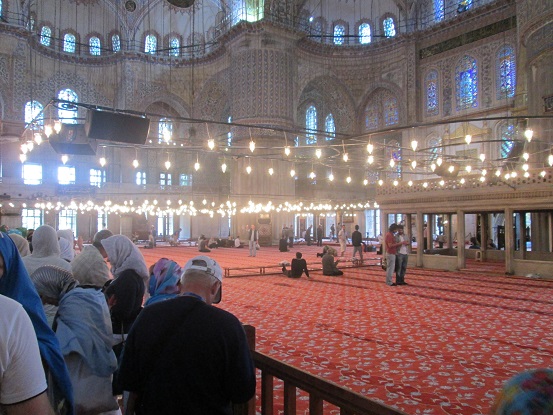
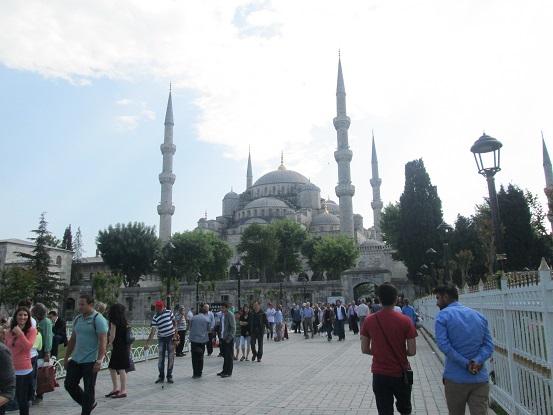
3) Sultan Ahmet (Blue Mosque) is the big daddy mosque that plays host to all of us tourists. It’s the one you can enter as an ignorant boob without getting into trouble, because they’ve prepared for your ignorant boobness. For instance, you have to wear long pants and a sleeved shirt as a man. Of course I wore shorts. It’s okay, though, because they offer you a long blue skirt of sorts that you wrap around yourself over your shorts in place of long pants. Women also need to cover their arms and legs, but in addition they need to cover their heads. The mosque’s hosts provide head coverings. Once inside, we were able to look around. Muslim men pray in the front of the mosque. We tourists walked around behind the men. Muslim women prayed behind us.
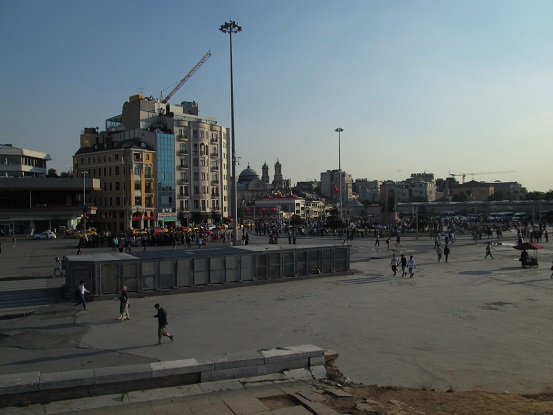
4) Taksim Square is an open area at one end of Istiklal Street. It’s where last year’s and this year’s famous demonstrations occurred. It’s a pretty plaza.
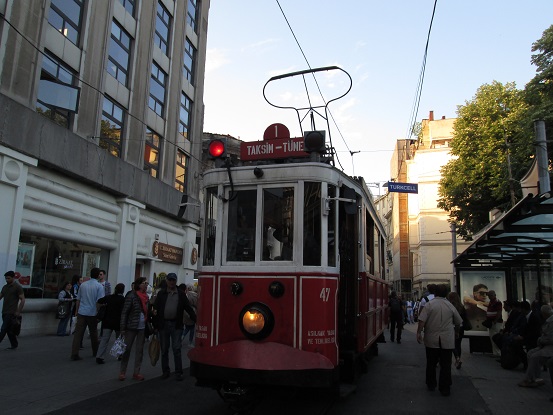
5) Istiklal Street is where you find tons of conventional shopping and dining. The city is incredibly light on alcohol, but Istiklal offers restaurants that serve it. Otherwise, the western European influence is extremely evident: it looks just like a commercial street you would find in Amsterdam, or like Kaufingerstraße in Munich.
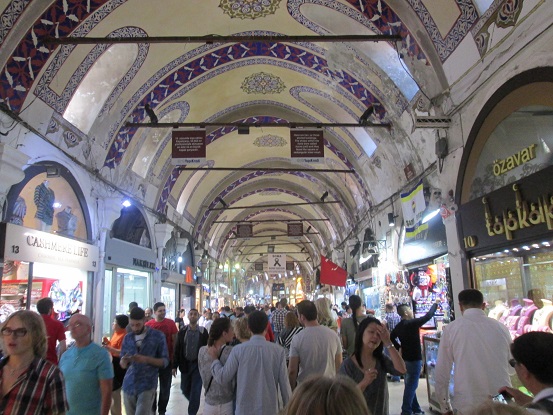
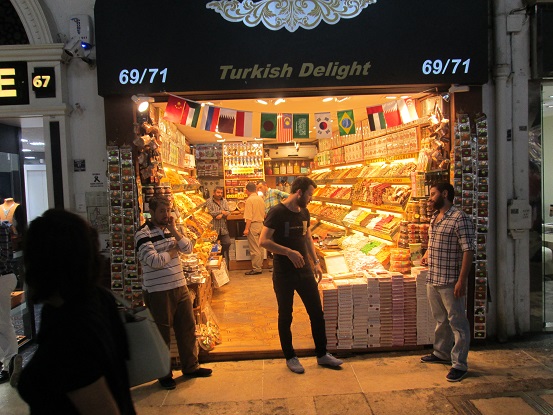
6) The Grand Bazaar and the Spice Bazaar were major trade hubs a long time ago, I think. I think I remember learning when I was younger that western Europeans many many years ago would travel through Istanbul on their way eastward. They would stop and marvel at the foreign spices and wares sold at these markets, and then maybe go home to tell their bros how awesome it was. I’m trying my hardest not to Google this right now. My point is that we were able to learn very, very little about the history of these Bazaars while we were there, although the city might offer that information through some channel that we didn’t find. Today, you move through its giant hallways past throngs of shoppers, perfume stores, clothing stores, and shops that sell special candies generally called “Turkish Delight.”